01 Lumens by use
Lighting is measured in lumens. General parking and storage need less light, workshops need more and detail or fabrication work needs the most. A common planning approach is to set a lumens-per-square-foot target for the use and multiply by the floor area.
Our Garage Lighting Calculator does the math for your size.
02 Fixtures and spacing
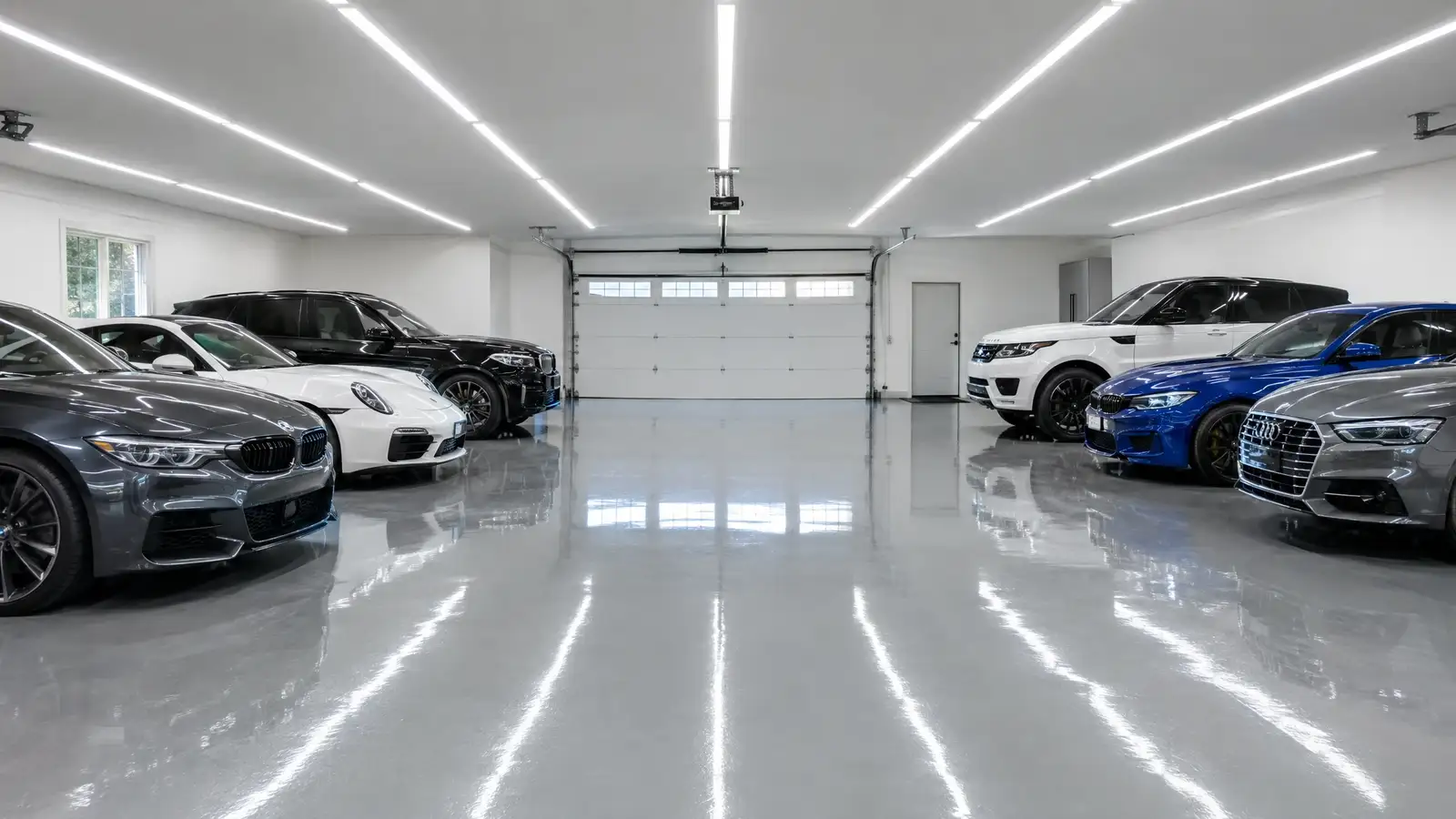
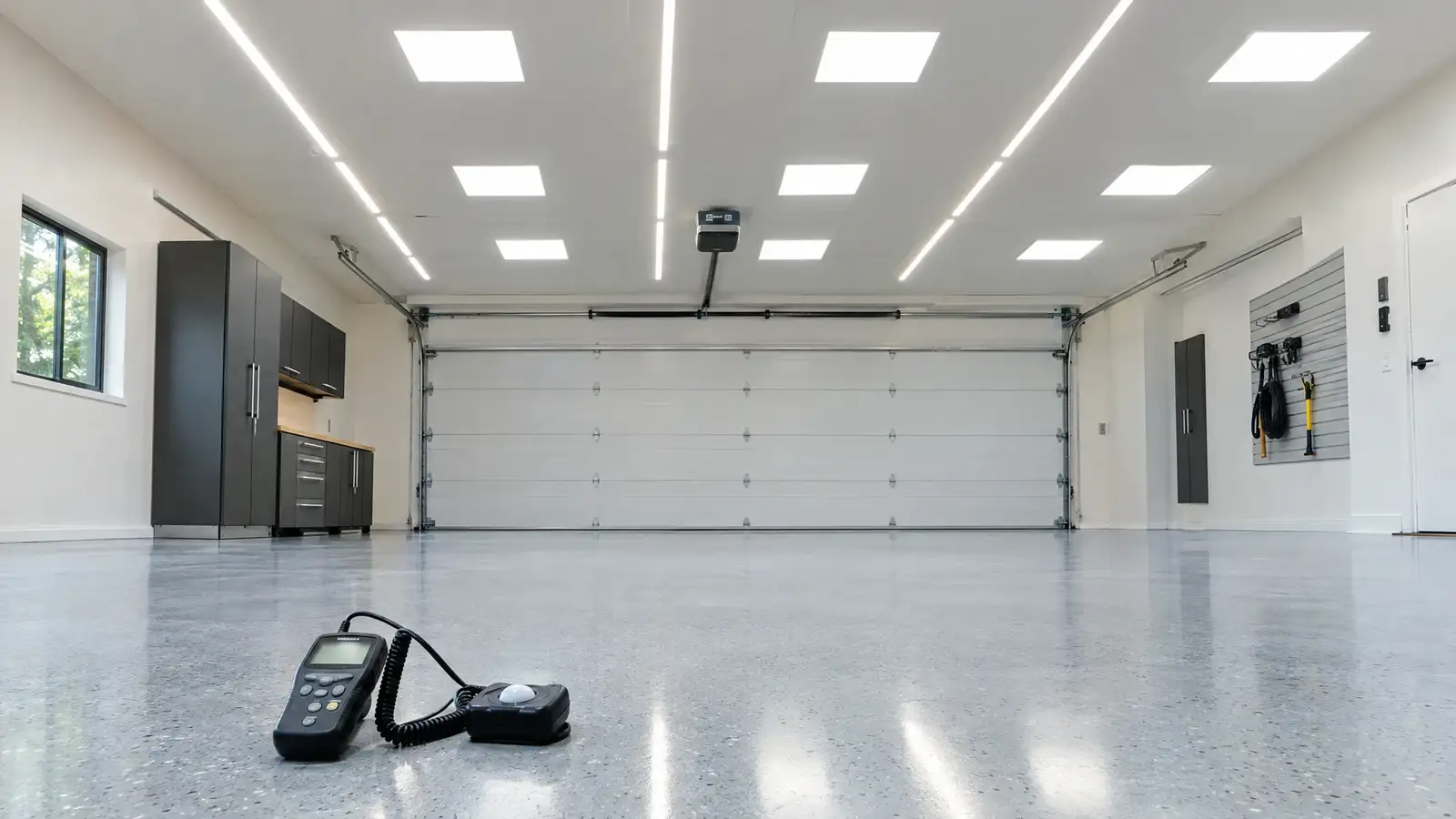
Linear LED fixtures in parallel rows give even light without hot spots. Space them so beams overlap, and run rows parallel to the long walls and across the cars. Light colored walls and ceiling help reflect light.
More fixtures at lower power often beat a few bright ones.
03 Task and accent light
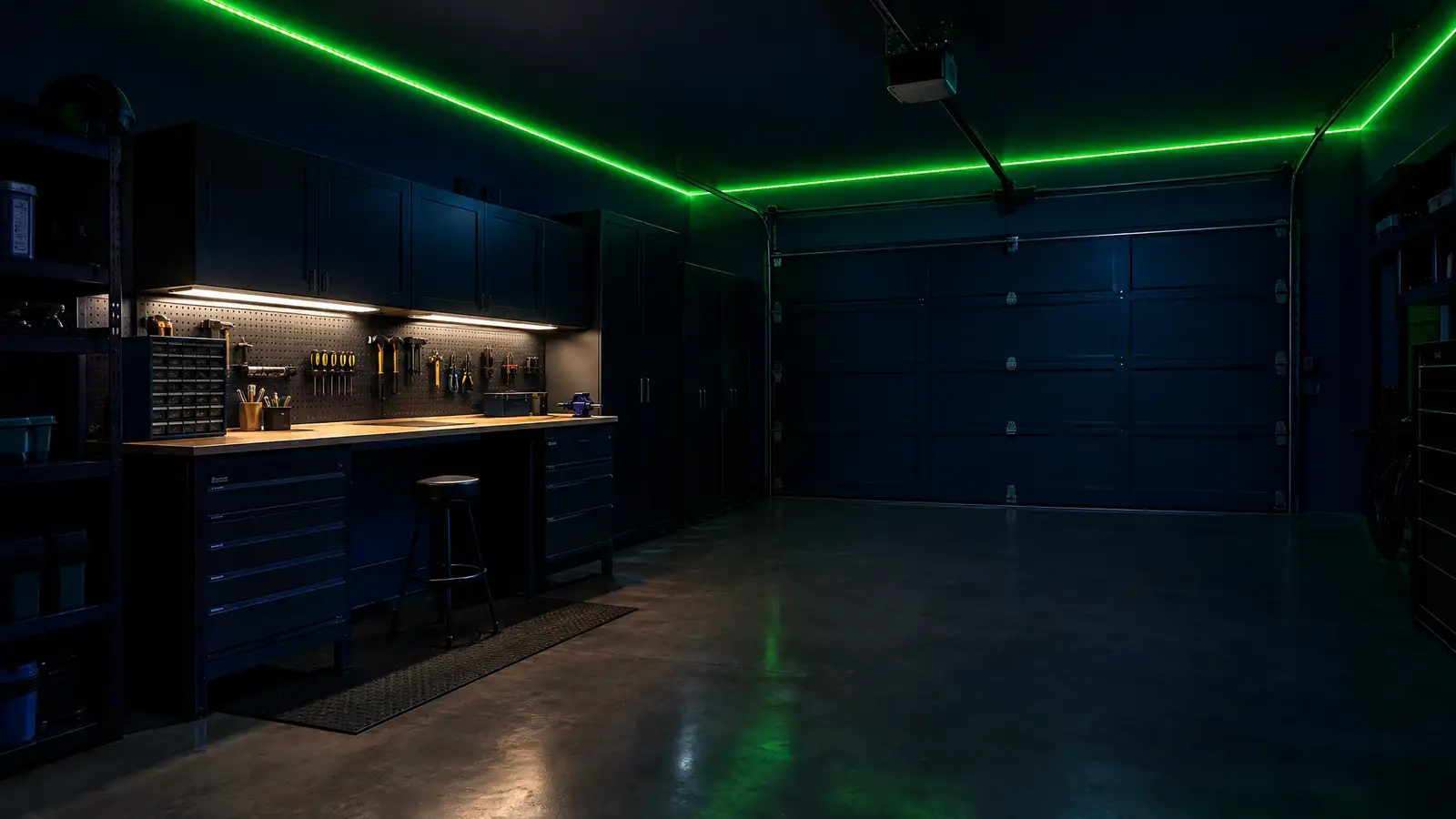
Add task light above benches and inside cabinets. Under-cabinet strips remove the shadow cast by your own body. Accent light on walls or displays adds mood. Use dimmers to move between work and relax modes.
Place light so it does not glare off glossy floors.
04 Color temperature and quality
Neutral to cool white light, often in the 4000K to 5000K range, looks clear and clean for garages. Warm light suits lounges. Look for good color rendering so paint, wires and finishes look true.
Choose fixtures rated for garage temperatures and dust.
? Common questions
How many lumens does my garage need?
It depends on use and size. The calculator on this site gives a starting target.
Is LED worth it?
Yes. LED is efficient, long lasting and available in garage-friendly formats.
Should lights be switched in groups?
Yes. Separate switches for general, task and accent light give flexibility.