01 Coatings: epoxy and polyaspartic
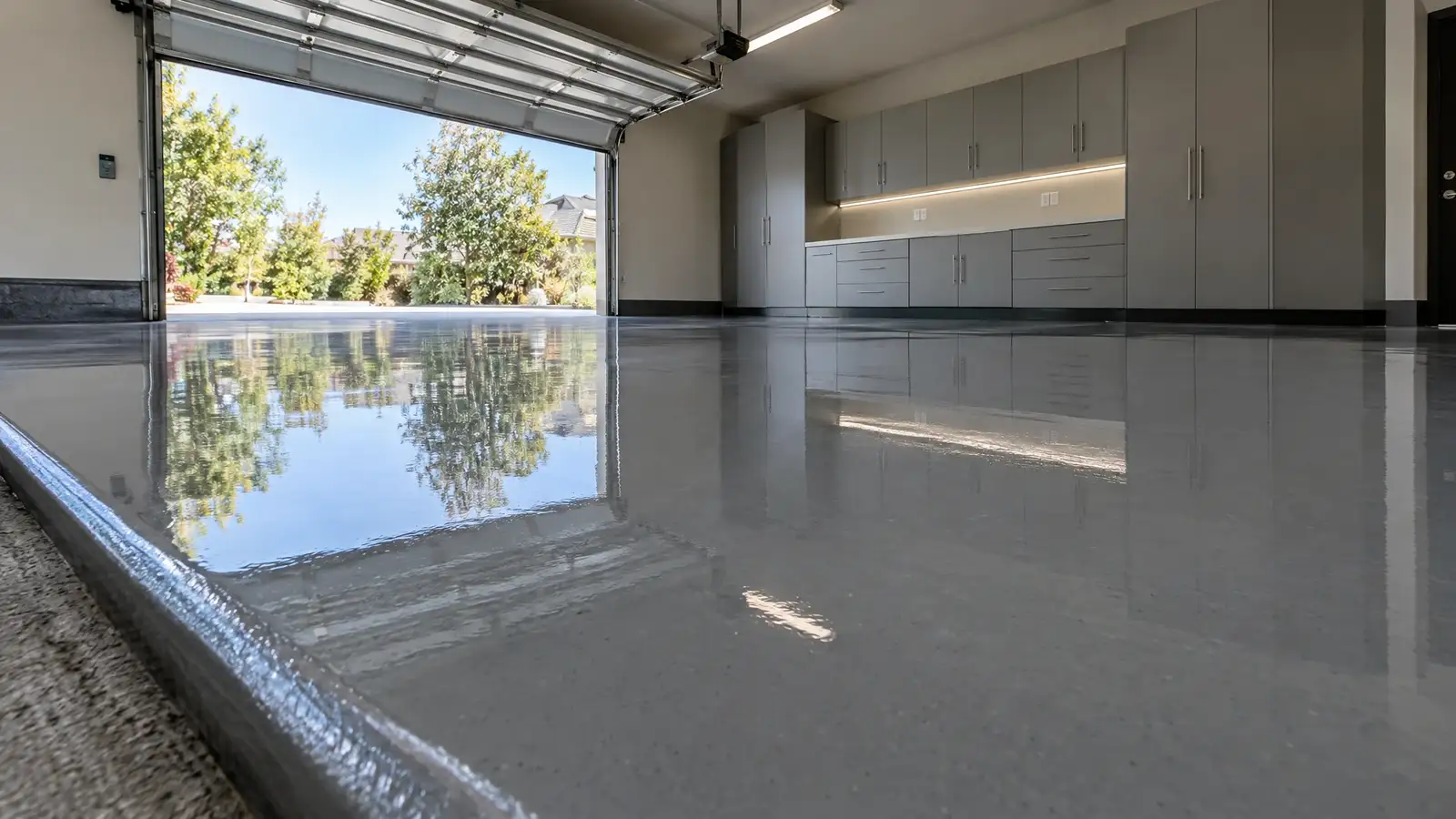
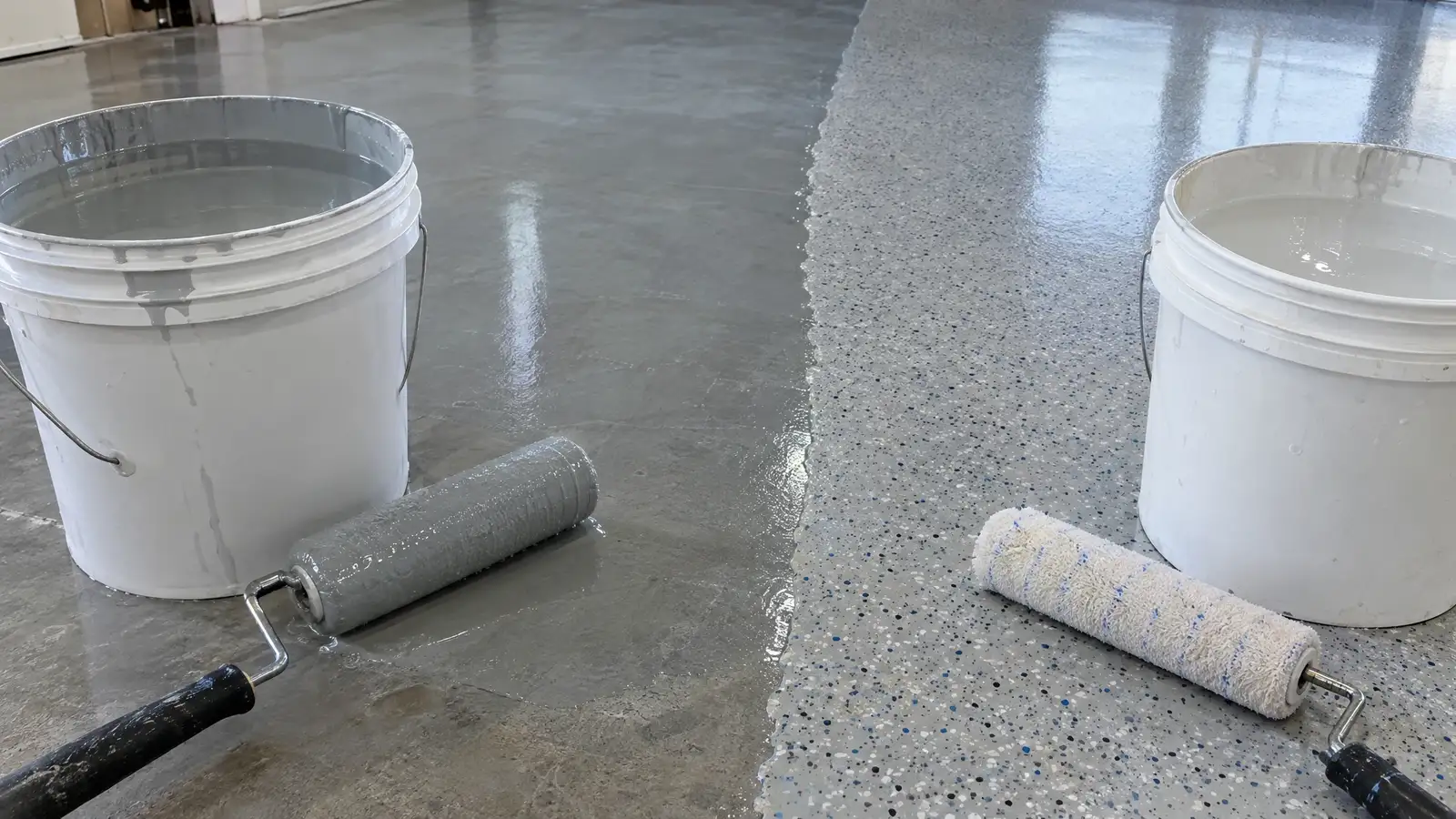
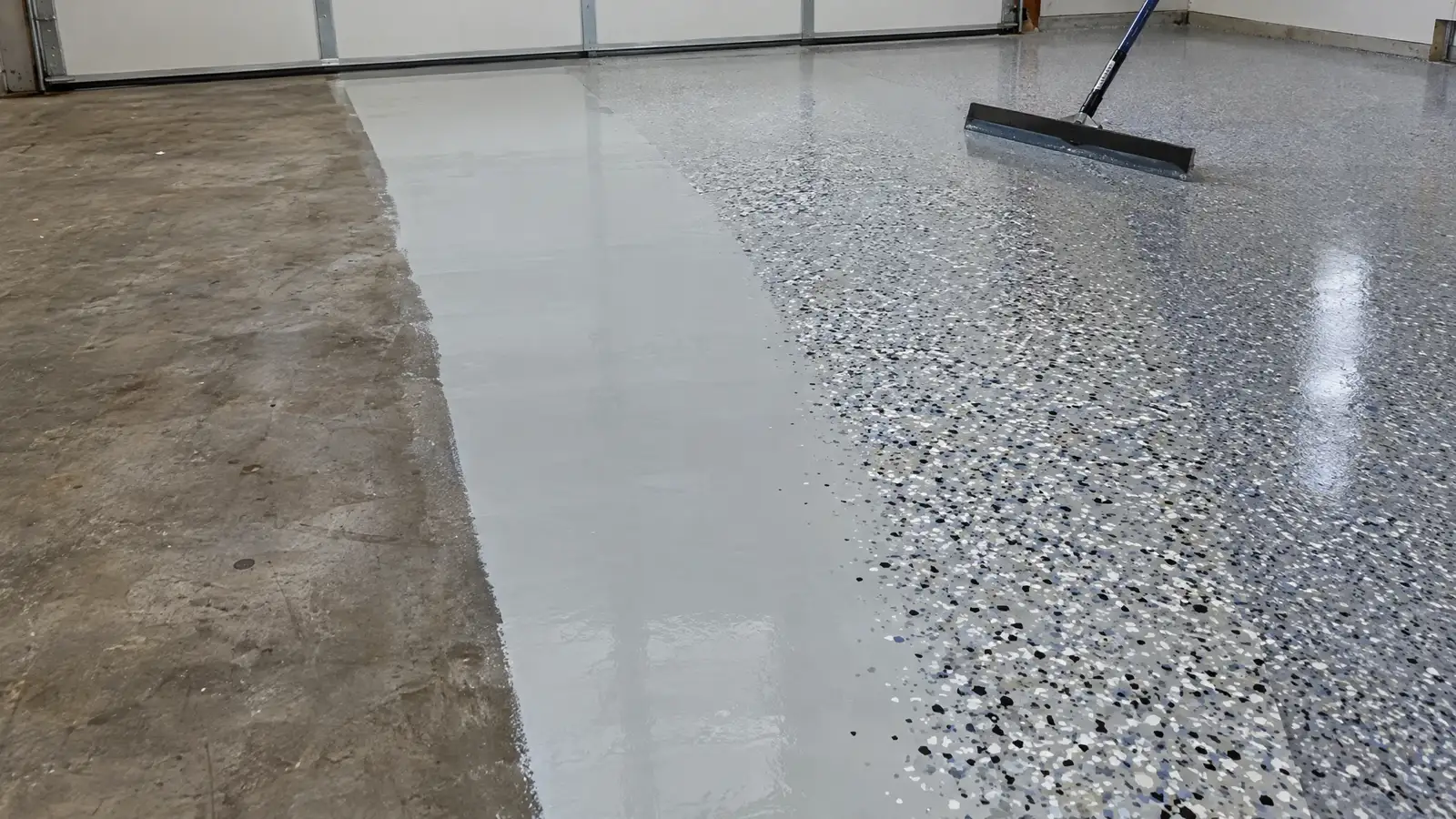
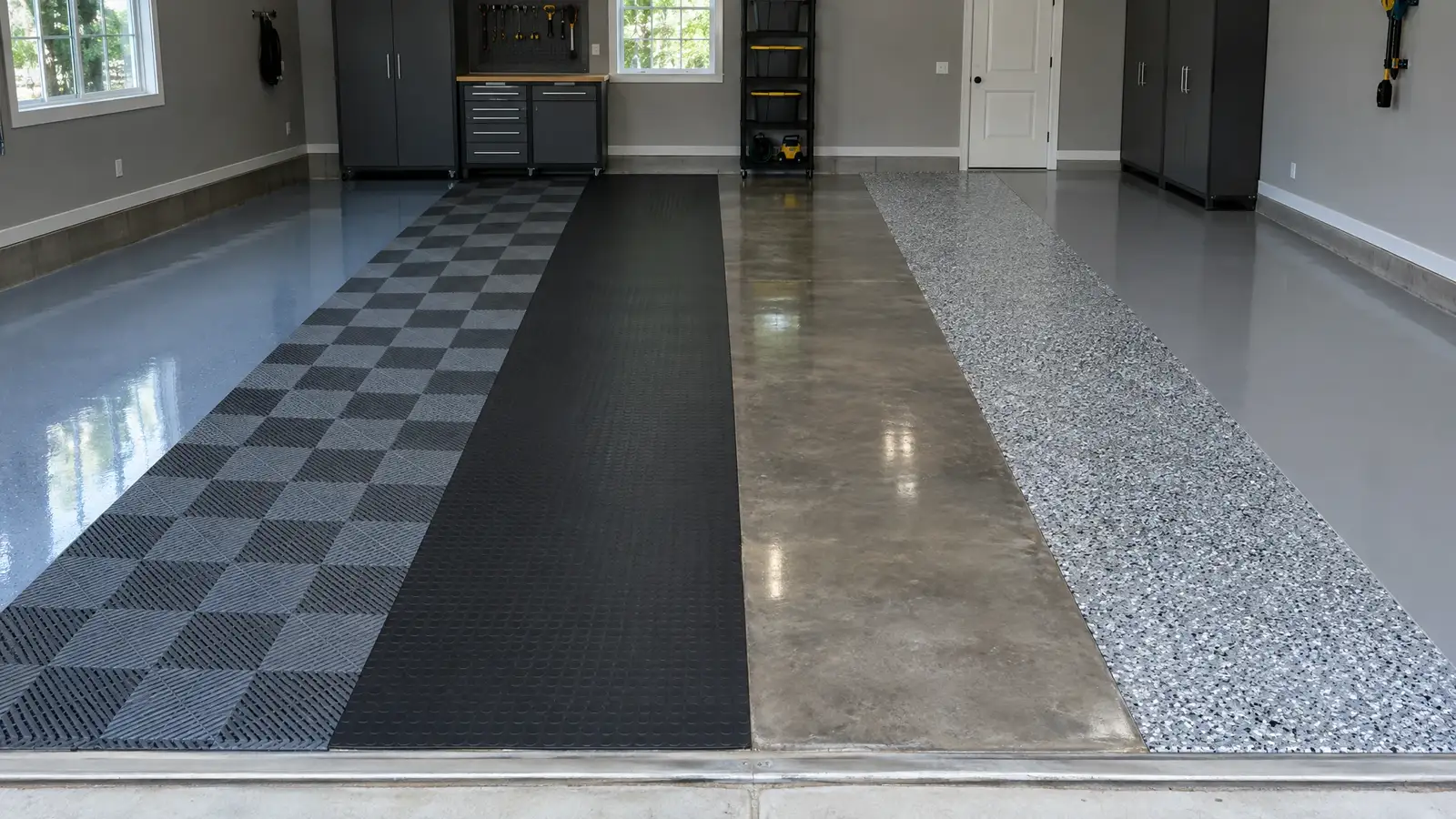
Coating systems bond to a prepared slab and form a seamless, hard surface. Epoxy is common and versatile. Polyaspartic cures faster and resists UV. Both offer solid, flake and metallic looks. Prep is the key to how long they last.
Coatings are the usual choice for a permanent, easy-clean, high-end garage floor.
02 Polished and sealed concrete
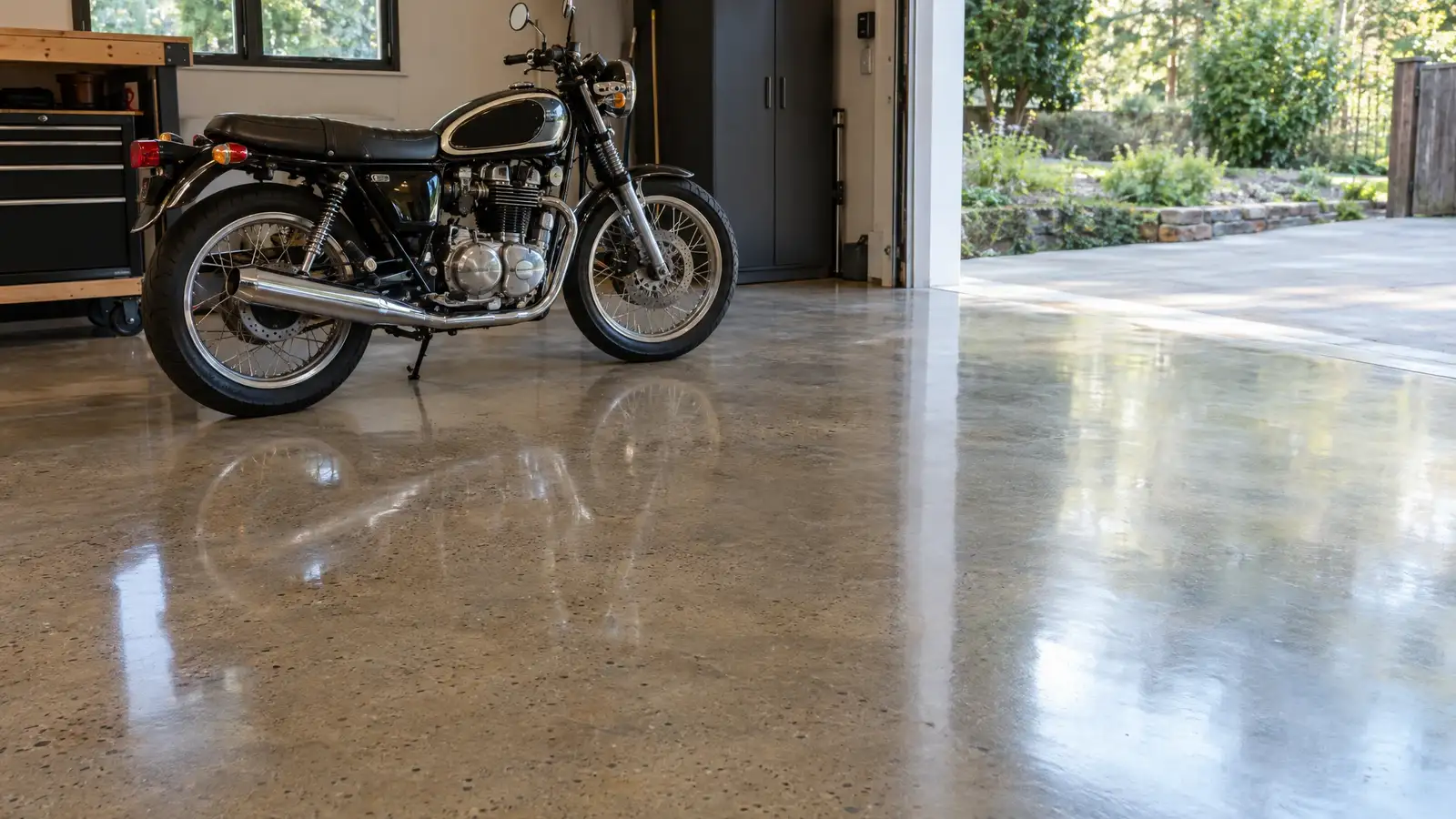
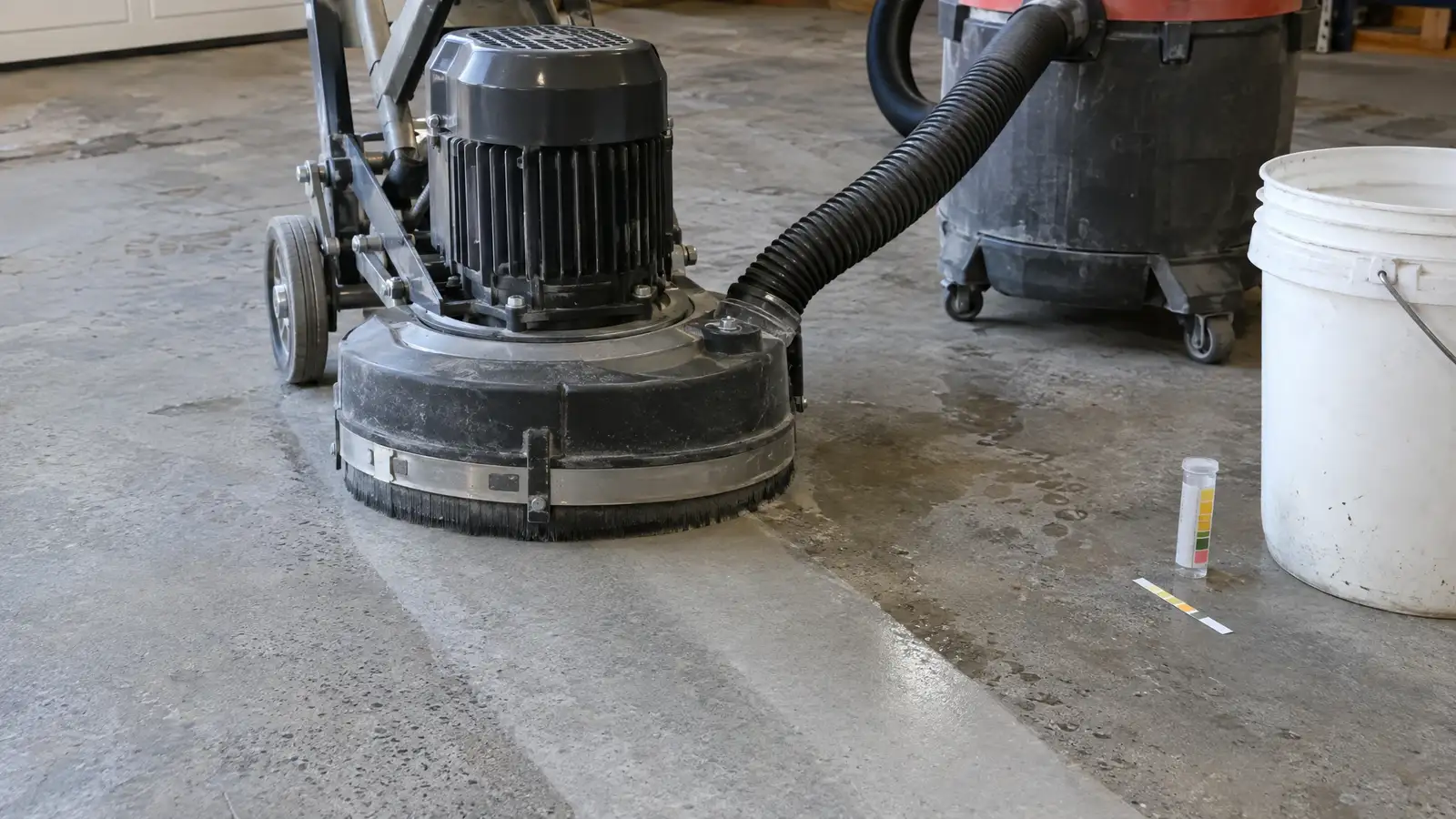
Polishing grinds and densifies the existing slab for a low-sheen finish with no film on top. It suits flat, sound slabs and an architectural look. It resists hot tires well but is less chemical-resistant than a thick coating.
It shows the slab as it is.
03 Tiles and mats
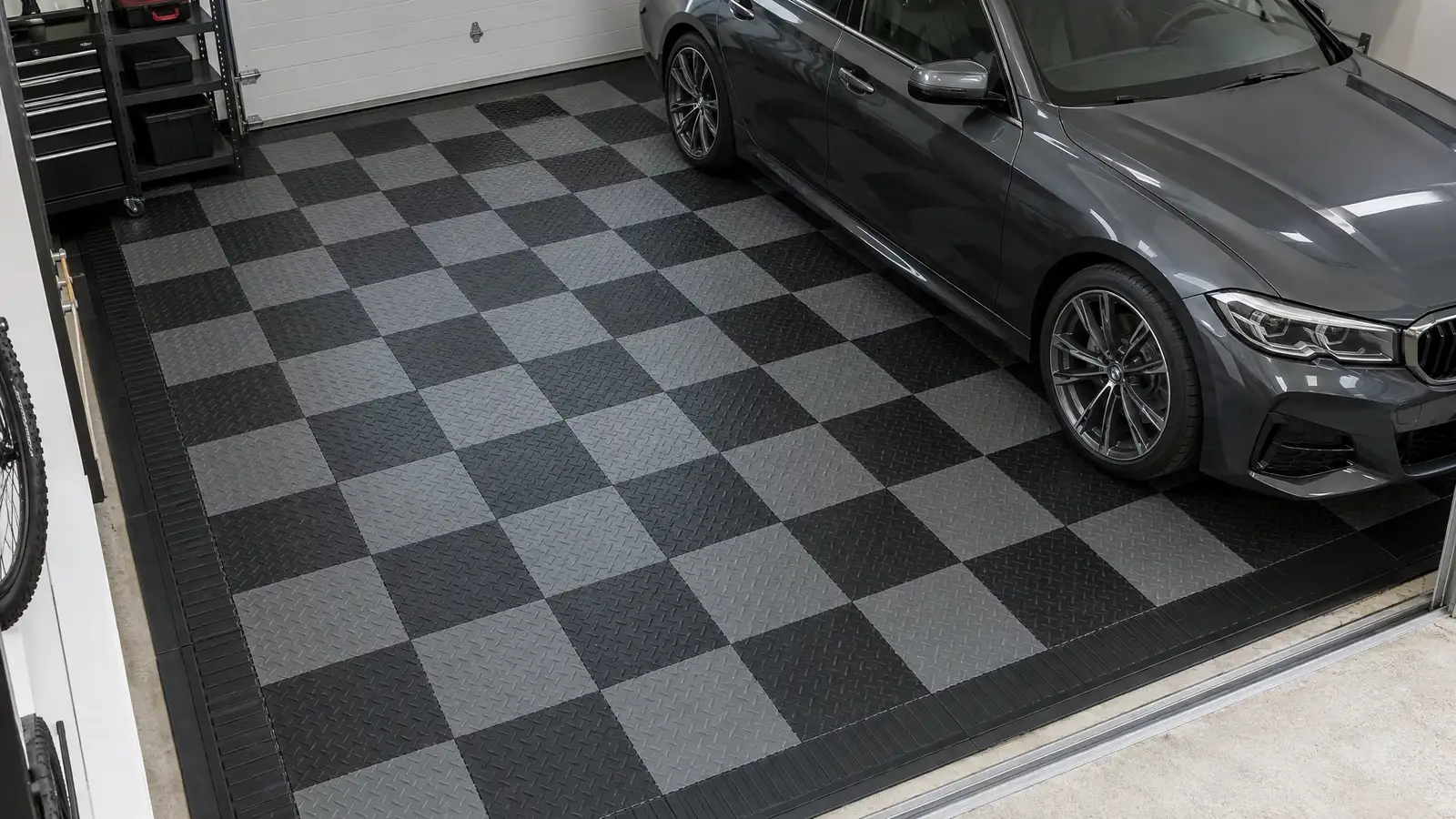
Interlocking tiles and roll-out mats float over the slab. They hide stains and cracks, need no cure time and are removable. They trap grit at the seams, and moisture can sit underneath, so test the slab first.
They are practical for rentals and quick fixes.
04 Rubber and gym floors
Rubber flooring cushions and protects the slab from dropped weights. It suits gym zones and workshops, and is not usually chosen for a whole parking floor. Check compatibility with coatings and slab moisture.
It is available in rolls and tiles.
05 How to choose
Think about use, budget, how long you will stay and the slab’s condition. Use our Floor Finder for a ranked shortlist, and compare the systems in the table on our flooring comparison page.
A moisture test and a good prep are part of every choice.
? Common questions
What is the most durable garage floor?
A professionally prepared and applied coating system, such as a flake system with a polyaspartic or urethane topcoat, is generally the most durable.
What is the cheapest option?
Roll-out mats and DIY paint tend to be lowest cost, with the tradeoff in lifespan.
Can I change my floor later?
Tiles and mats are easy to remove. Coatings can be recoated or ground off.