01 What each is
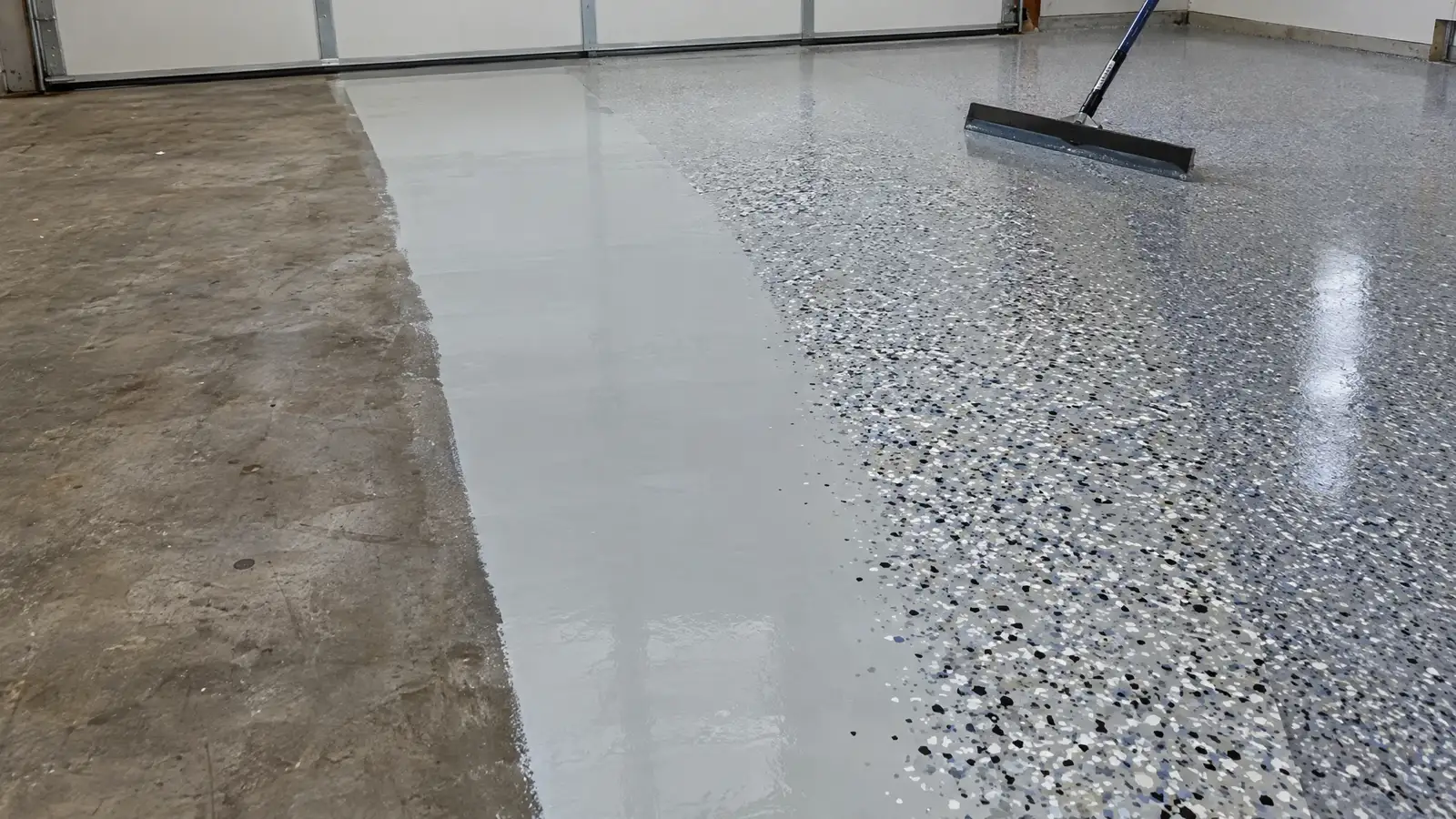
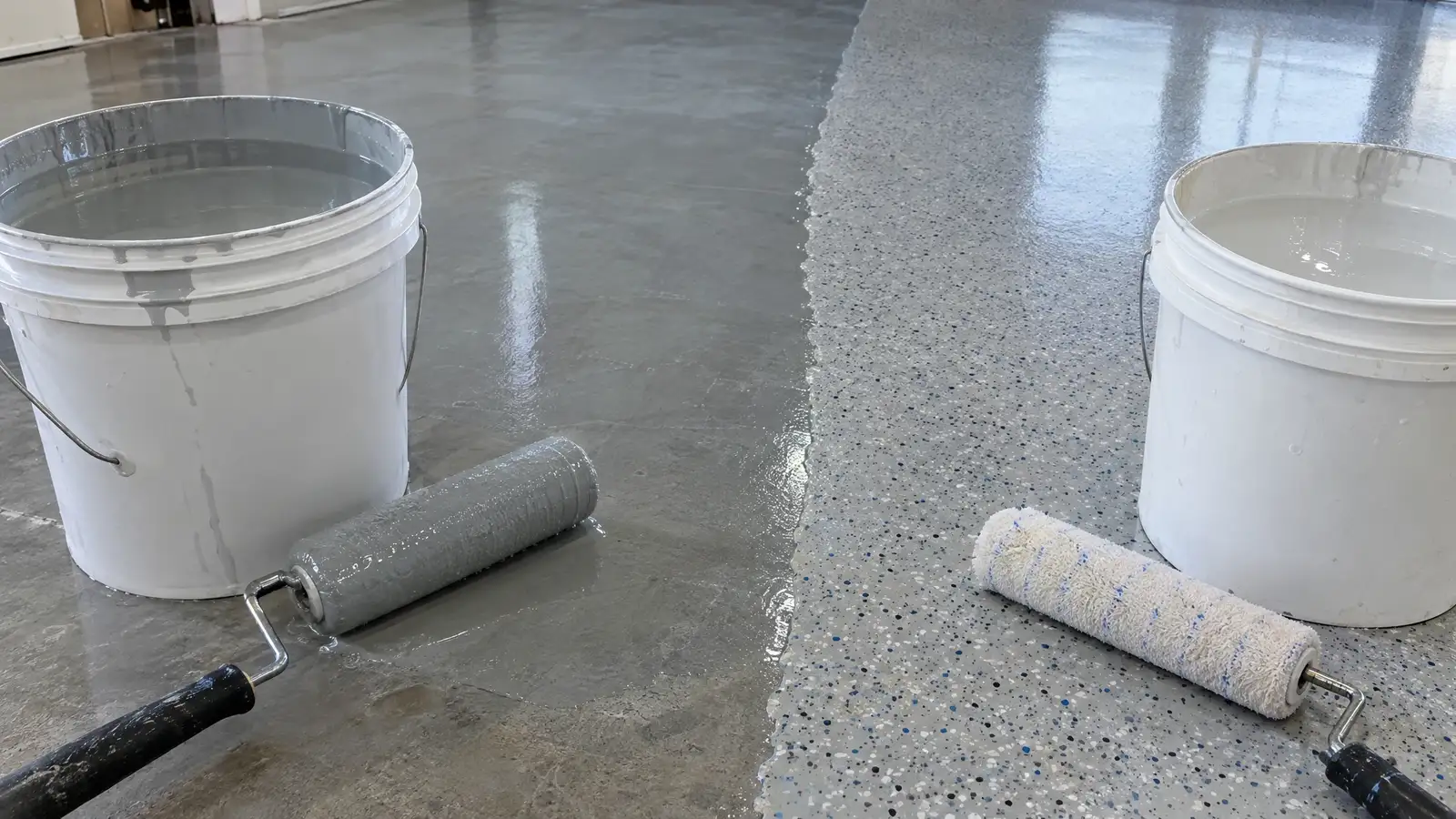
Epoxy is a two-part resin that bonds strongly to concrete and builds thickness. Polyaspartic is a related fast-curing polyurea chemistry known for UV stability and gloss. Both are applied in layers on a prepared slab.
They are often combined in one system.
02 Cure and downtime
Polyaspartic usually cures much faster, which can shorten the time the garage is out of use. Traditional epoxy needs longer before cars can return. Exact times depend on the product, thickness and temperature.
Ask for the manufacturer’s foot and vehicle traffic times.
03 UV and gloss
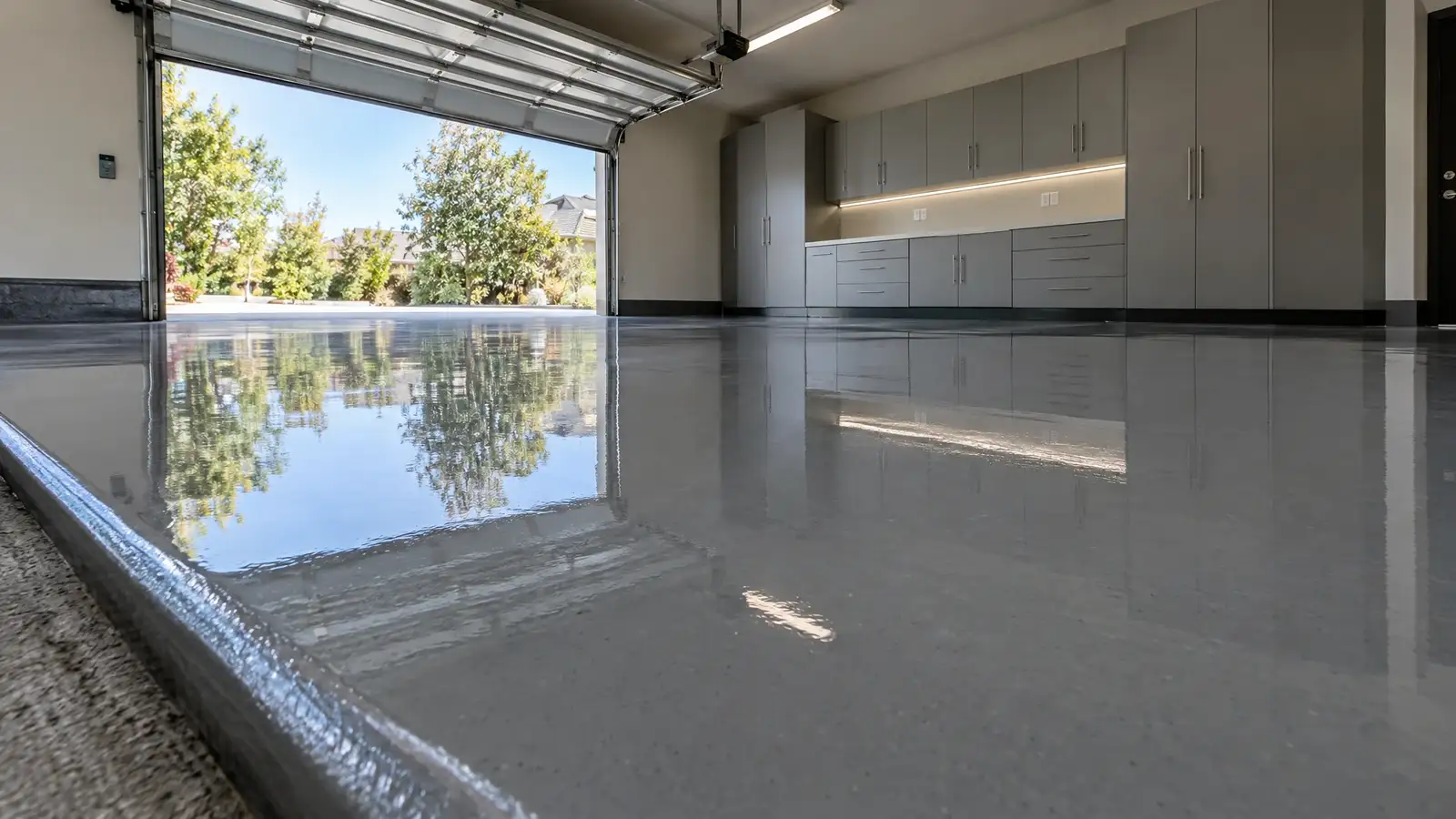
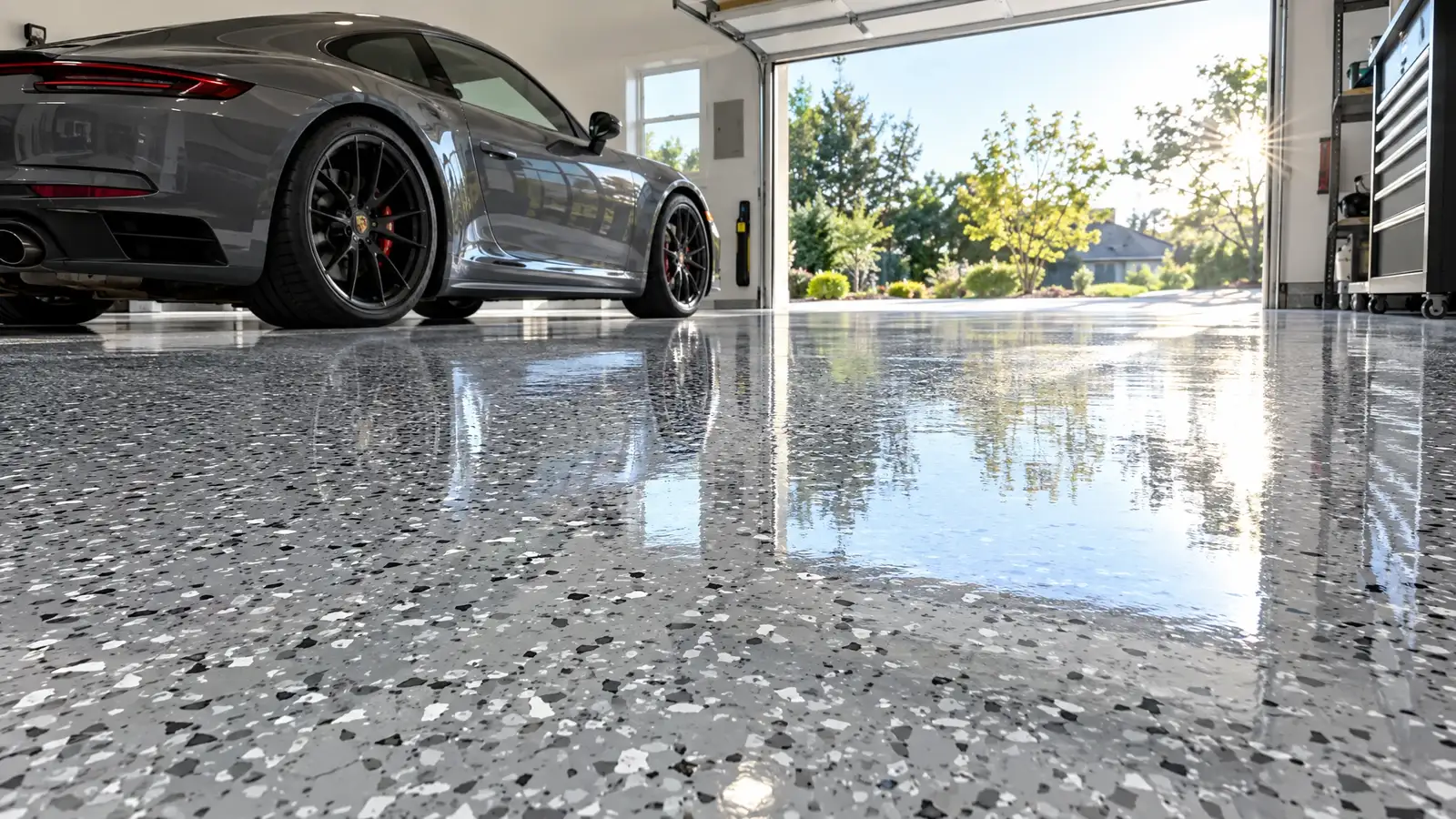
Epoxy can yellow or chalk under sunlight over time, so it is typically topcoated. Polyaspartic stays clear in UV and gives a deep, wet-look gloss. In a sunlit garage with the door open often, this is a real advantage.
Both can be made matte for a softer look.
04 Application and cost
Epoxy is more forgiving to apply and often costs less in materials. Polyaspartic has a short working time and demands skilled installers, and its materials usually cost more. The hybrid gives many of the benefits for a balanced cost.
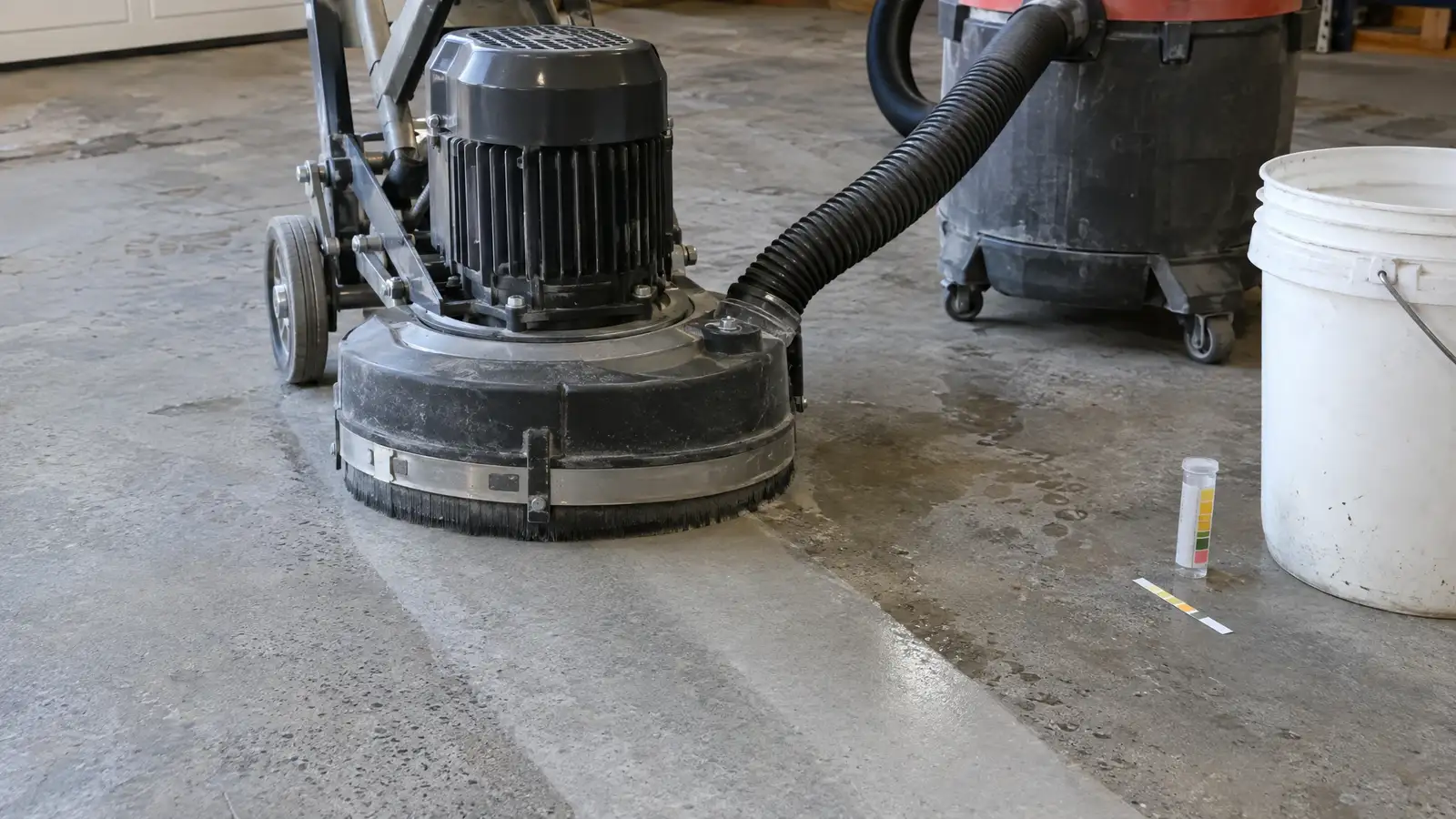
Prep and moisture matter equally to both.
? Common questions
Which lasts longer?
Longevity depends more on prep, moisture and traffic than on chemistry. A well-applied system of either can last well.
Is polyaspartic worth the extra cost?
For sunlit garages, quick turnaround or high gloss, many owners say yes.
Can I use epoxy under polyaspartic?
Yes. An epoxy base with a polyaspartic topcoat is a common hybrid system.