01 Why prep matters
A coating bonds to the surface profile it can grip. Smooth, sealed or contaminated concrete refuses the bond, and the coating can peel. The preparation step is as important as the coating itself.
Poor prep is the most common reason garage coatings fail.
02 Diamond grinding
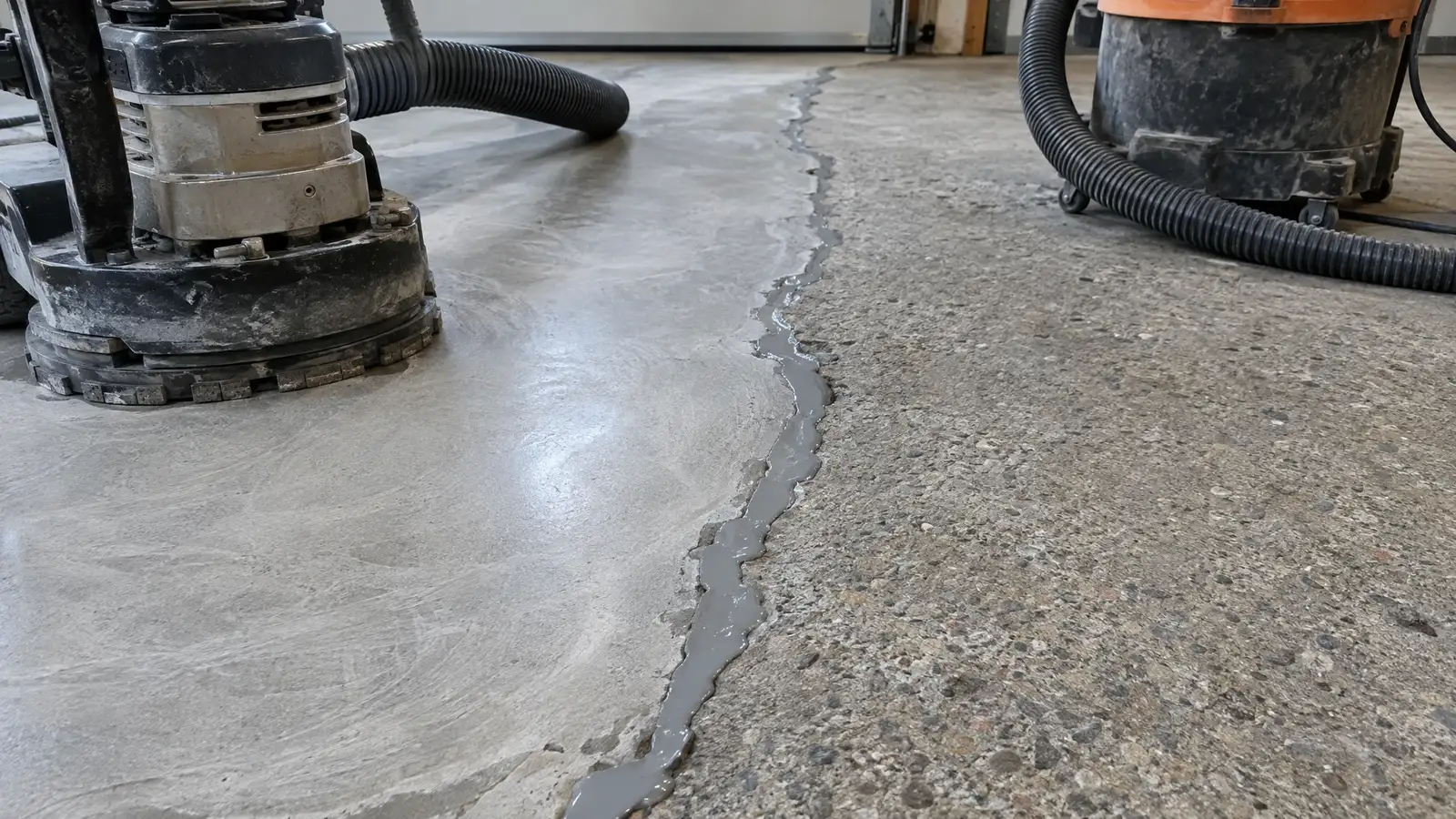
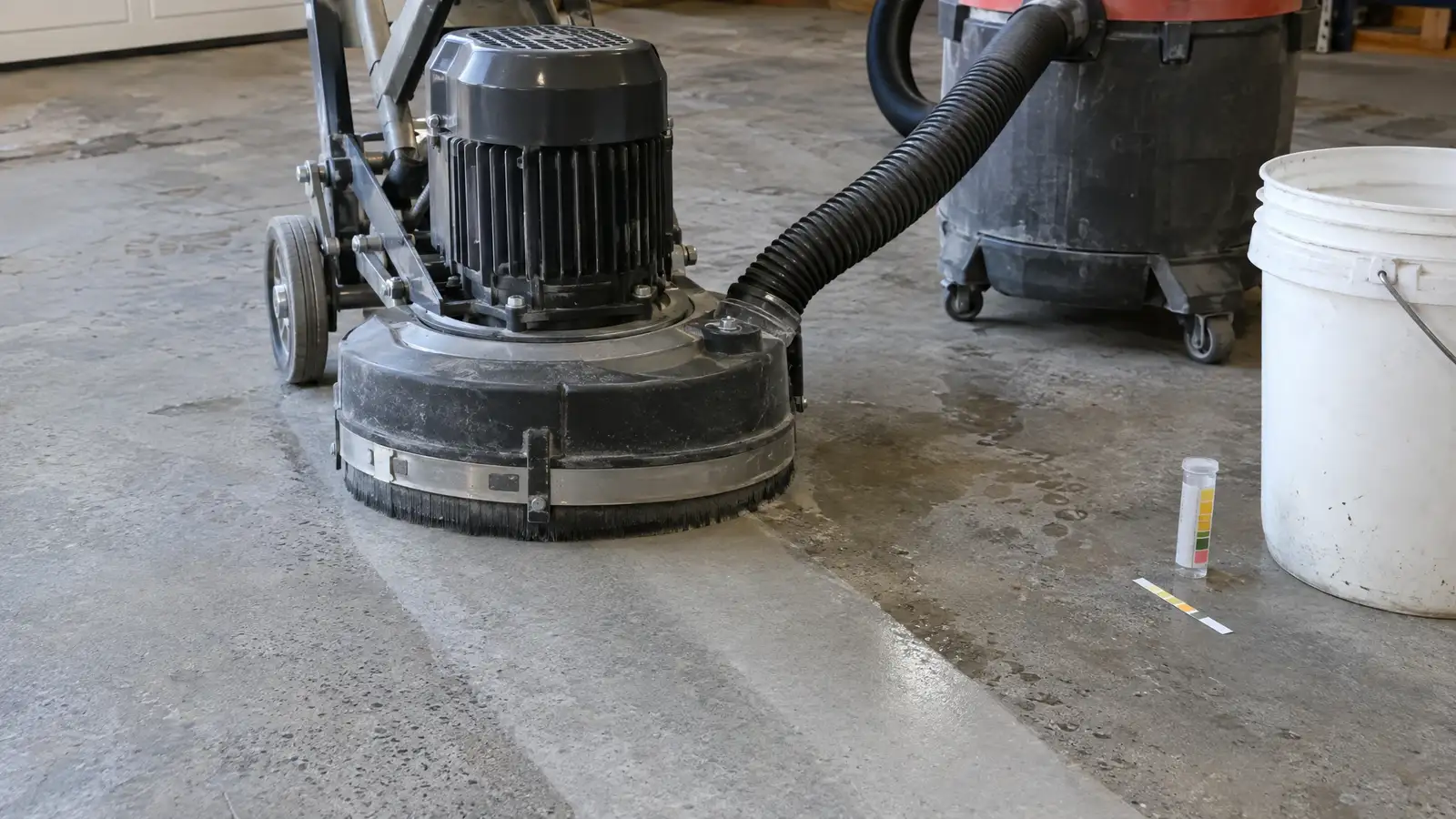
A diamond grinder removes the weak top layer, old coatings and contaminants, and leaves a uniform, open surface. A shrouded grinder with a vacuum controls dust. It also levels small lips and removes laitance.
It gives the most consistent profile, which is why professionals use it.
03 Acid etching
Acid etching uses a mild acid to roughen the surface. It is common in DIY kits. It can leave residues, depends on thorough rinsing and gives a less uniform profile. It does not remove oil or old coatings.
It can be adequate in some light-duty cases with careful work.
04 Check readiness
A water-drop test shows if the surface absorbs water, which is a sign it is open. A visual check looks for sheen, contamination or dust. A moisture test shows if the slab is dry enough.
Professionals also check the surface profile against reference standards.
? Common questions
Is grinding worth the extra cost?
For a durable floor, yes. It gives a better and more consistent bond than etching.
Can I etch and coat myself?
Many do, with mixed results. Careful rinsing and a dry slab are essential.
How do I know the floor is clean?
It should be dust-free, dry and free of oil, with a rough texture like fine sandpaper.