01 Powder-coated steel
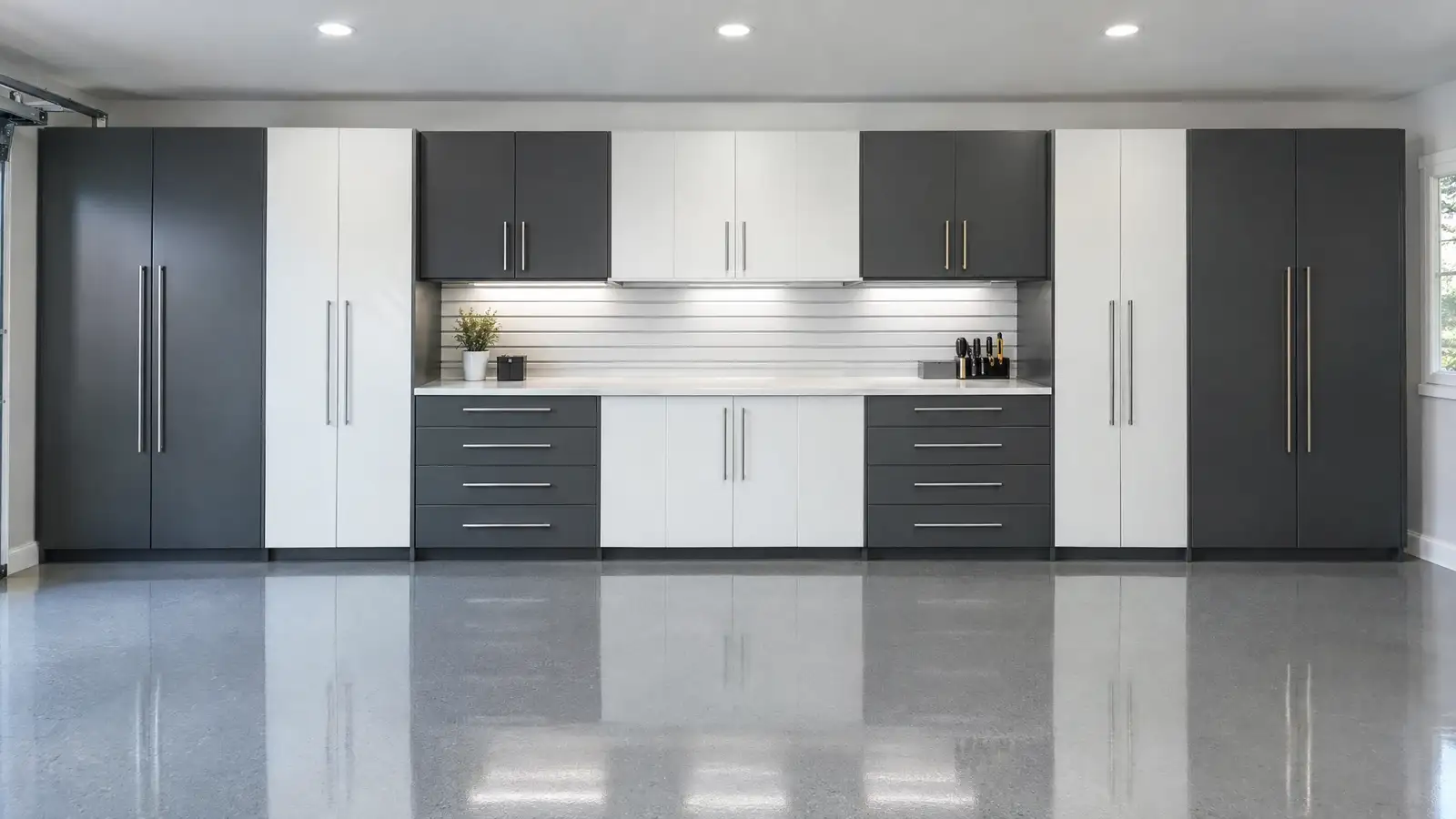
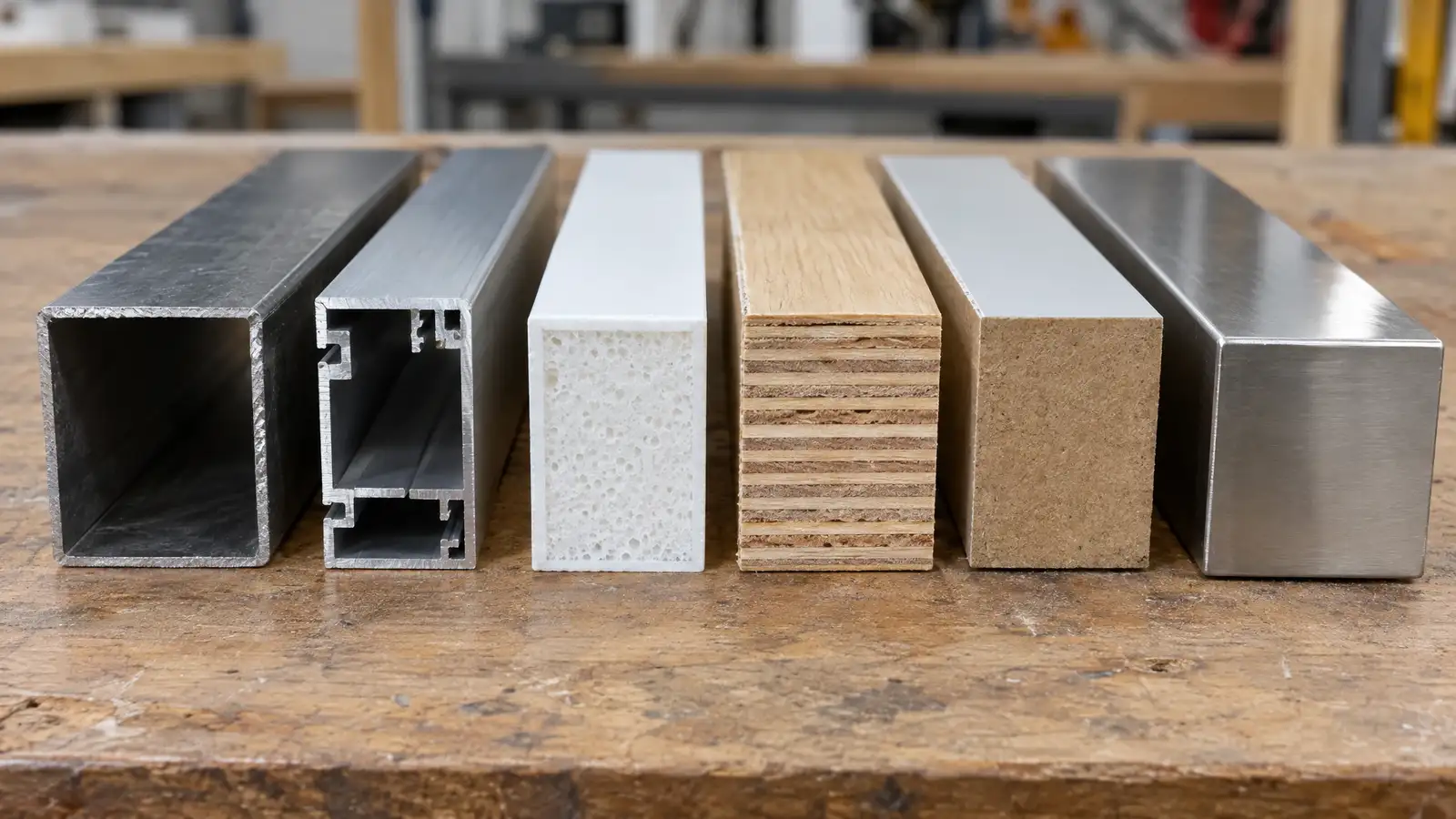
Steel cabinets are strong and rigid and take a heavy load. A powder coat finish resists scratches and comes in many colors. The weak point is any exposed cut edge or scratch, which can rust if the garage is damp.
They are a good all-round choice for tools and heavy items, especially in dry or moderate climates.
02 Aluminum
Aluminum is lighter than steel and does not rust. It is often used in framed doors and in coastal or humid garages. It dents more easily than steel, so thickness and design matter.
The look is clean and modern, and it pairs well with glass or frosted doors.
03 Polymer and PVC
Polymer cabinets are fully moisture-proof, never rust and wipe clean. They are lighter and quieter to use, though the weight rating is usually lower than steel. Look for rigid, thick panels with reinforced shelves.
They are a strong fit for humid garages, pet areas and wet zones.
04 Thermofoil, melamine and plywood
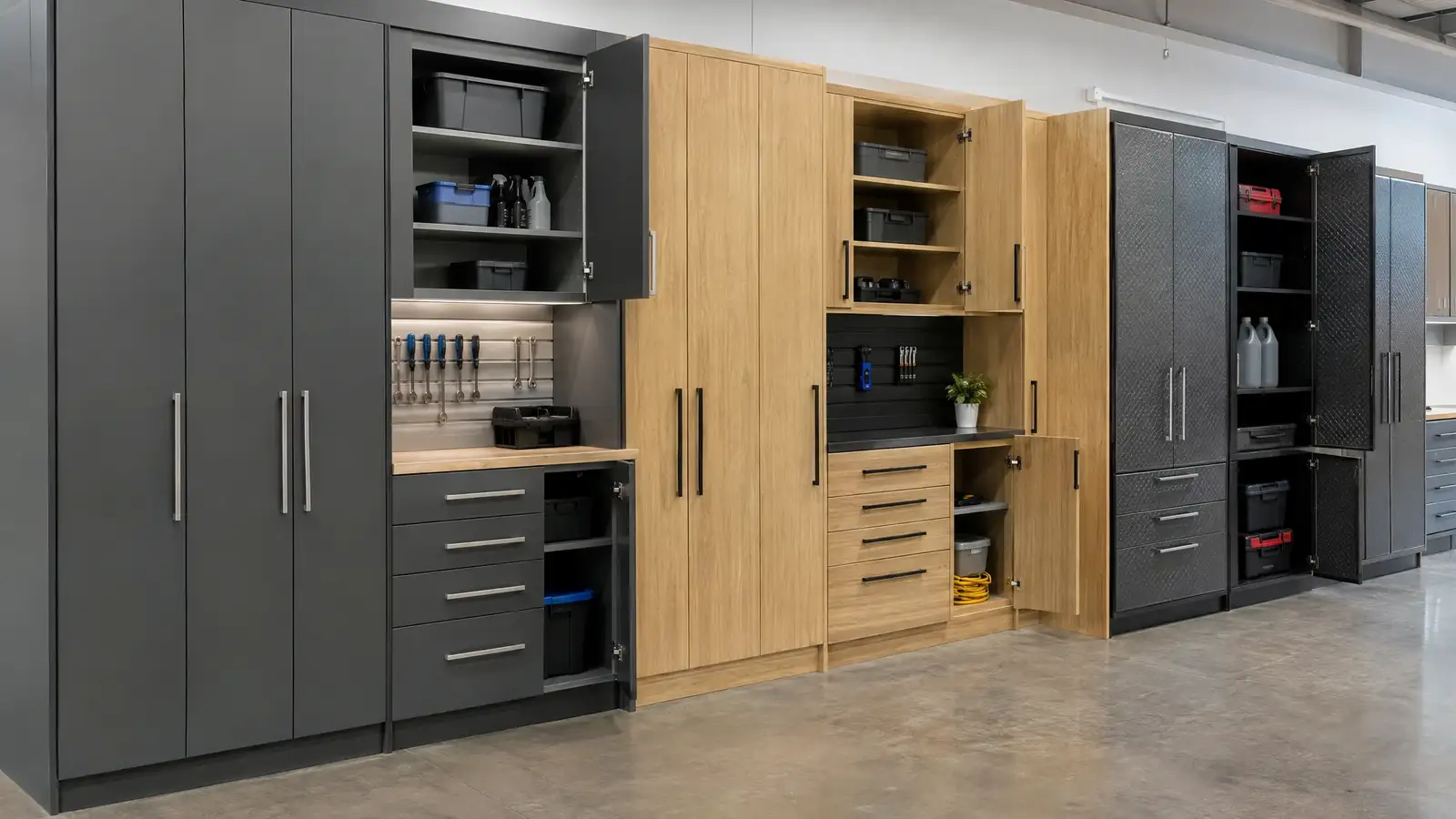
Thermofoil and melamine over MDF look good but can swell if water reaches the core. Plywood boxes with durable finishes hold screws well and look warm. Edge sealing is the key to lasting in a garage.
These are most suitable in dry, climate-controlled garages.
05 Stainless steel
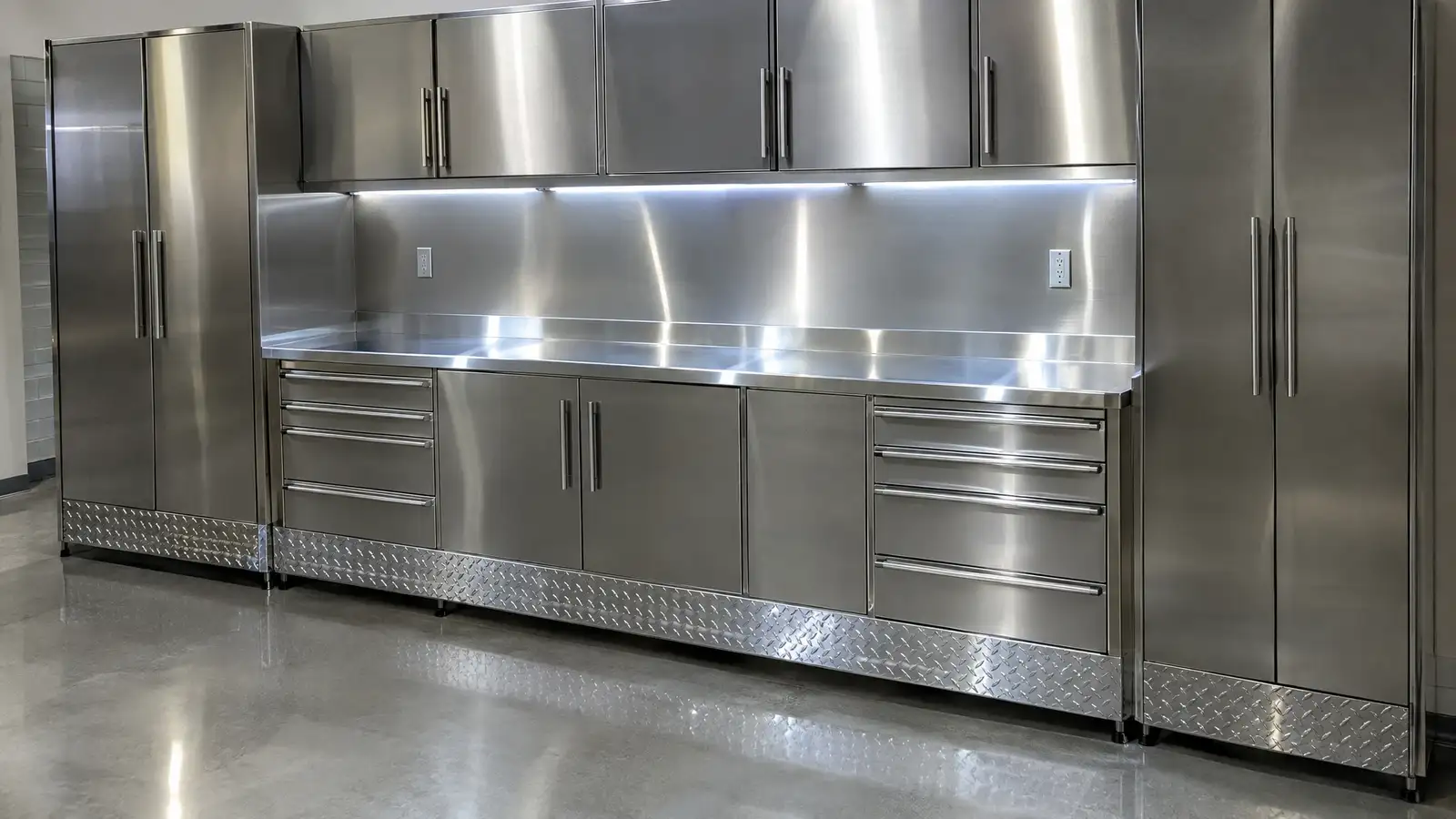
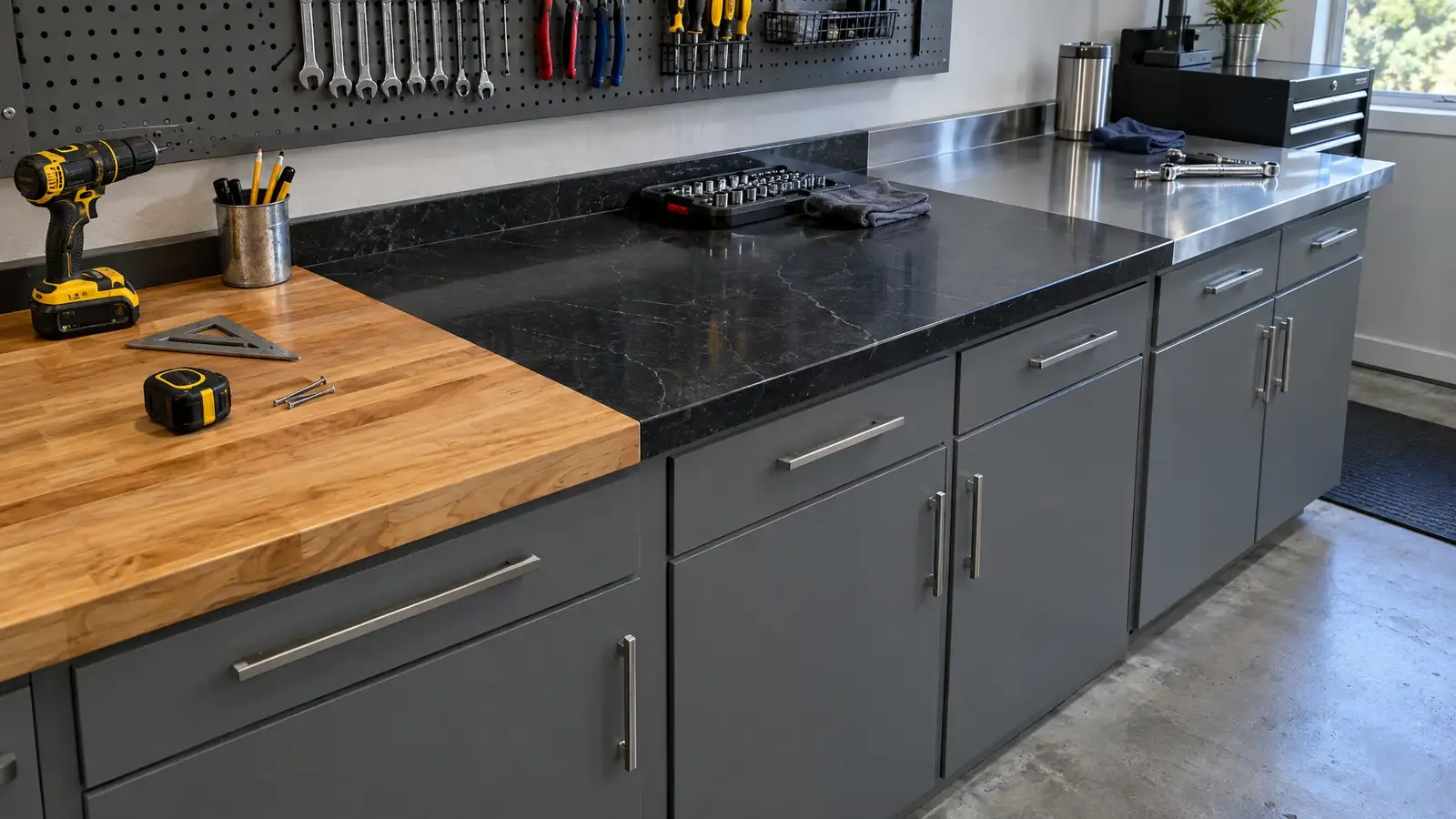
Stainless is the premium option. It resists rust and chemicals and looks professional. It costs more and can show fingerprints. Many owners use stainless at the bench and another material elsewhere.
Compare the options in the table on our cabinet material comparison page.
? Common questions
Which material is best for a humid garage?
Polymer, aluminum and stainless handle moisture best. Steel with a quality coat can work if edges are sealed.
Which holds the most weight?
Steel and stainless generally carry the most, but ratings depend on the design, so check the stated load for each shelf and drawer.
Does material affect the finish options?
Powder coat and laminate offer wide color ranges. Stainless is limited to metal finishes.