01 Start with the envelope
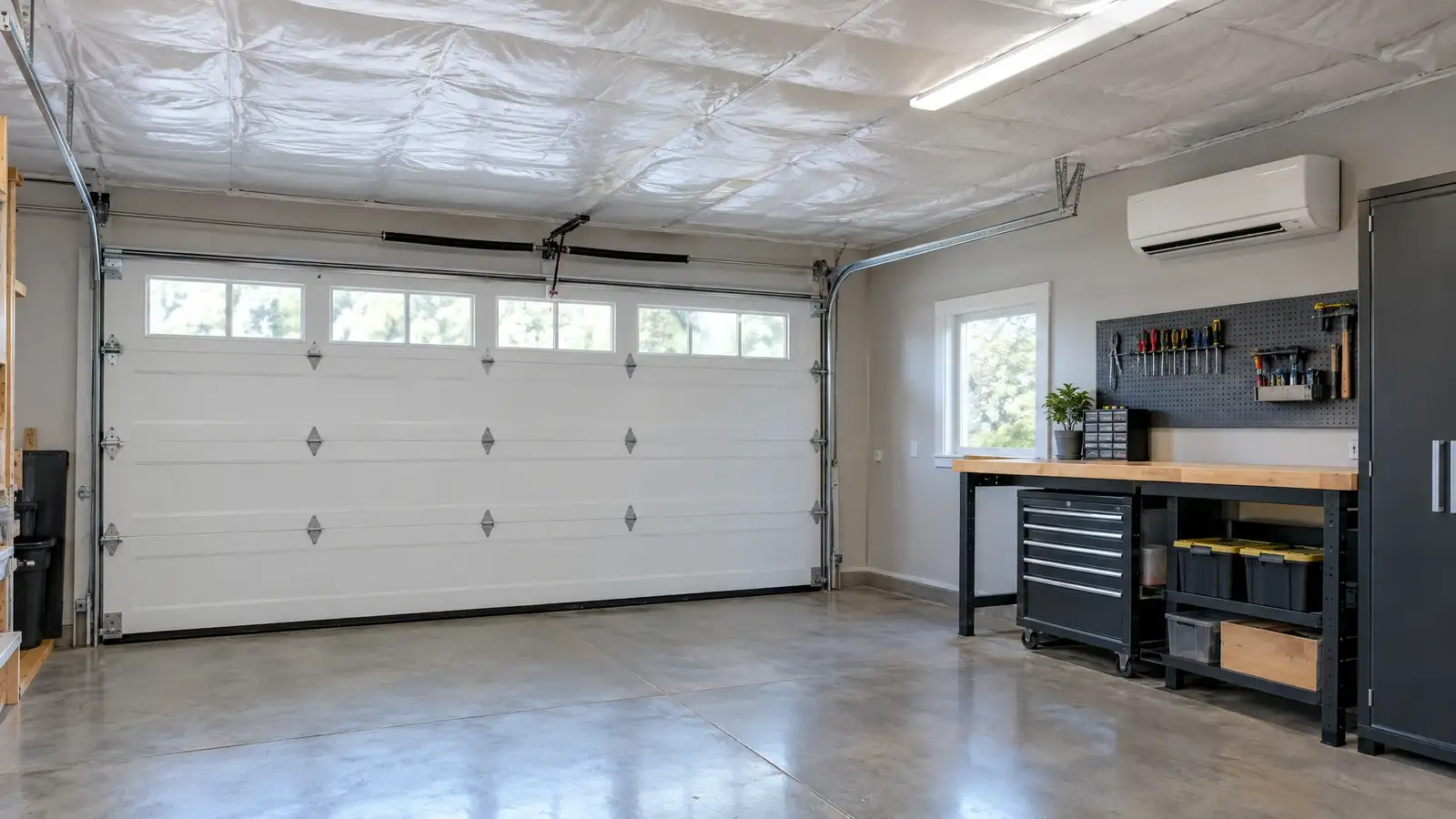
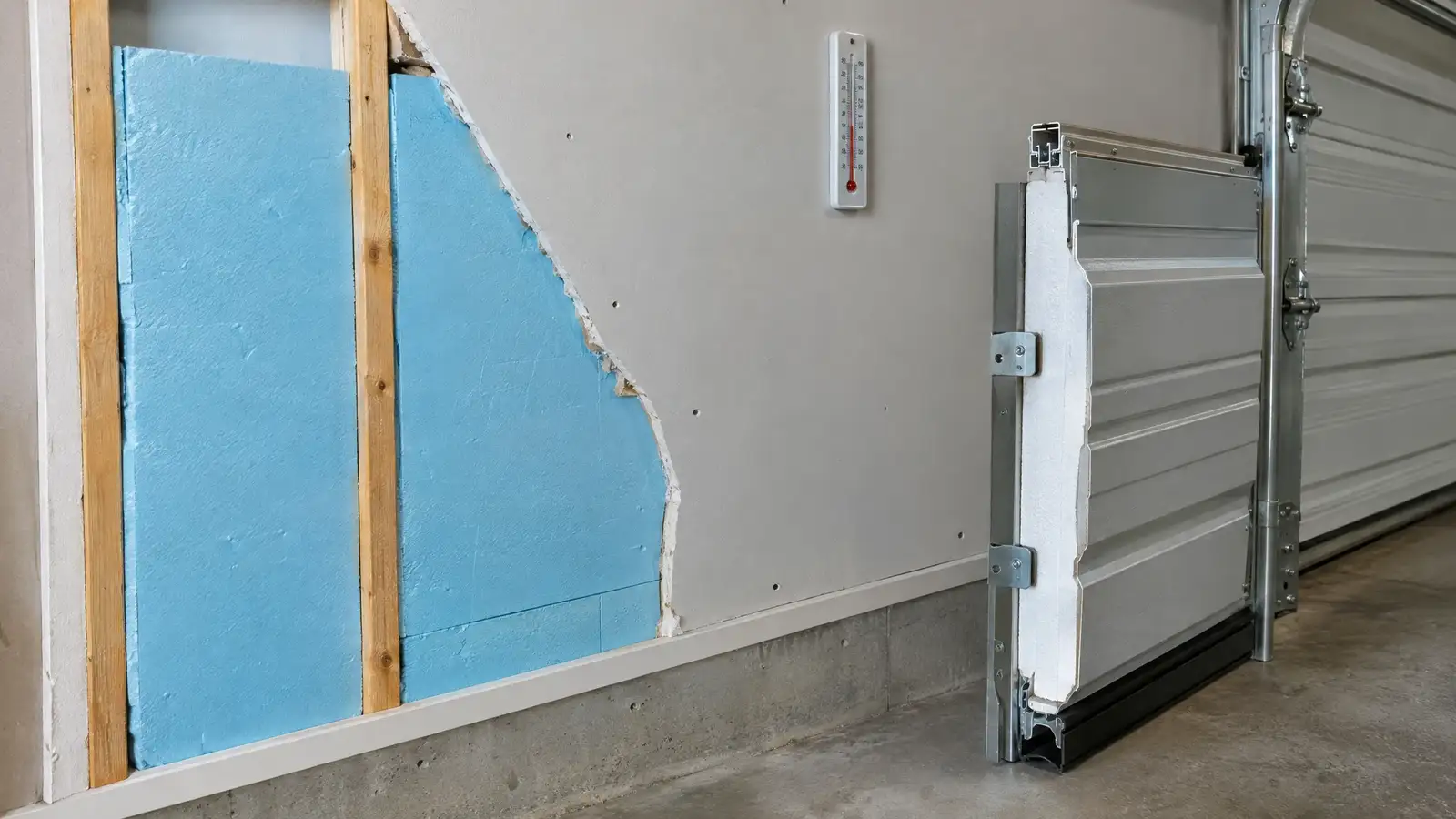
Insulate the walls and ceiling, especially the ceiling under any room above. Replace a leaky door with an insulated model and seal gaps at the threshold and sides. Air sealing often gives more comfort than adding more insulation.
A sealed, insulated garage holds temperature much better.
02 Insulation types
Fiberglass batts are low cost and common. Rigid foam board gives higher R-value per inch and resists moisture. Spray foam seals and insulates in one step but costs more. Choose by cavity depth, budget and moisture.
Fire-separation walls need to keep their rating.
03 Heating and cooling
A ductless mini-split heats and cools efficiently in one unit. Electric garage heaters are simple for occasional use. Fuel-burning heaters need ventilation and clearances. Fans and ventilation help in mild climates.
Match the equipment to how often you use the space.
04 Humidity
Humid garages rust tools, swell materials and grow mold. A dehumidifier, good ventilation and sealed floors help. Insulation reduces condensation by keeping surfaces warmer.
A moisture-tolerant floor helps in damp climates.
? Common questions
What is the best way to heat a garage?
A ductless mini-split is popular, and electric heaters suit occasional use. Always follow safety rules.
Is insulating the door worth it?
Often, especially in attached garages. The seals matter as much as the foam.
Do I need ventilation?
Yes, particularly with cars, chemicals or fuel-burning heaters.