01 Good cabinet contents
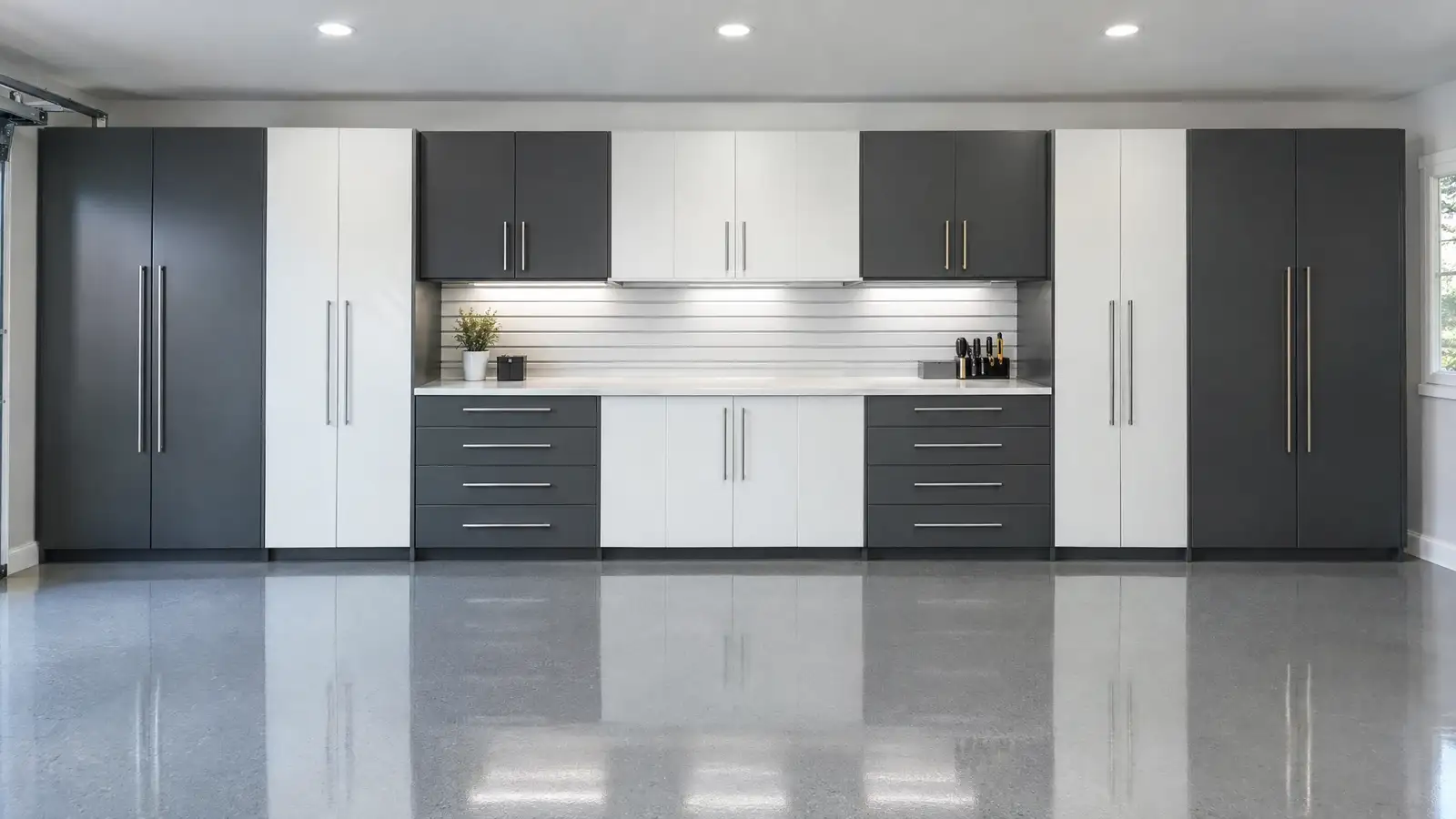
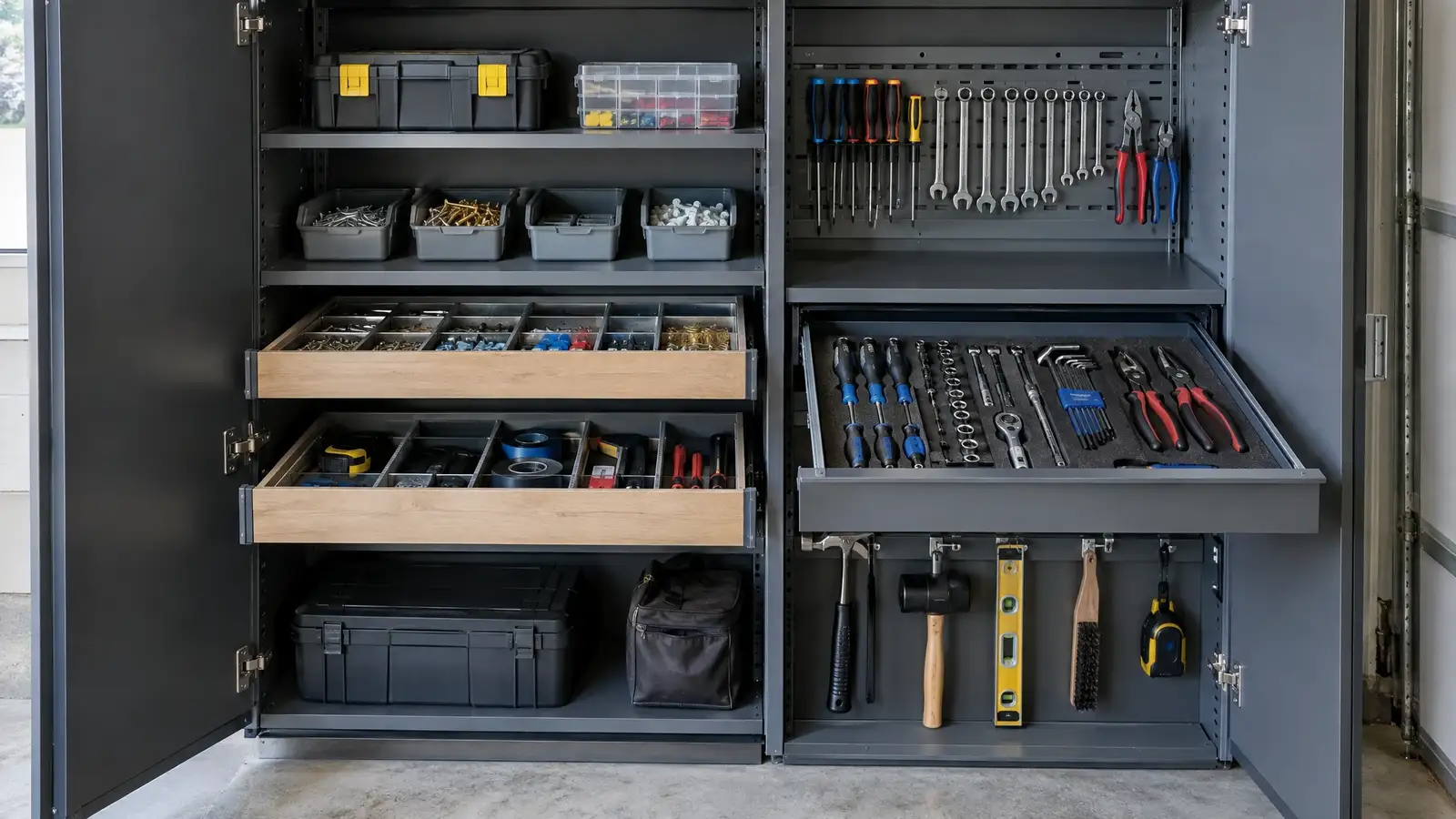
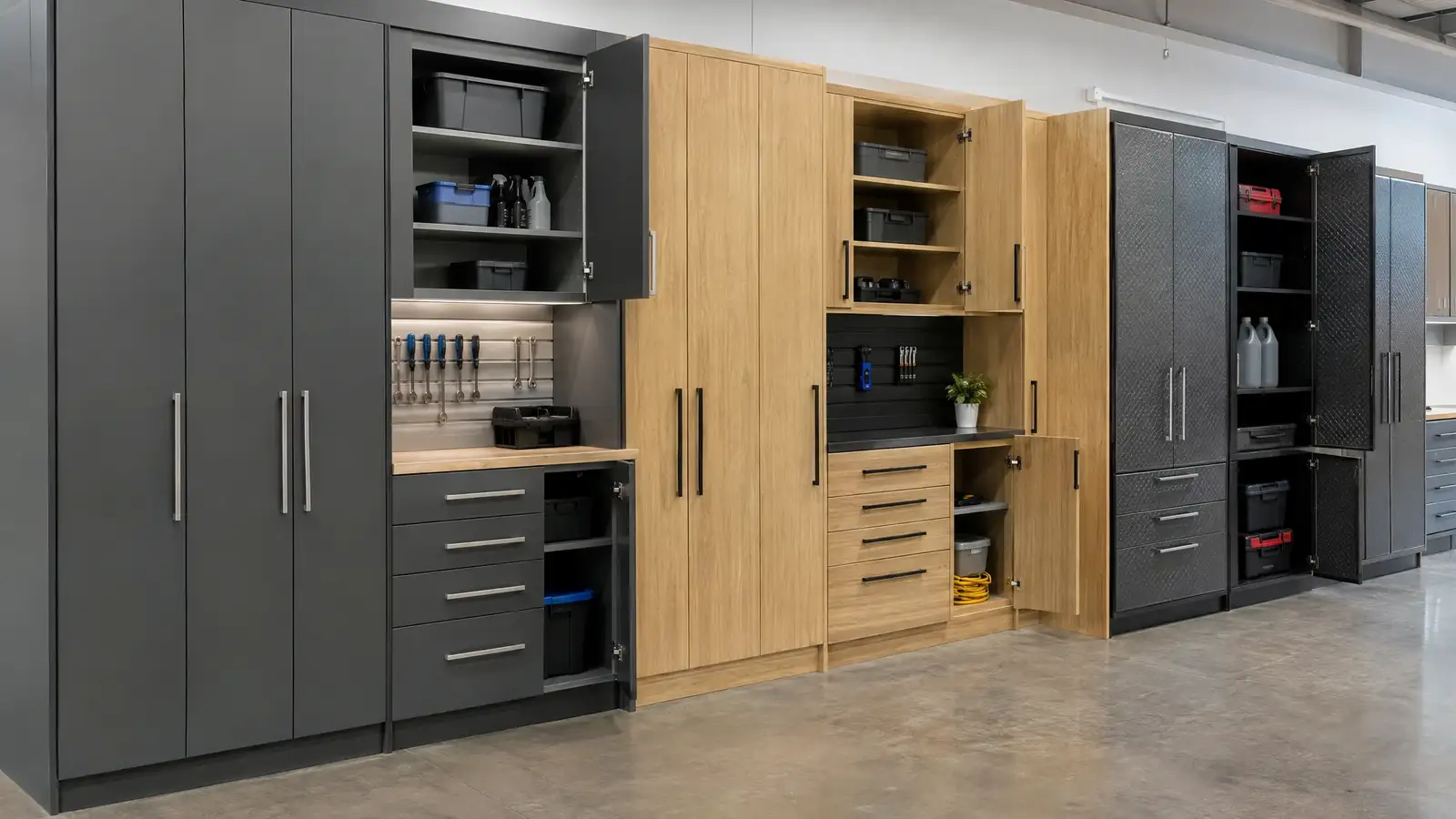
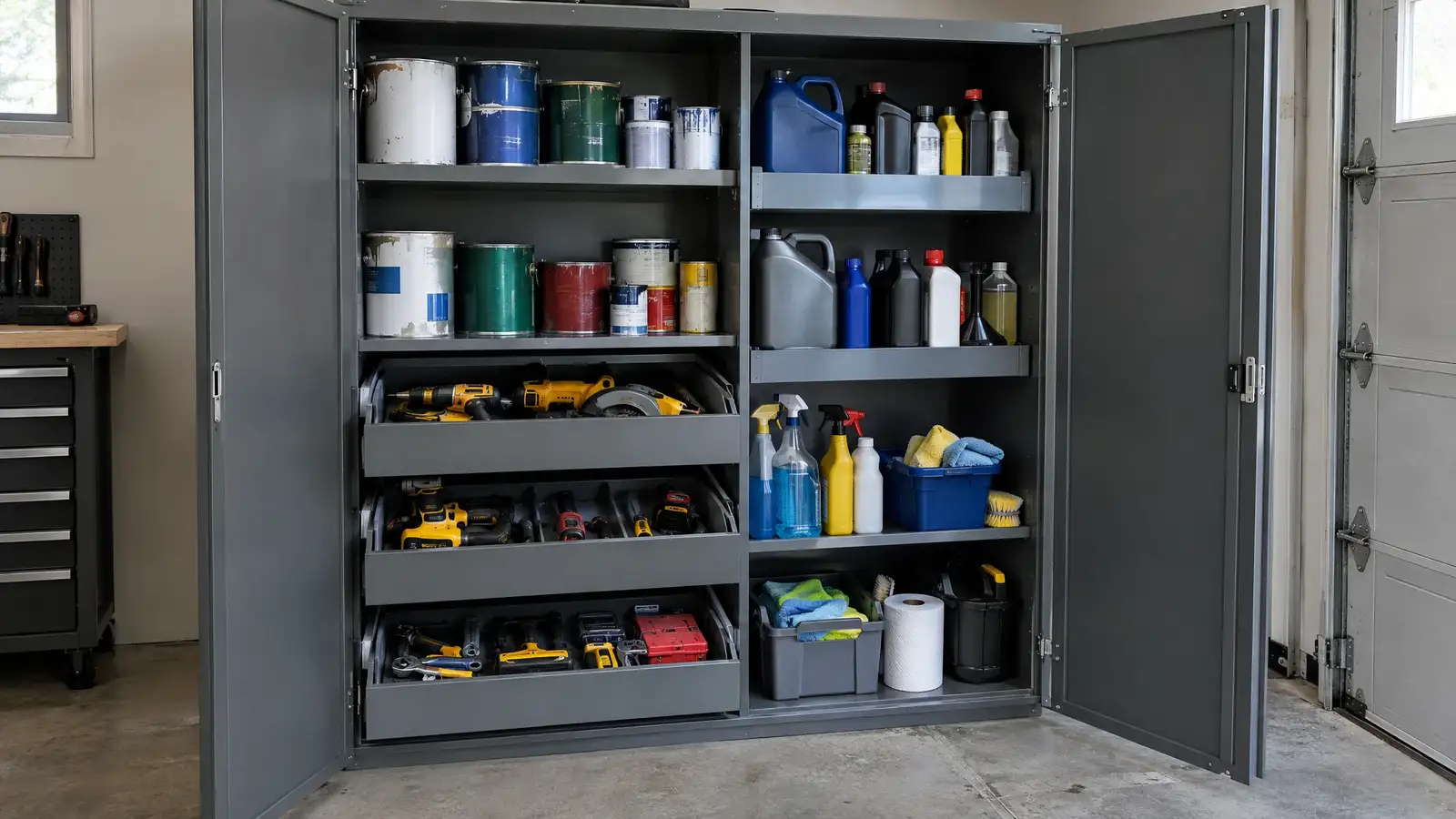
Power tools and batteries (in moderate temperatures), hand tools, painting supplies, cleaning chemicals, automotive fluids on a lipped shelf and small hardware are ideal cabinet contents. Closed doors keep dust off and keep curious hands away.
Use drawers for items you use weekly and shelves for items you use monthly.
02 Better on hooks and racks
Long-handled tools, hoses, ladders, bikes and extension cords hang better than they sit in a cabinet. A wall system or rail near the door keeps them in easy reach and frees cabinet space for smaller items.
See our guide on wall systems for the options.
03 Chemicals and fluids
Store chemicals in original containers, tightly closed, ideally in a locked cabinet away from heat and children. Use a lipped shelf or tray to catch drips. Keep different chemicals apart as the labels advise.
Dispose of old products through local household hazardous waste programs.
04 What does not belong
Items that dislike temperature swings and humidity are better kept in the house: paper records, photographs, electronics, some medicines and food that is not meant for garage storage. Paint and some adhesives can be damaged by freezing.
If the garage is insulated and conditioned, the list shrinks.
? Common questions
Can I store paint in the garage?
Many paints are damaged by freezing or extreme heat. Check the label and consider a conditioned space if your garage swings widely.
Should chemicals be locked up?
If children or pets have access, a lockable cabinet is a sensible safety step.
Where should I keep batteries?
In moderate temperatures, away from heat sources, and not stacked loosely where terminals can contact metal.