01 Why slip happens
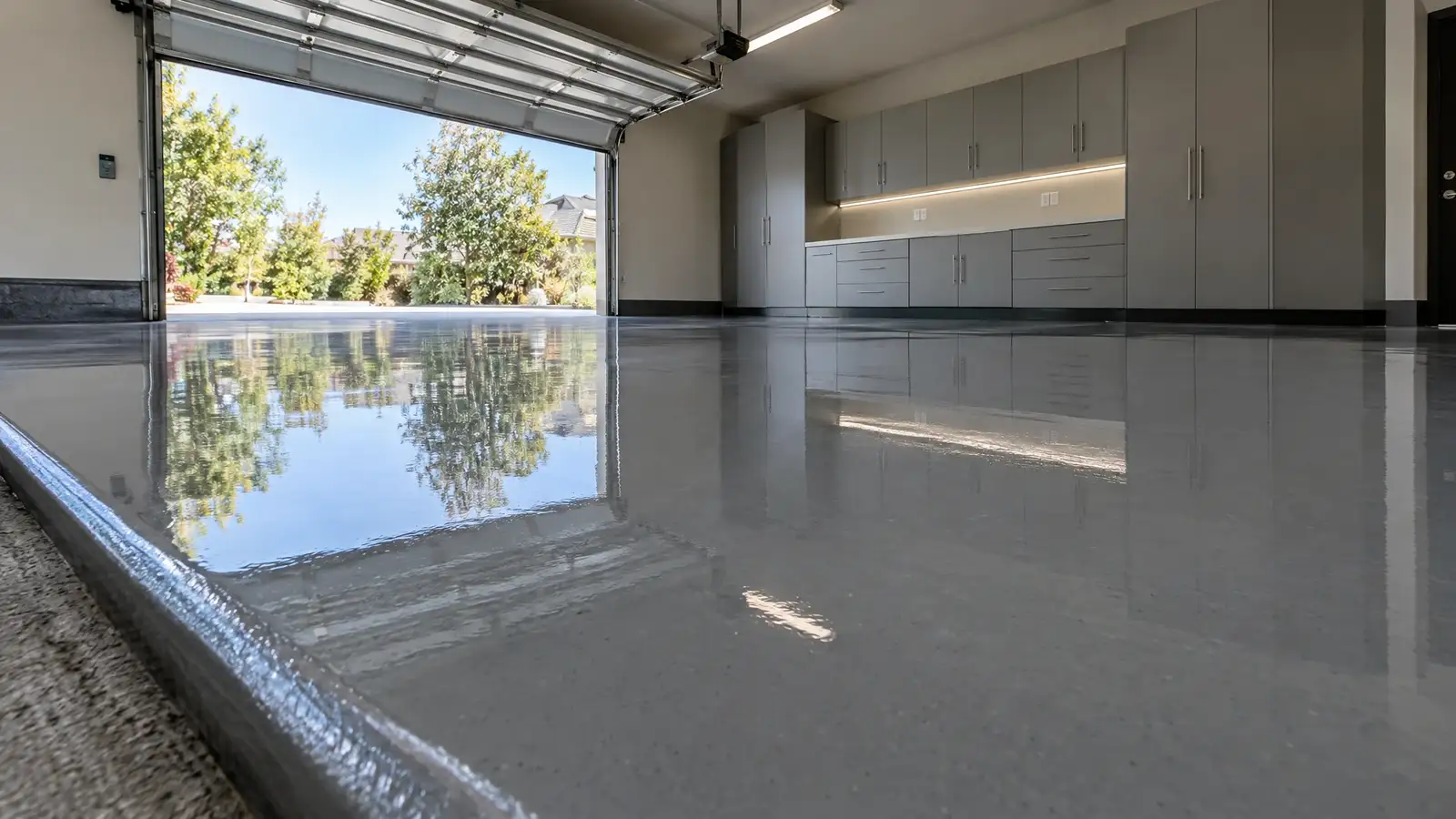
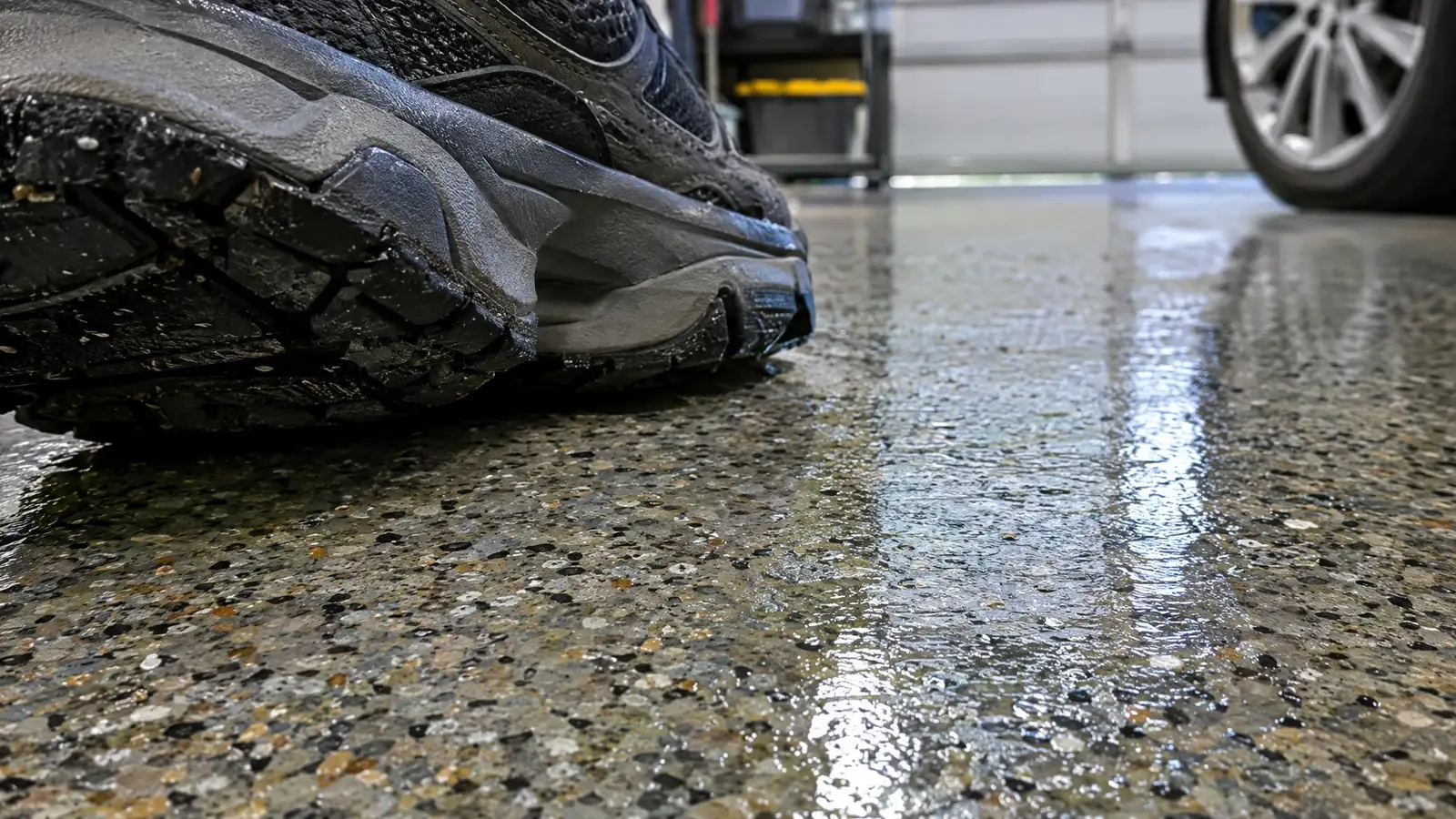
Smooth coatings are glossy and, with water, oil or snow melt, can be slippery. Garage entrances and wash zones see the most water. Adding texture or using a naturally gripping surface reduces the risk.
Traction is a design choice, not an afterthought.
02 Texture additives
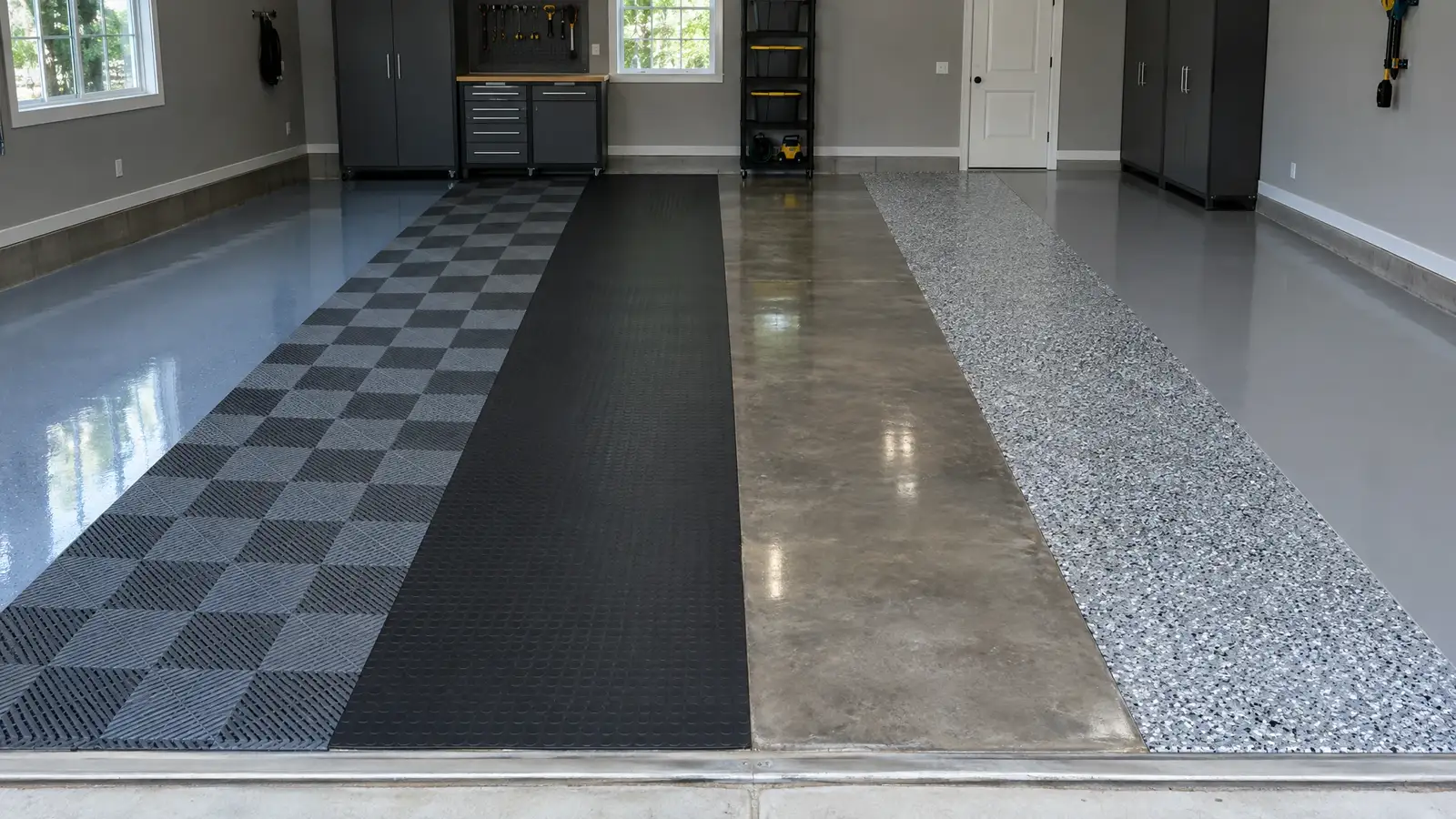
Fine aggregates such as aluminum oxide or polymer grit can be mixed into a coating or broadcast into the topcoat. They give a controlled level of grip, from a light feel to a rough texture. Higher grip is harder to clean.
The installer can sample the level for you.
03 Flake and rubber
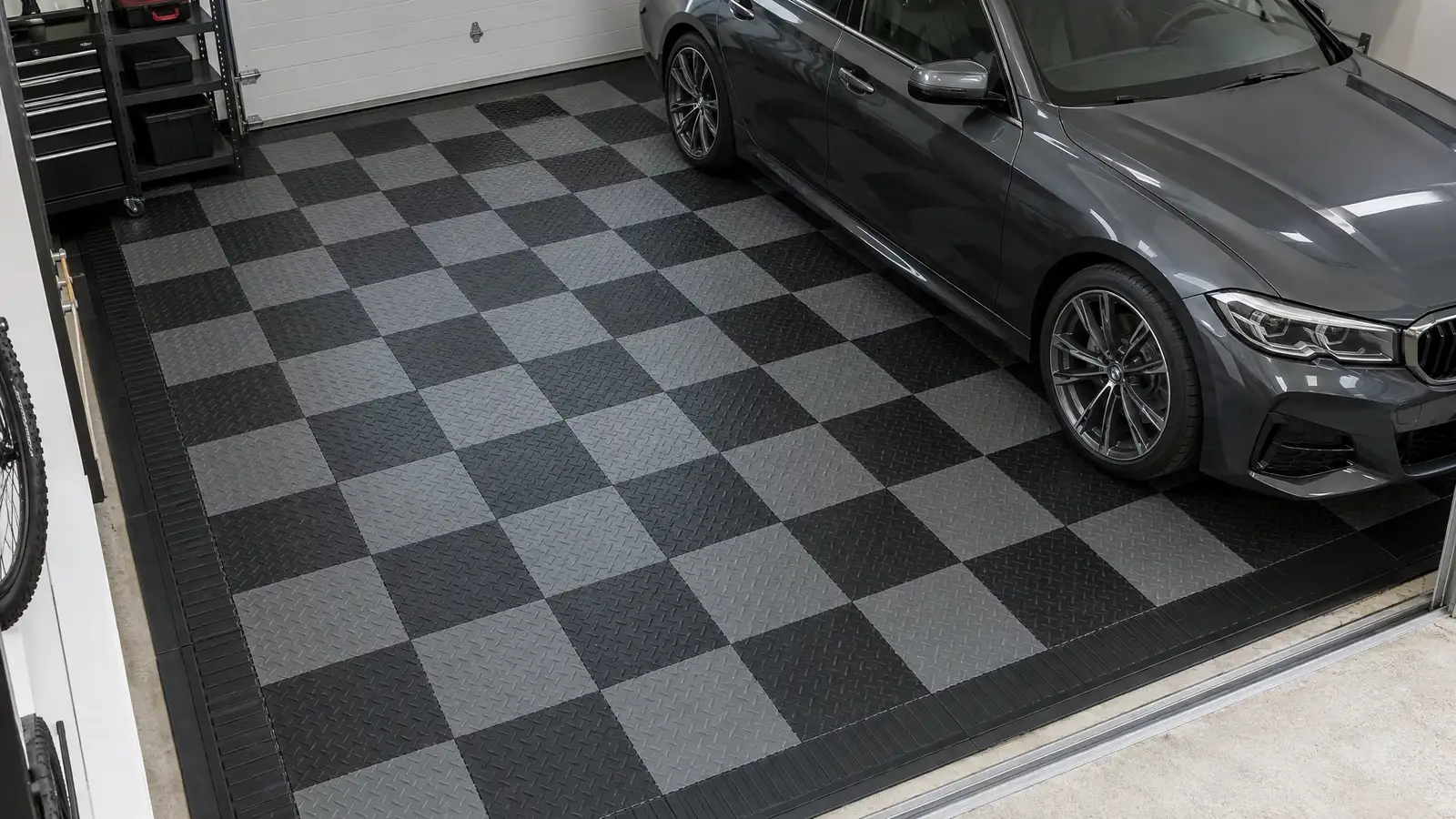
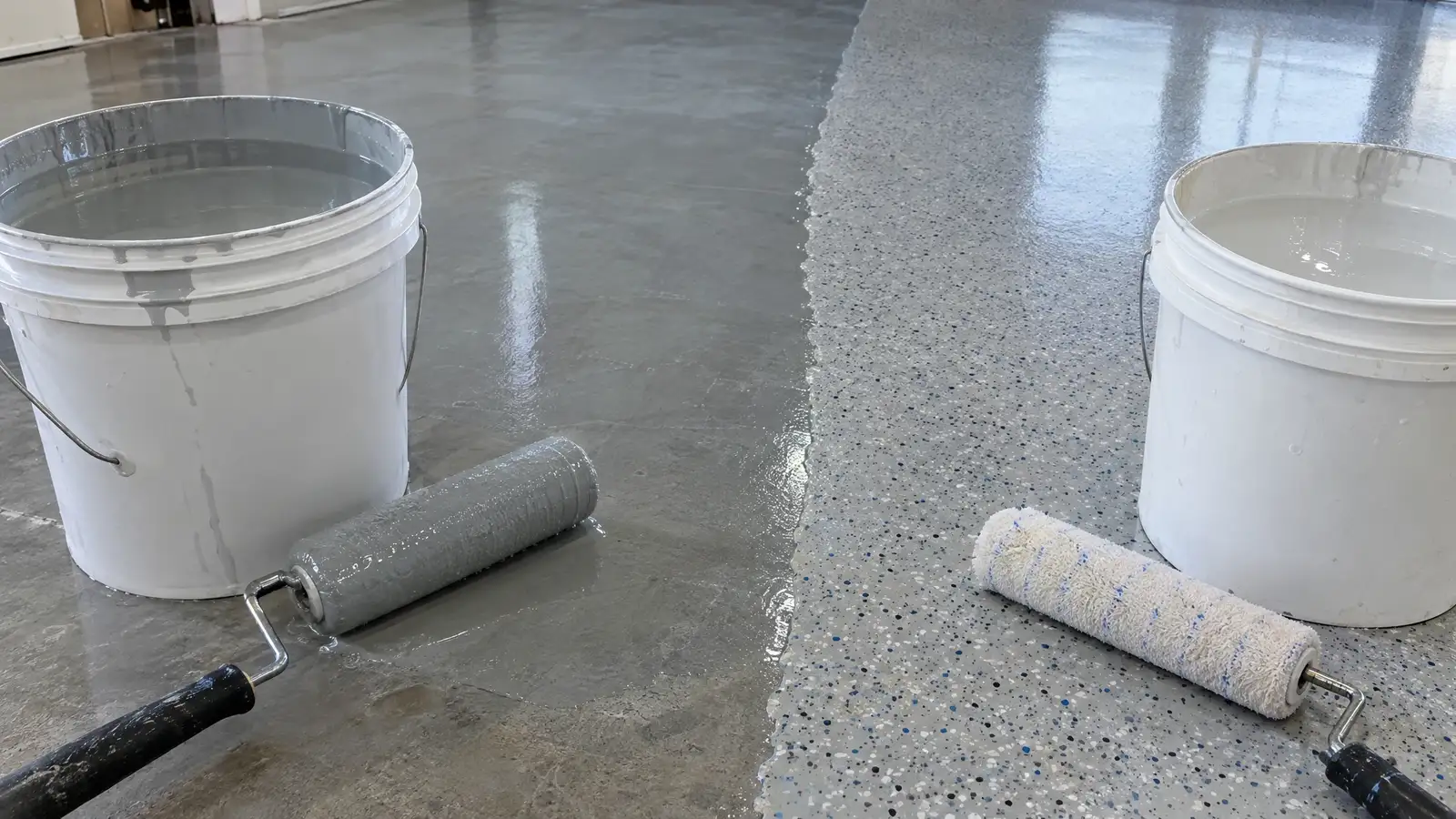
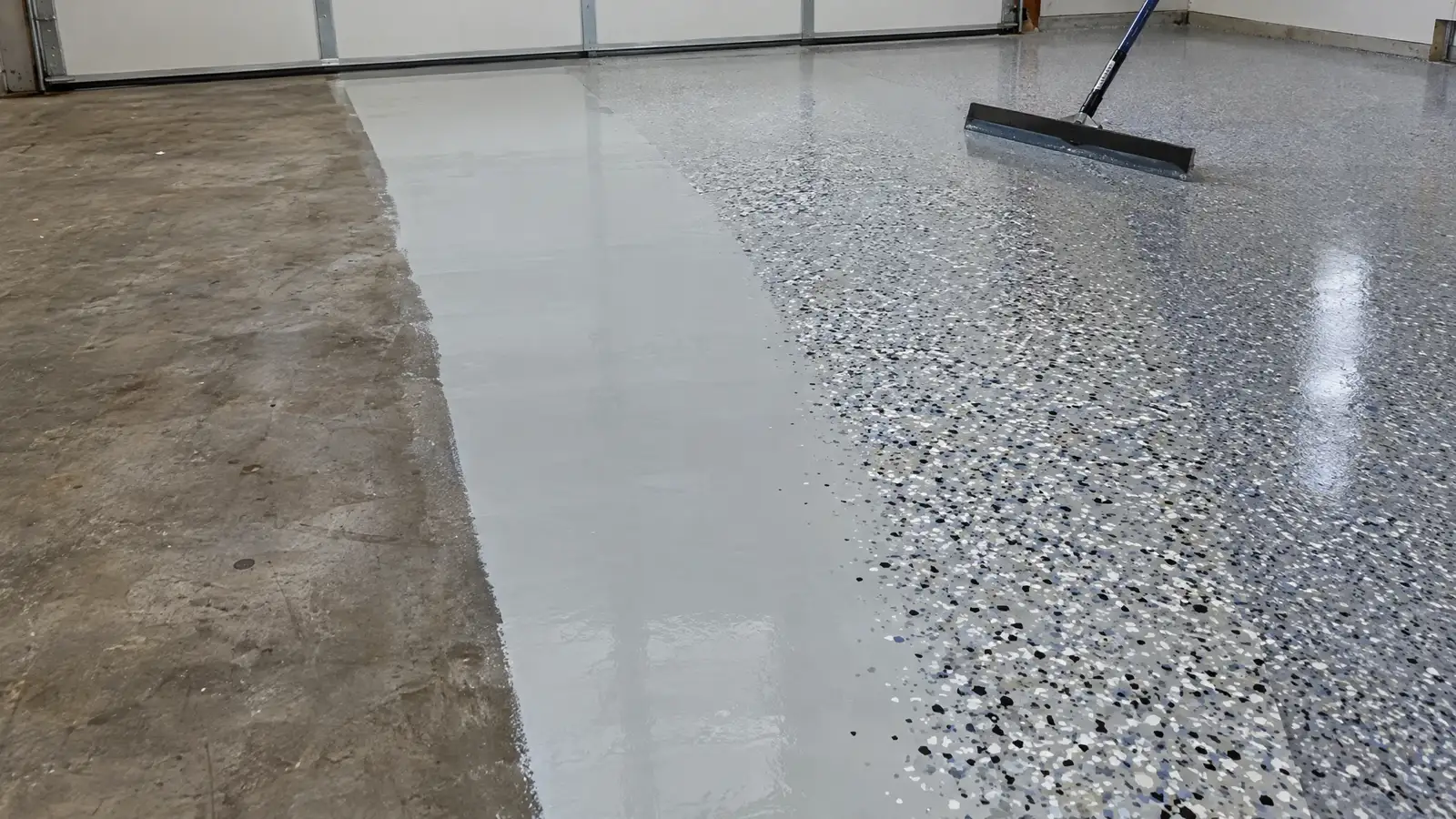
Chip flake adds a gentle texture and hides imperfections. Rubber flooring and textured tiles give a naturally gripping surface that is also easy on feet. Diamond-plate patterns and coin textures give grip while looking industrial.
Choose by feel and use.
04 Where to add it
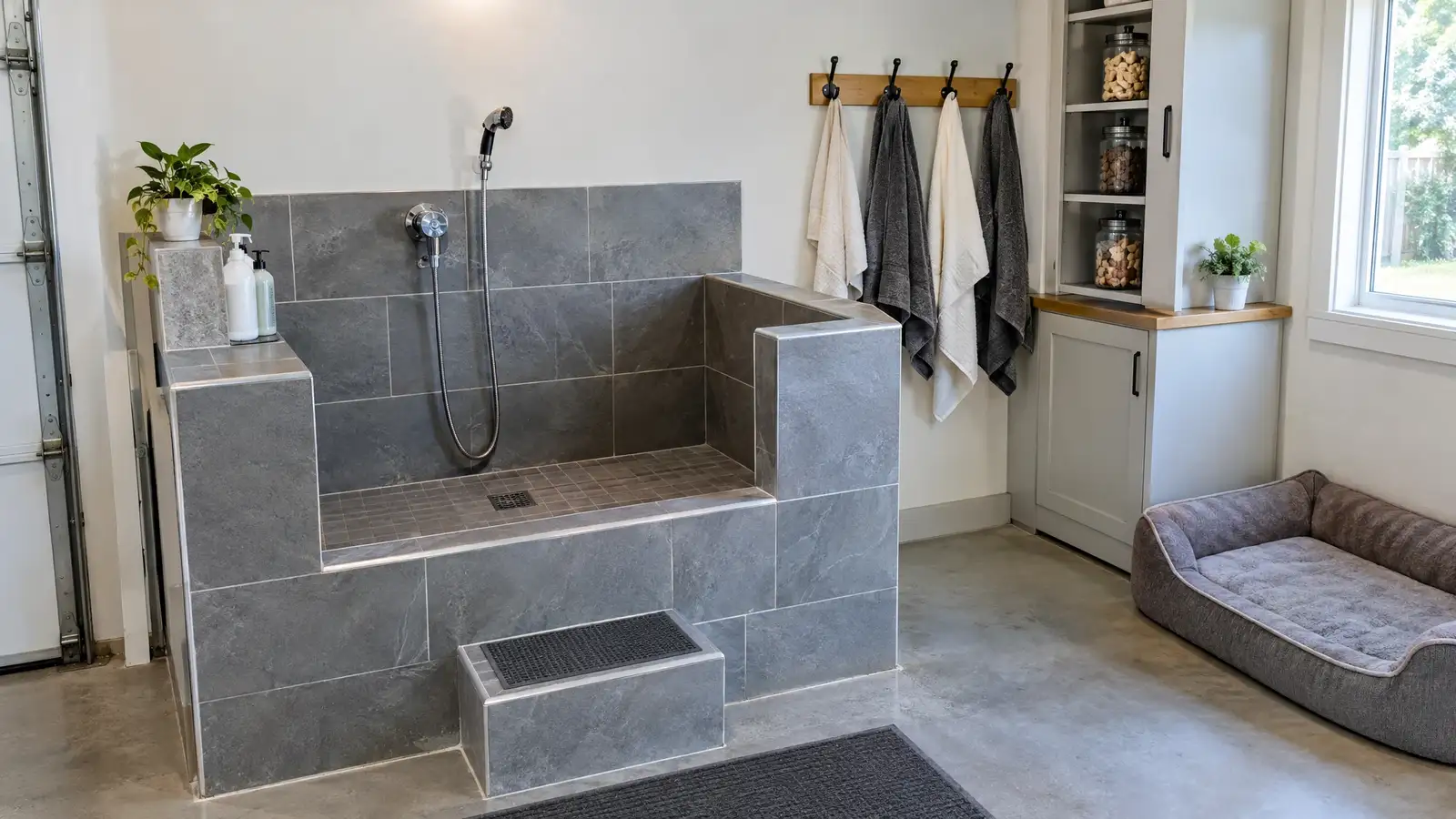
Add grip at the door threshold, around sinks and wash stations, and on any ramp. A smoother finish can remain in the dry parking area. Mats near doors catch water and dirt.
In cold climates, extra grip helps with ice and snow melt.
? Common questions
Will a grip additive make cleaning harder?
A rougher surface holds dirt more. Choose the lowest grip that is safe for the area.
Is epoxy slippery?
A smooth gloss coating can be when wet. Flake or an additive helps.
Can a polished floor be non-slip?
A satin polish is usually less slick than a gloss coating, and sealers with traction additives are available.