01 What it is
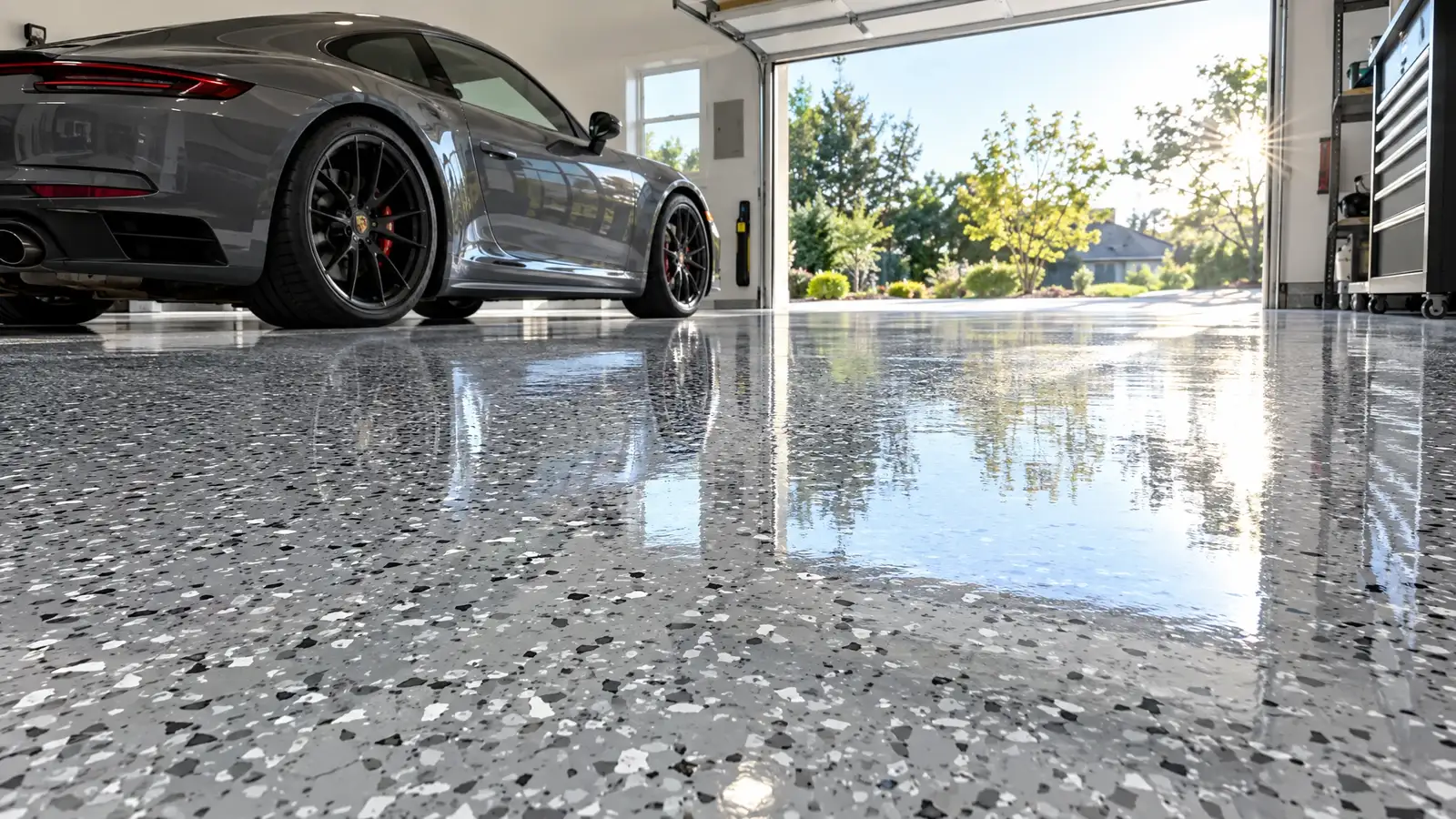
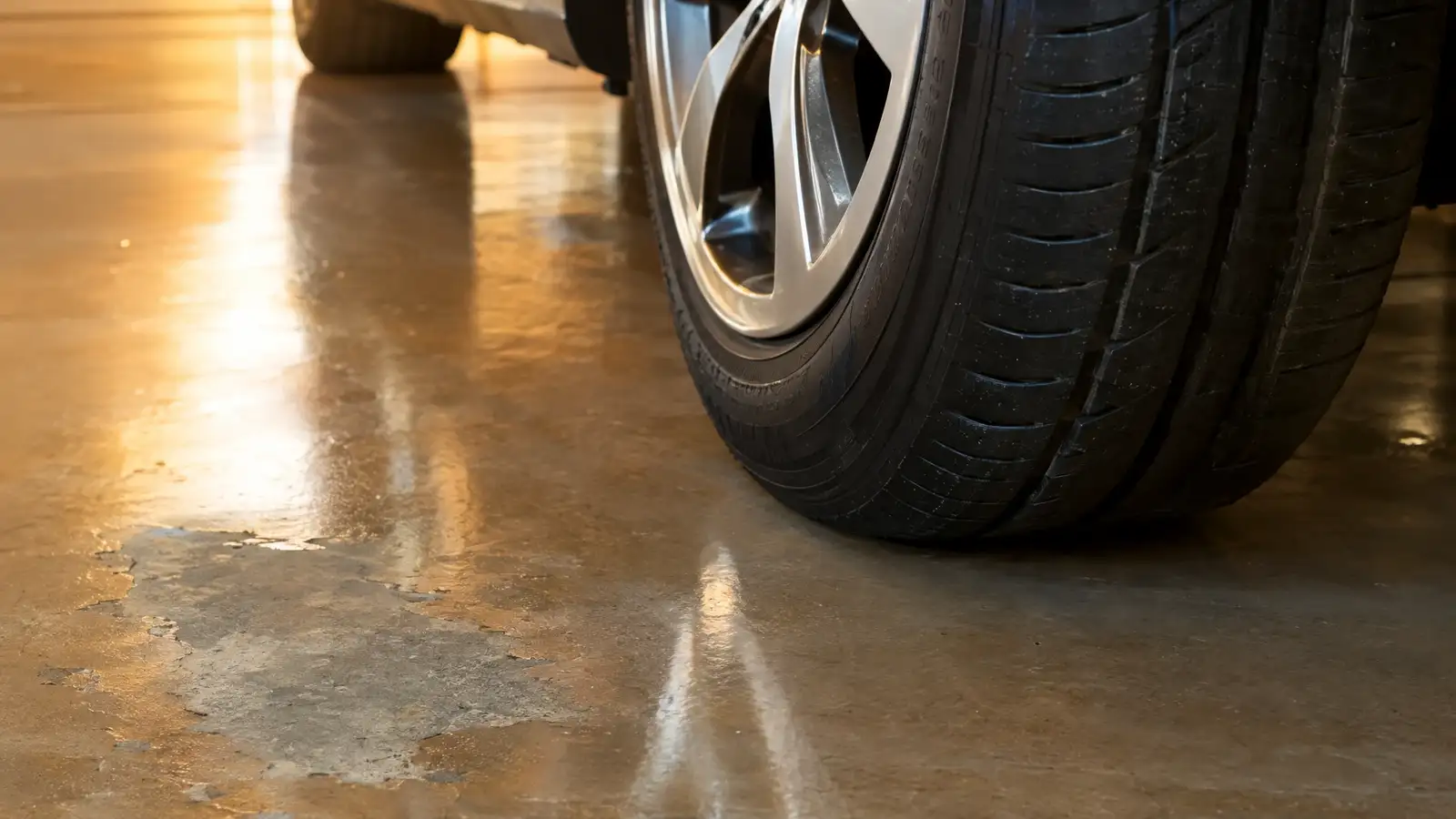
Hot tire pickup happens when a tire’s warm rubber softens or lifts a coating that was thin, soft or poorly bonded. It shows up as patches of peeled coating where the tires sit. Tires heat up after a drive, and the surface under them can be hotter than the air.
Cheap kits and rushed jobs are the usual culprits.
02 Prep prevents it
A well-profiled, clean, dry slab gives the coating a strong grip. Grinding rather than etching, correct moisture control and priming all matter. A coating that bonds well can stand up to the heat and pressure of tires.
Most hot-tire failures trace back to bond.
03 Choose a hard system
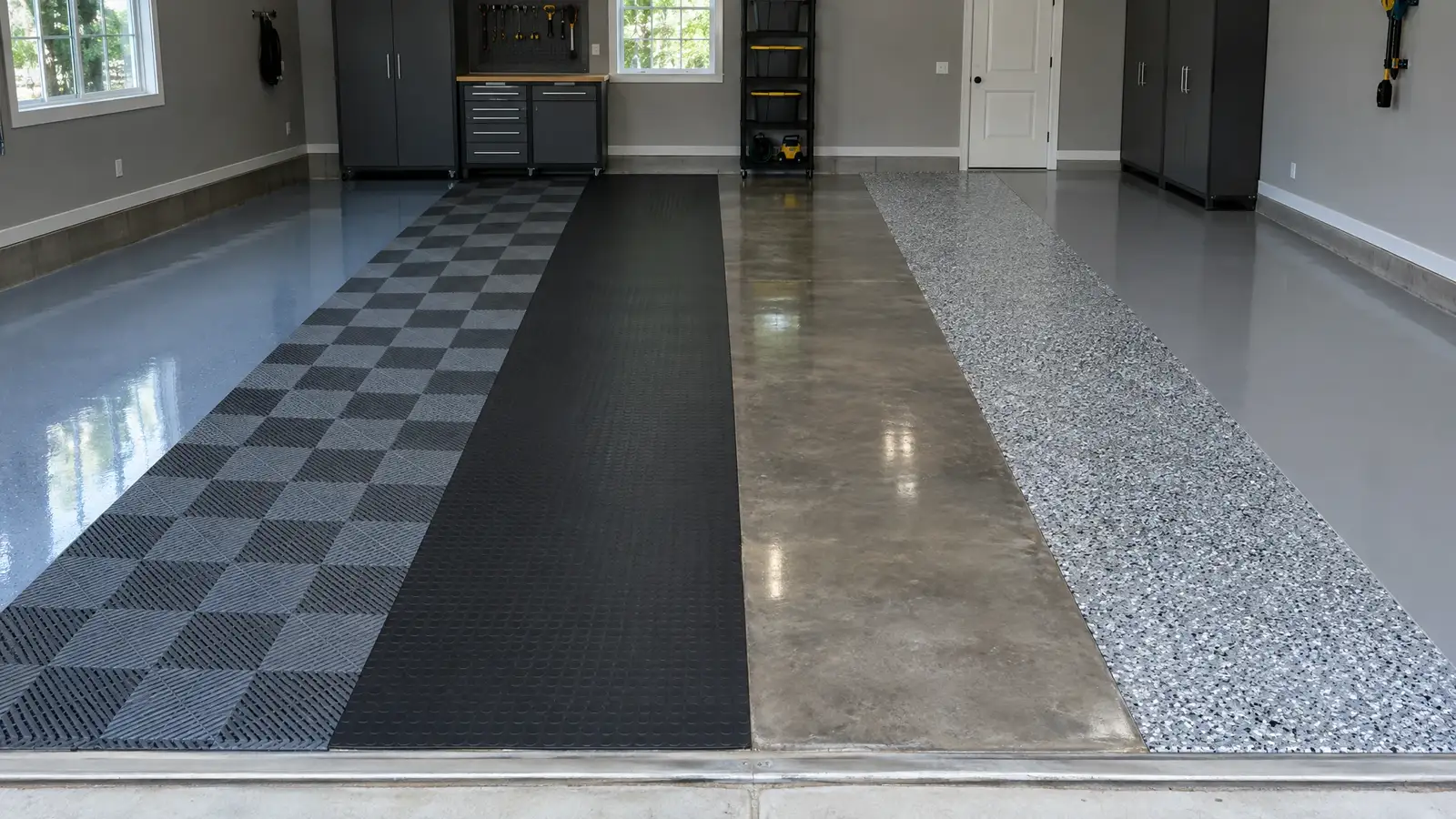
Polyaspartic and urethane topcoats and quality epoxy systems cure to a hard, cross-linked finish that resists hot tires. Thin DIY paints often do not. Ask an installer how the system is rated for hot tires.
Thickness and cure matter as well.
04 Respect the cure
Allow the cure time before cars return. Driving on a coating too early can leave marks or weaken the bond. The manufacturer’s timeline is the reference, and cooler temperatures usually extend it.
Parking on a cool tire after a short trip is gentler than after a long drive.
? Common questions
Will any coating resist hot tires?
Quality, well-prepped and fully cured systems do very well. Thin paints may not.
Can pickup be repaired?
Often yes. The affected areas are removed, prepared and recoated, though a poor underlying bond may mean redoing more.
Does color matter?
Not for pickup, though lighter floors may show tire marks more.