01 What salt does
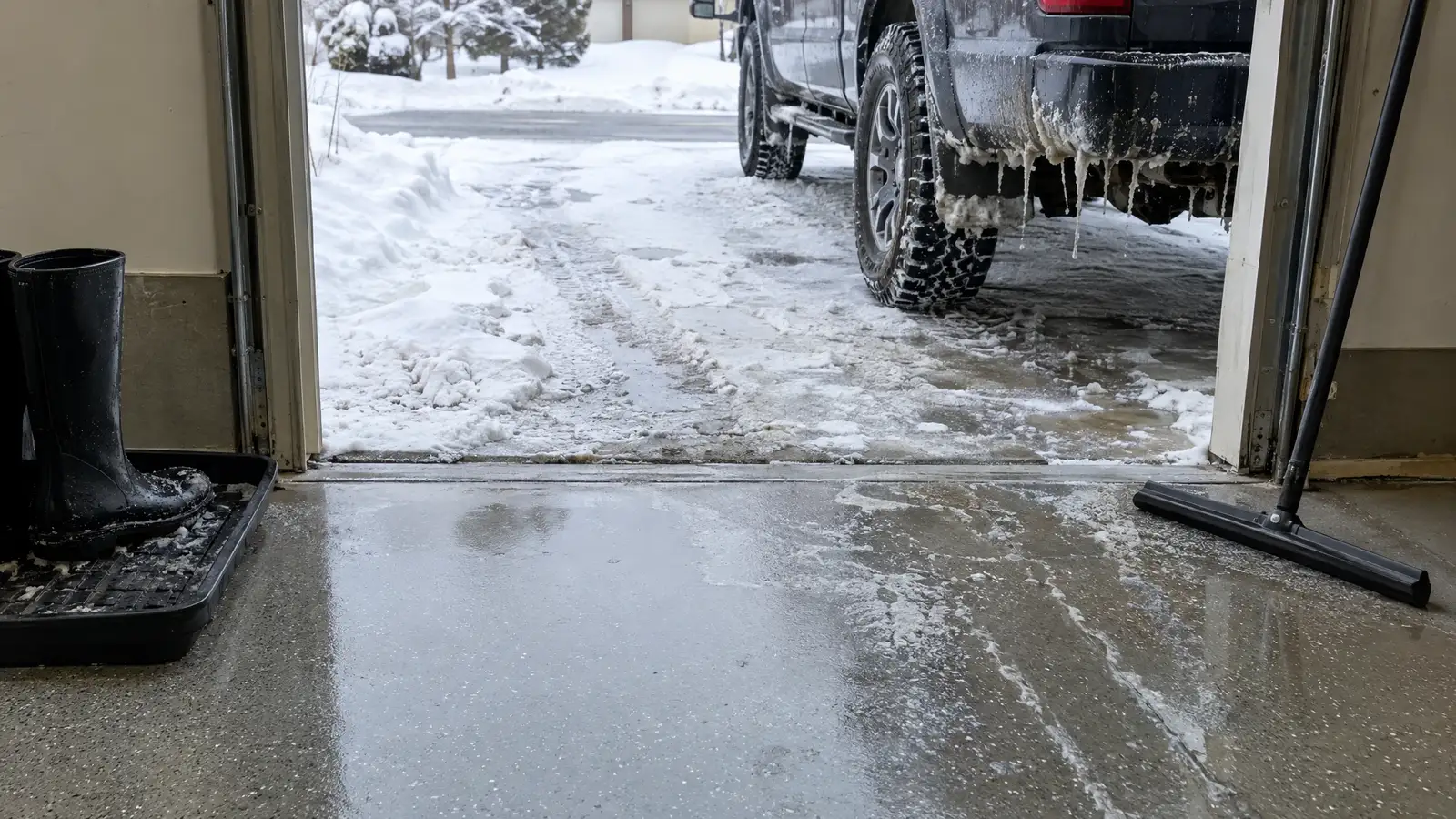
Road salt dissolves in meltwater that drips from cars and soaks into bare concrete. It weakens the surface, causes scaling and flaking and can stain. Salt also rusts steel, so cabinets and tools near the door can suffer.
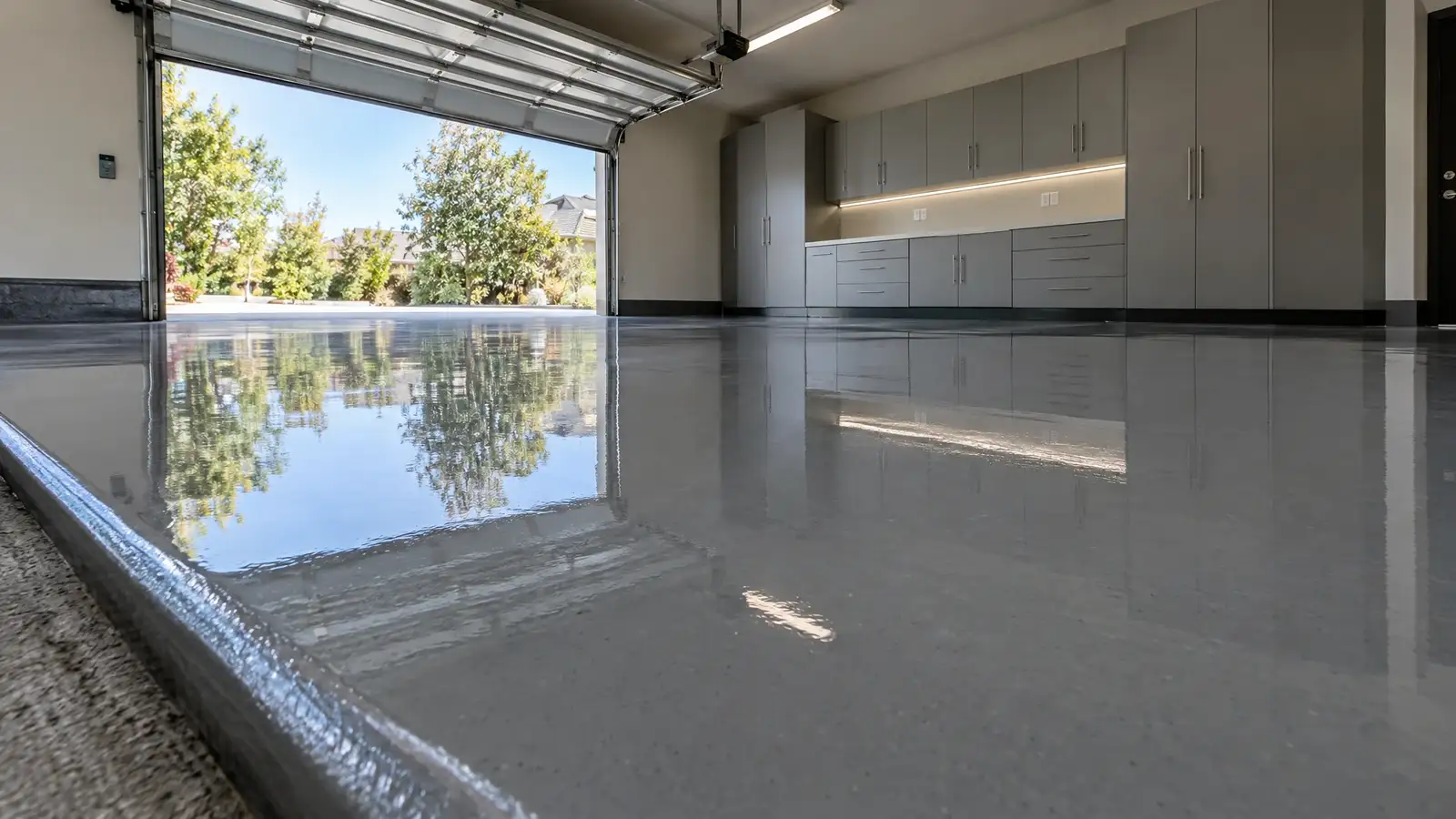
Sealing the slab keeps salt on the surface where it can be washed away.
02 Freeze-thaw damage
Water that gets into concrete expands when it freezes and breaks the surface. A garage that is unheated and takes in wet cars is exposed. A sealer or coating blocks water, which reduces damage.
Good drainage and a sloped floor also help.
03 Coatings and sealers
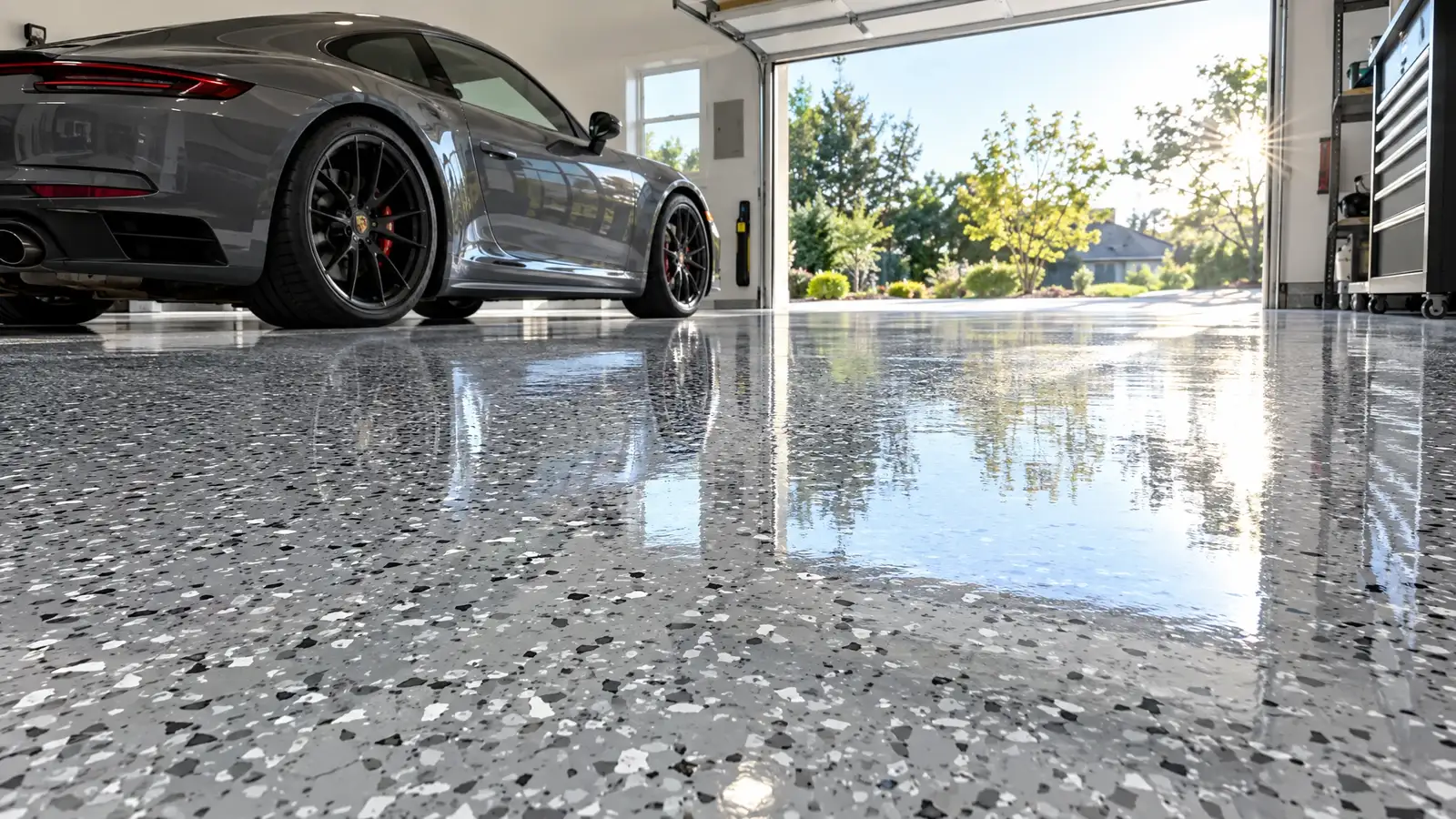
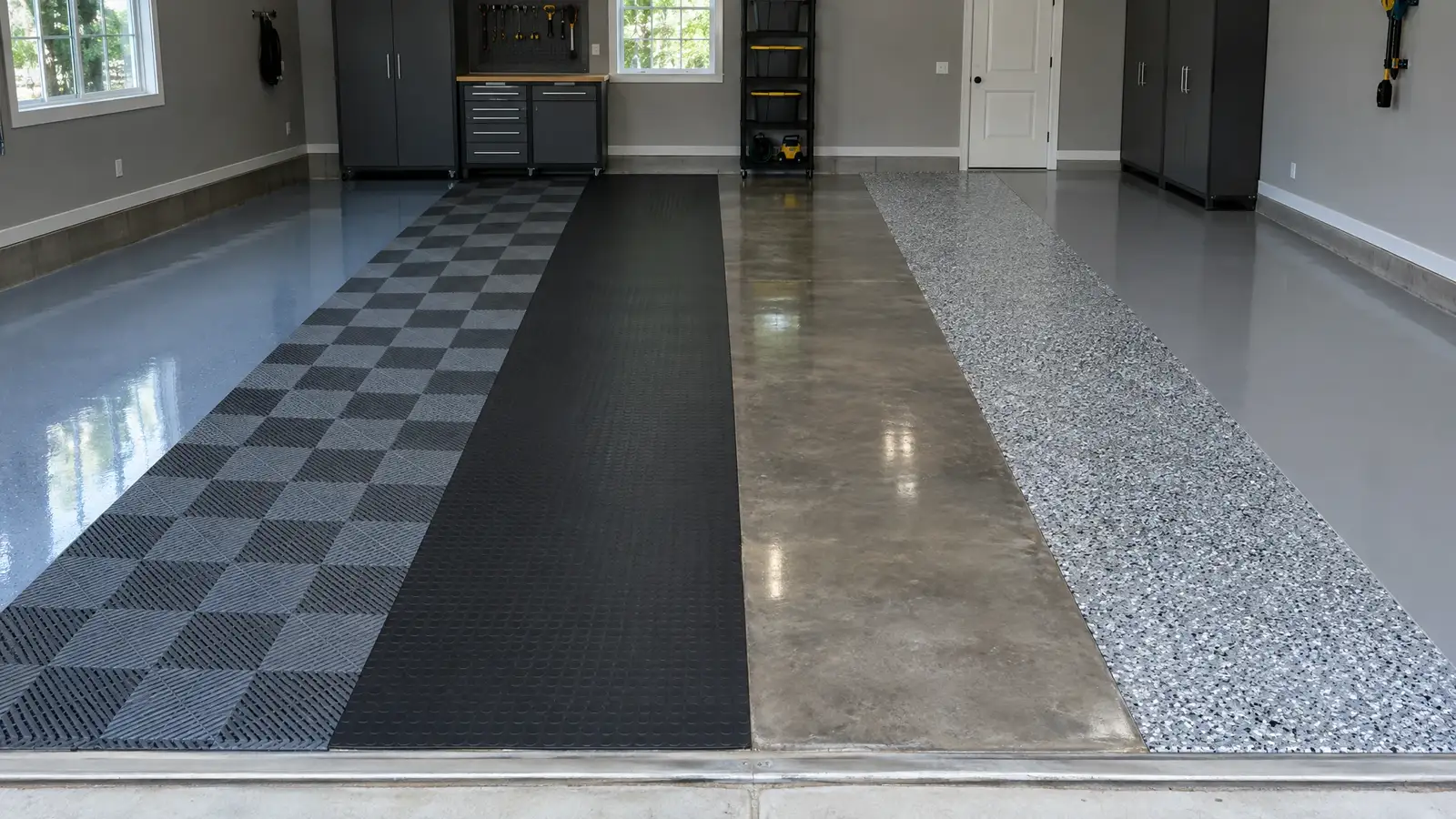
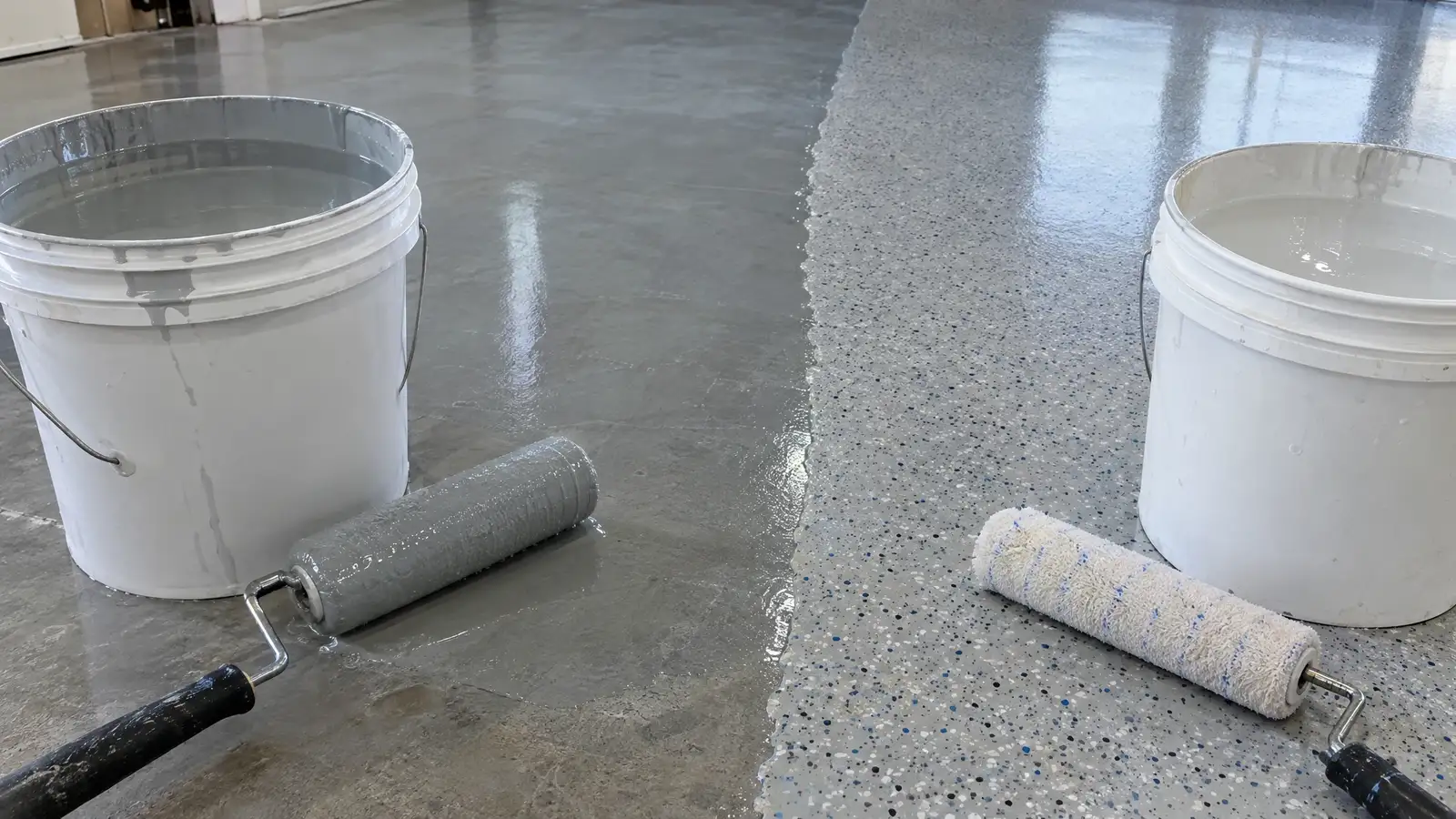
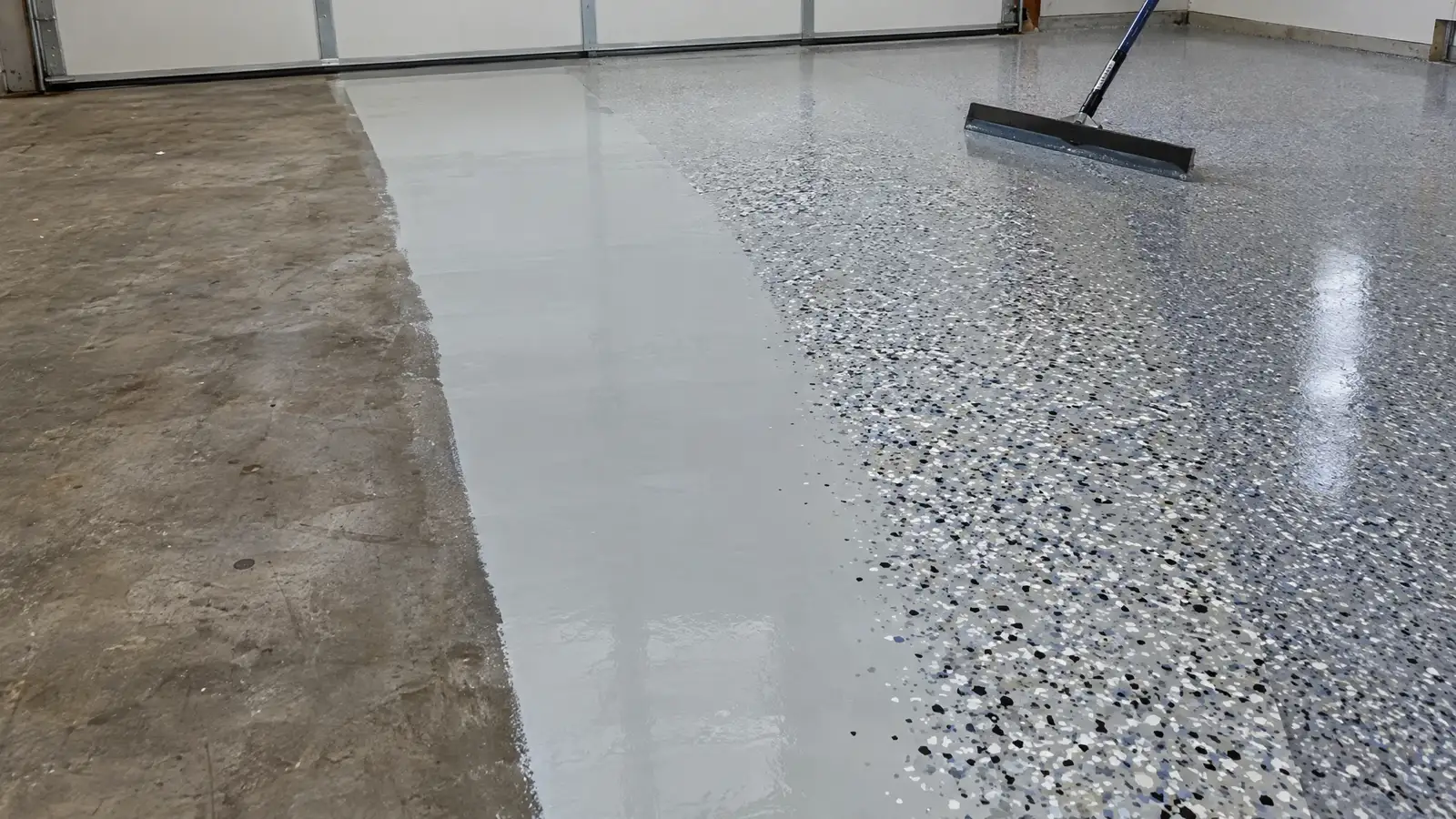
A quality coating or a penetrating sealer reduces absorption. Choose a system rated for cold temperatures and salt. Polyaspartic and some epoxy-urethane combinations work well in cold. A moisture-tolerant primer helps in damp slabs.
Cure conditions matter in winter.
04 Daily habits
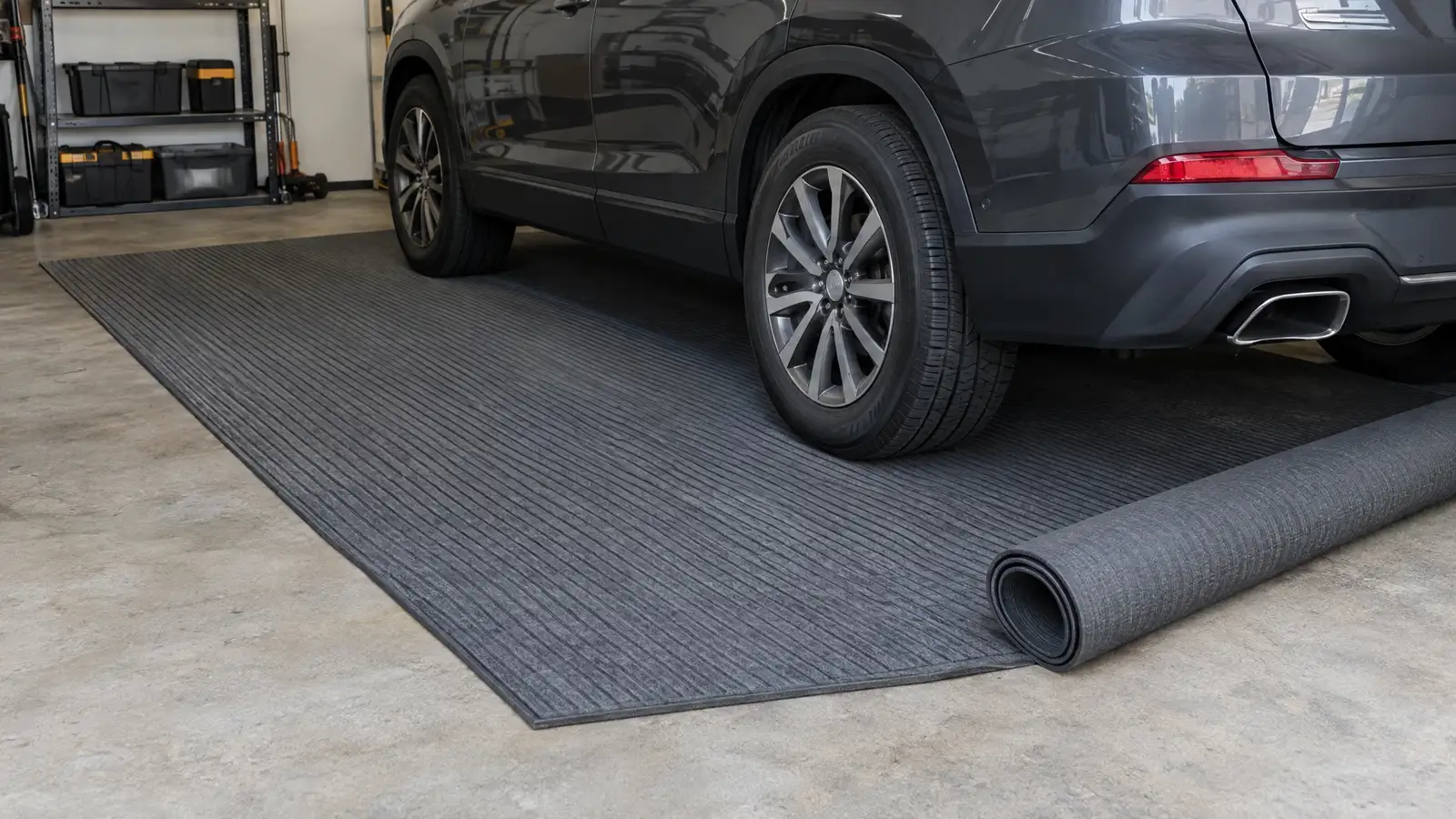
Squeegee meltwater toward the door and rinse salt residue with clean water. Use a containment mat or tray under the car. Keep metal tools off the floor and wipe cabinets near the door.
A boot tray at the entry catches salt from shoes.
? Common questions
Can I coat a floor in winter?
Yes, with suitable products and a heated, dry space. Cold slows some systems, so choose carefully.
Does road salt hurt a coating?
A good coating resists it. Rinse it off regularly.
Should I seal concrete in a cold climate?
A sealer or coating helps limit water and salt entering the slab.