01 Tiles: the case for
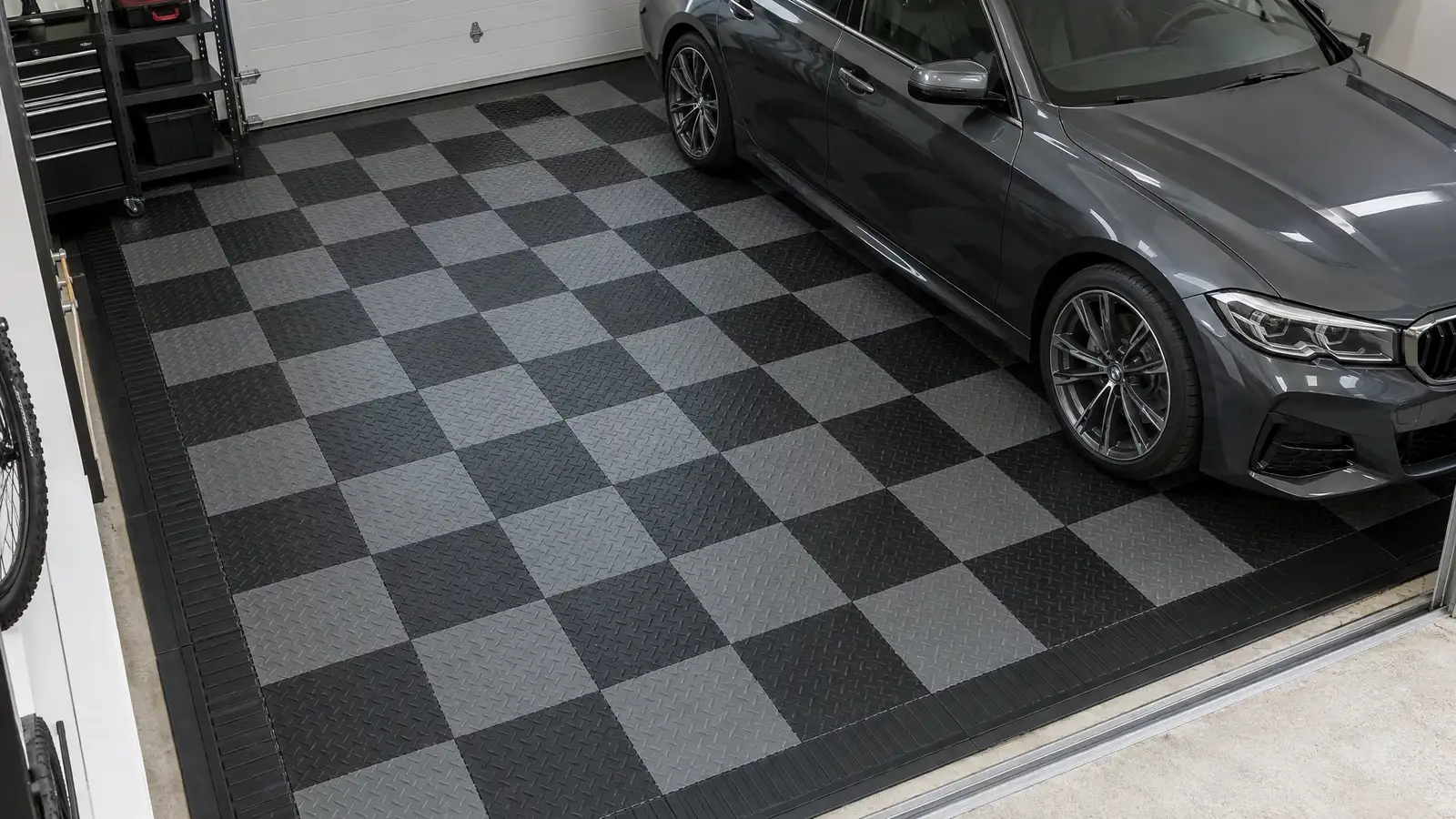
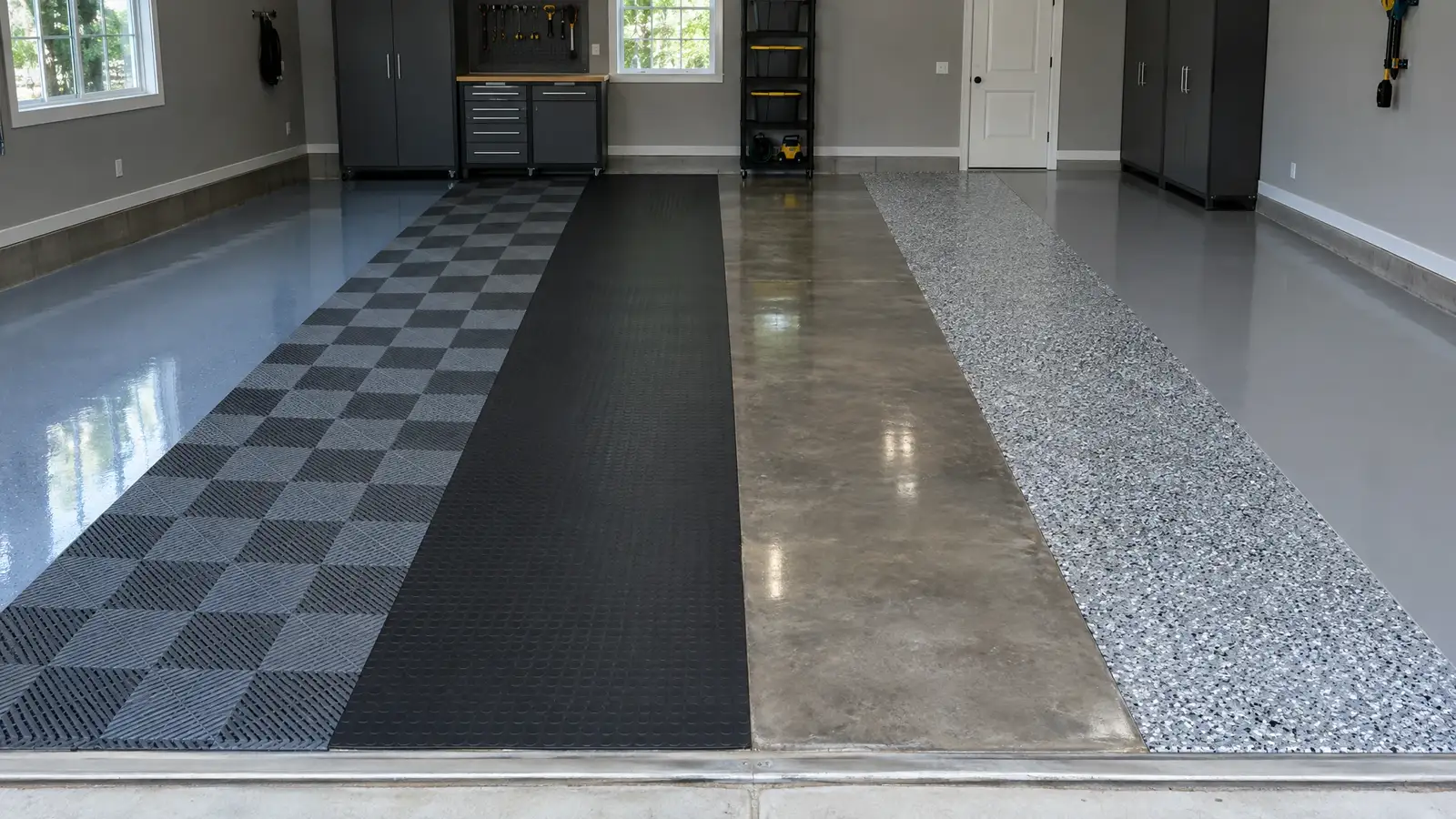
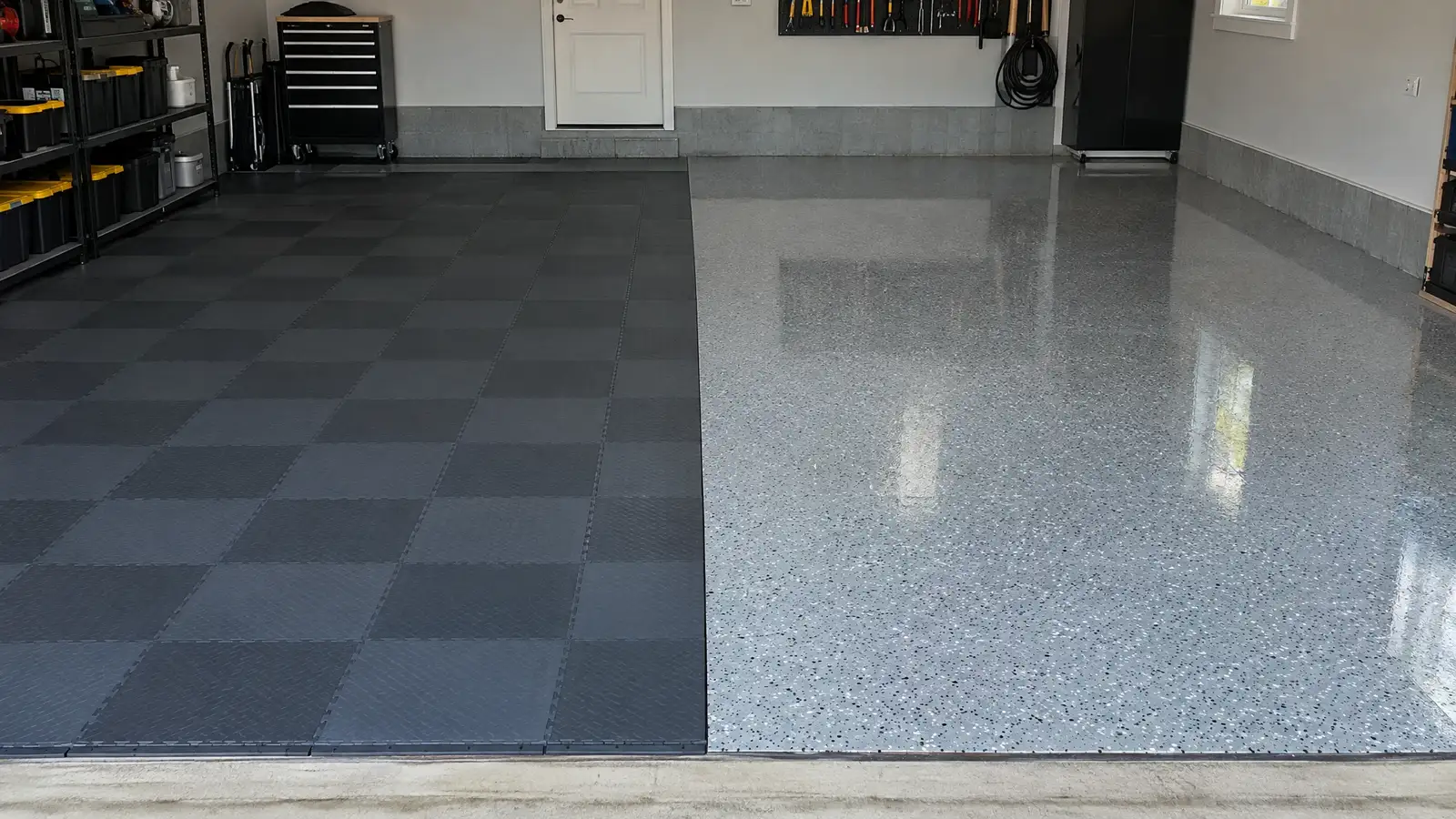
Tiles snap together over most slabs and are ready to use at once. They hide cracks and stains and can be replaced one by one. Colors and patterns are easy to mix, and they are removable if you move.
They can work on slabs too damaged for a coating.
02 Tiles: the downsides
Dirt and spills can reach the seams and the slab under the tiles. Heavy rolling loads can move tiles at the edges. Moisture can sit below them if the slab is wet. They cost more than basic coatings for some products.
Cleaning is a bit more involved.
03 Coatings: the case for
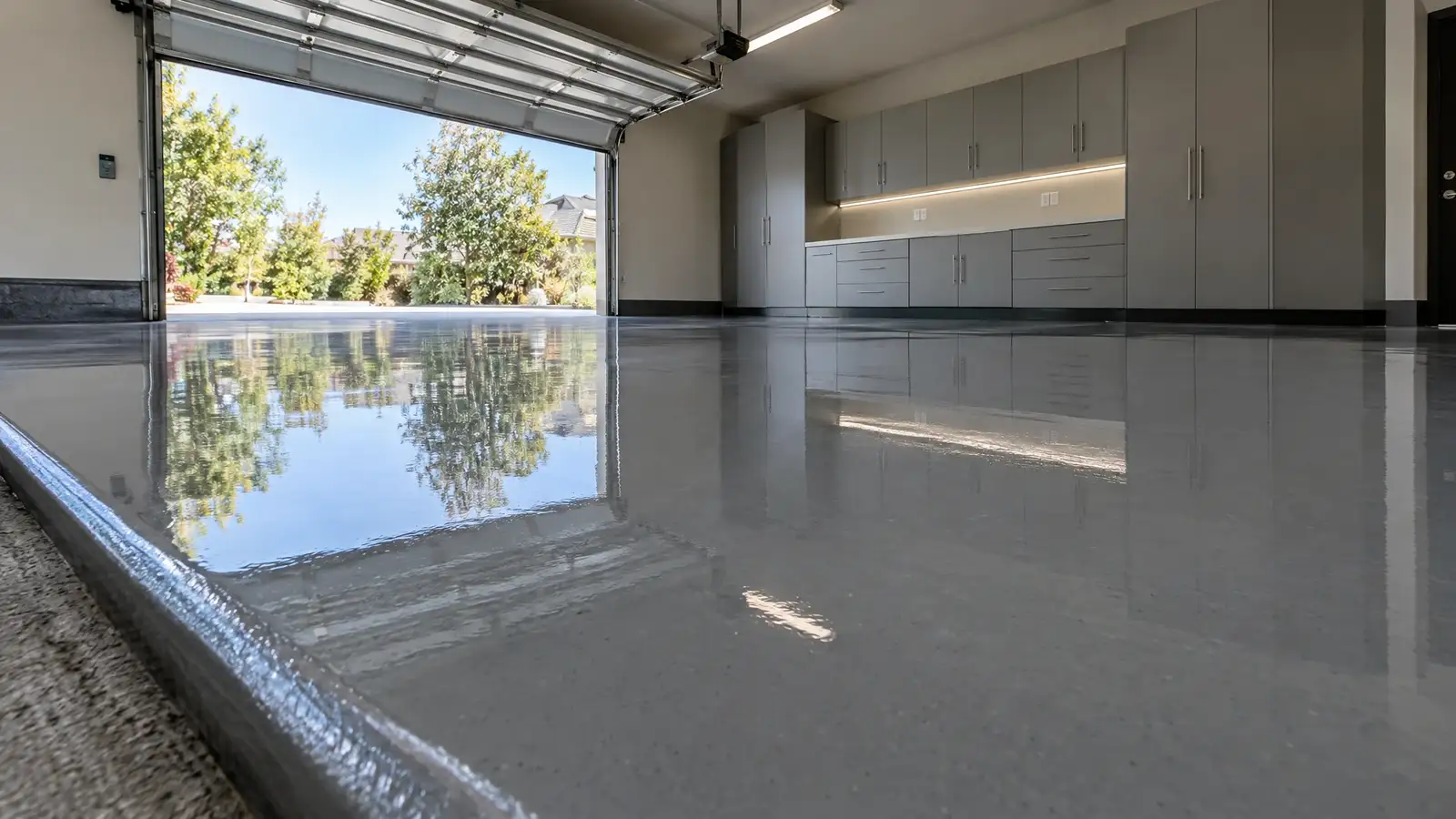
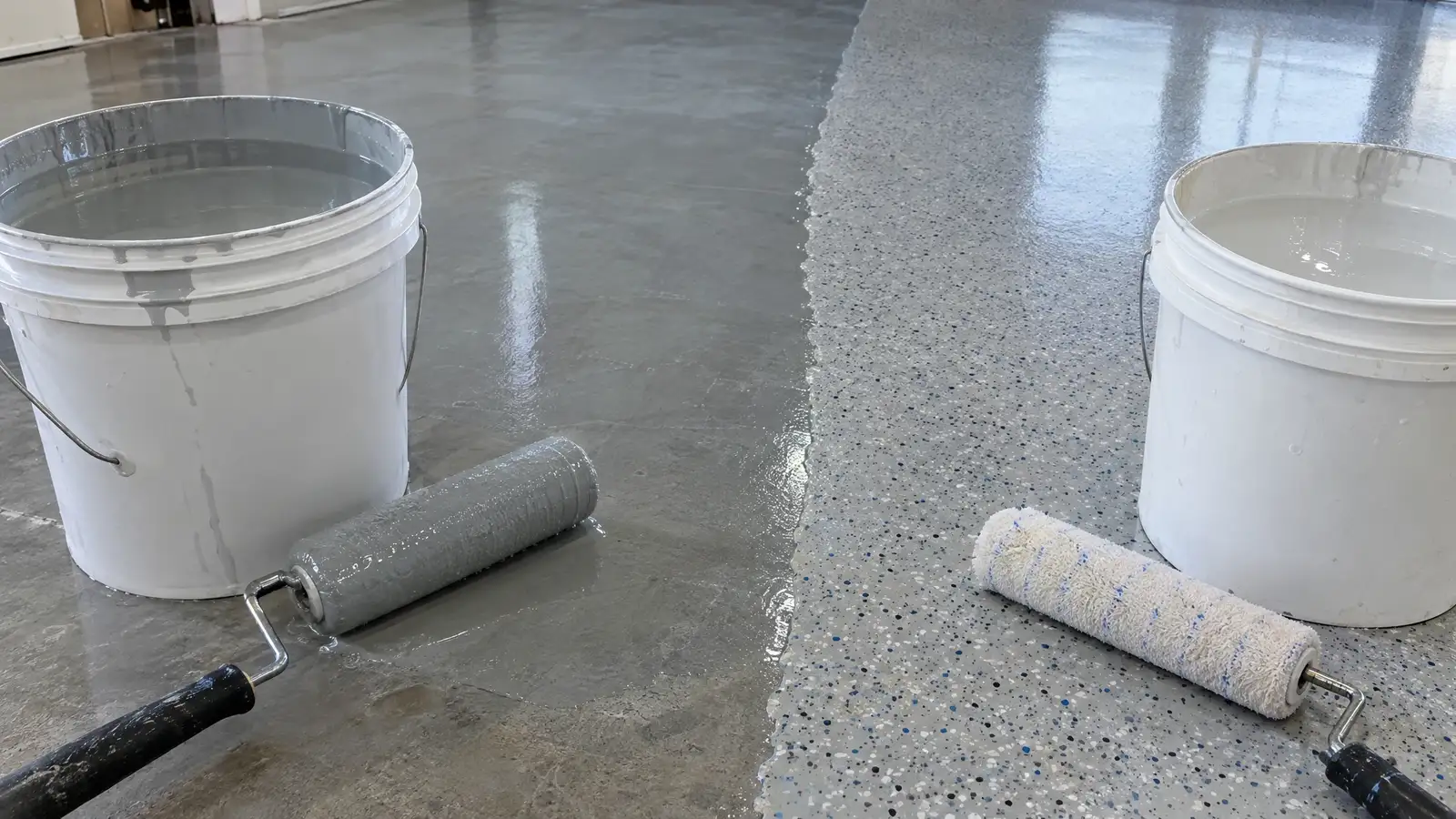
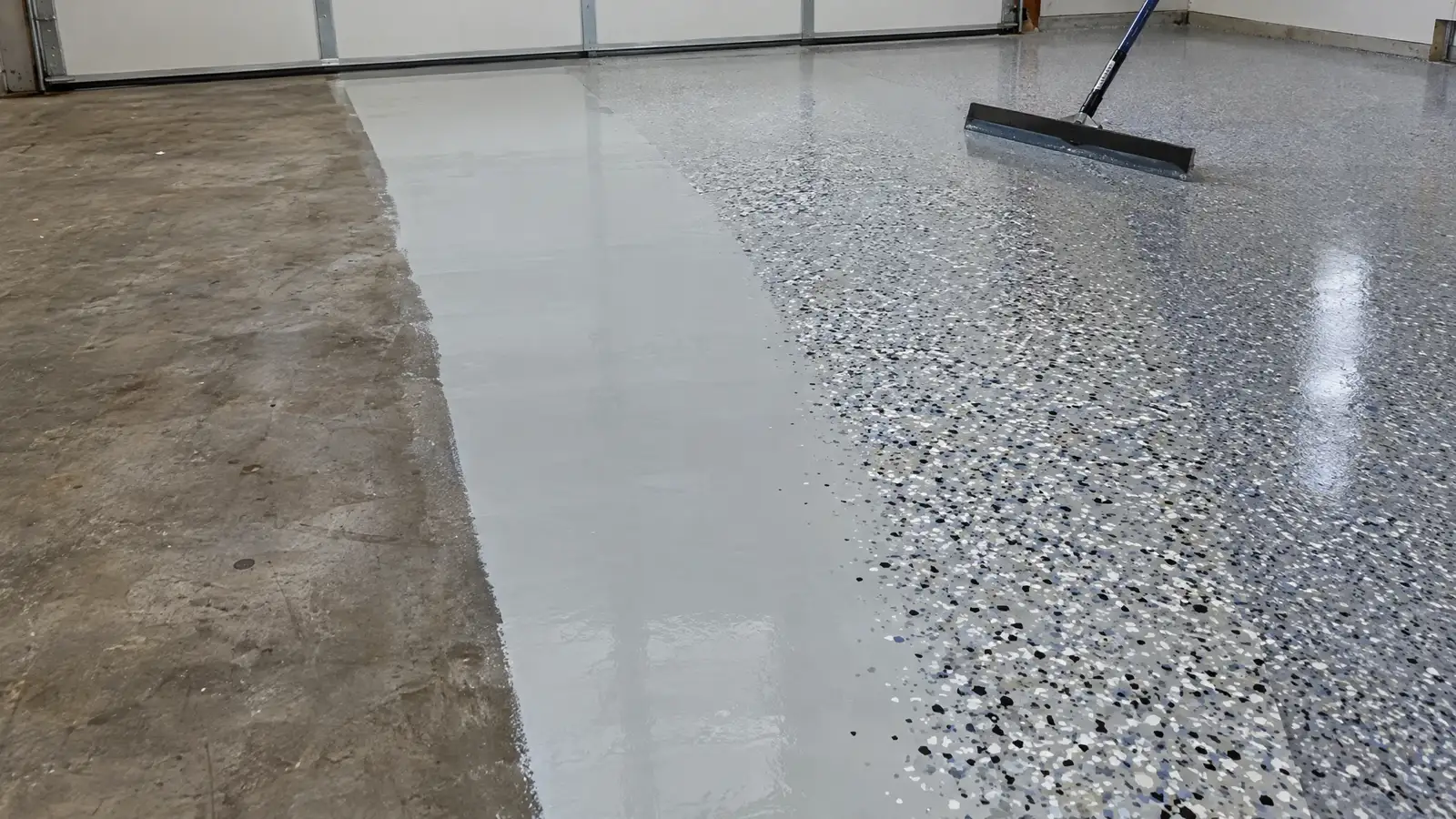
A coating bonds to the slab, creating a seamless surface. It seals the concrete, mops clean quickly and gives a high-end look. It resists chemicals and hot tires when well made.
It is the long-term choice for a permanent home.
04 Coatings: the downsides
A coating requires prep and a cure period, and a damaged slab must be repaired first. A failing coating can peel and be hard to remove. Moisture issues can cause blistering. Cost is higher up front.
A moisture test reduces the risk.
? Common questions
Which is cheaper?
Basic tiles and basic coatings overlap. Premium versions of either cost more.
Which is better for resale?
A well-done coating is often seen as a premium finish. Tiles can appeal as a flexible option.
Can tiles go over a cracked floor?
Yes, to a degree. They hide cracks, but large height differences should be fixed first.