01 Why test
Concrete holds and passes moisture. Vapor that cannot escape through a coating can build pressure and cause blisters, hazing or peeling. A test measures the rate or the level so the system can be chosen to match.
Skipping the test is the most common avoidable mistake.
02 Plastic sheet test
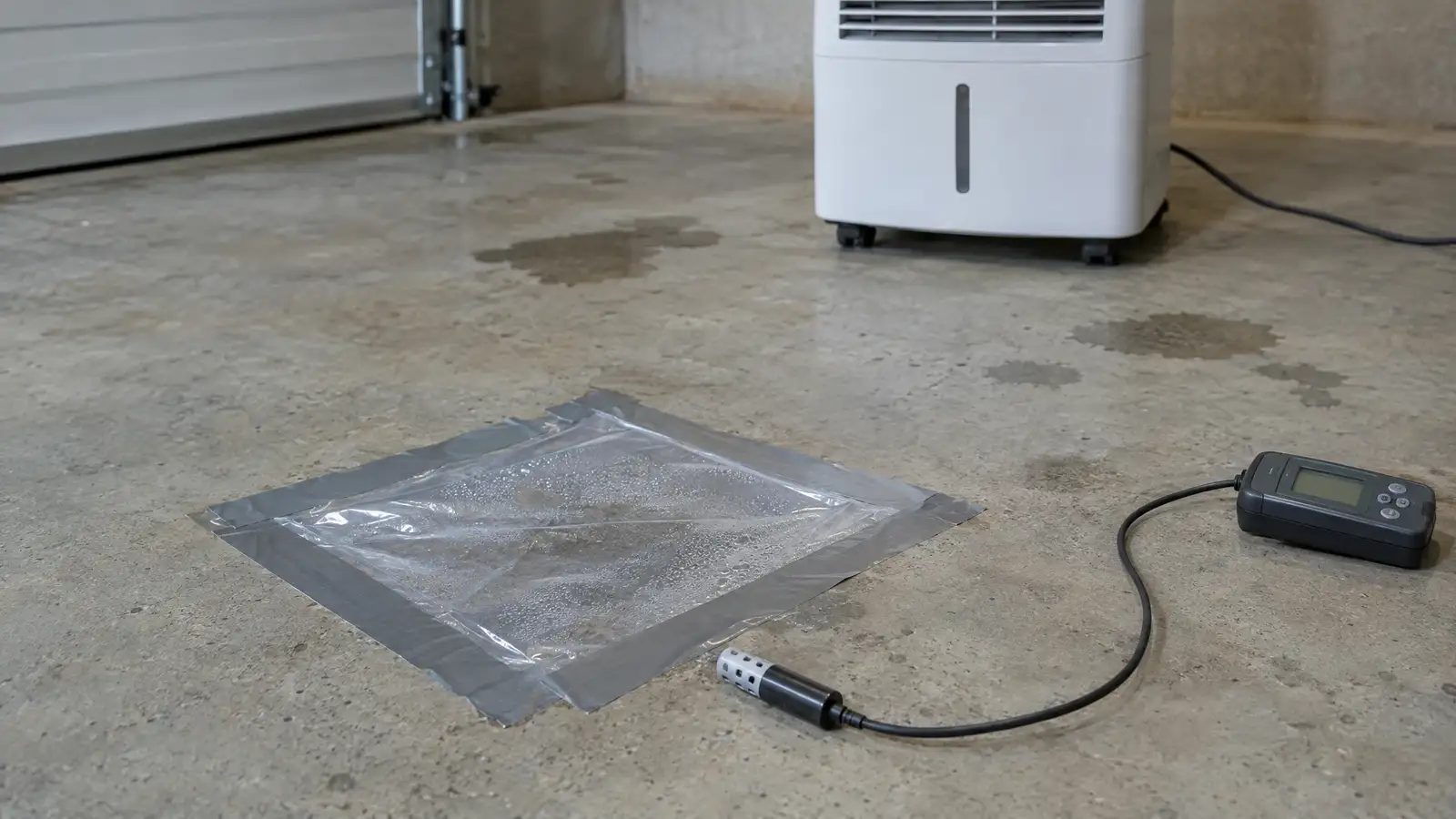
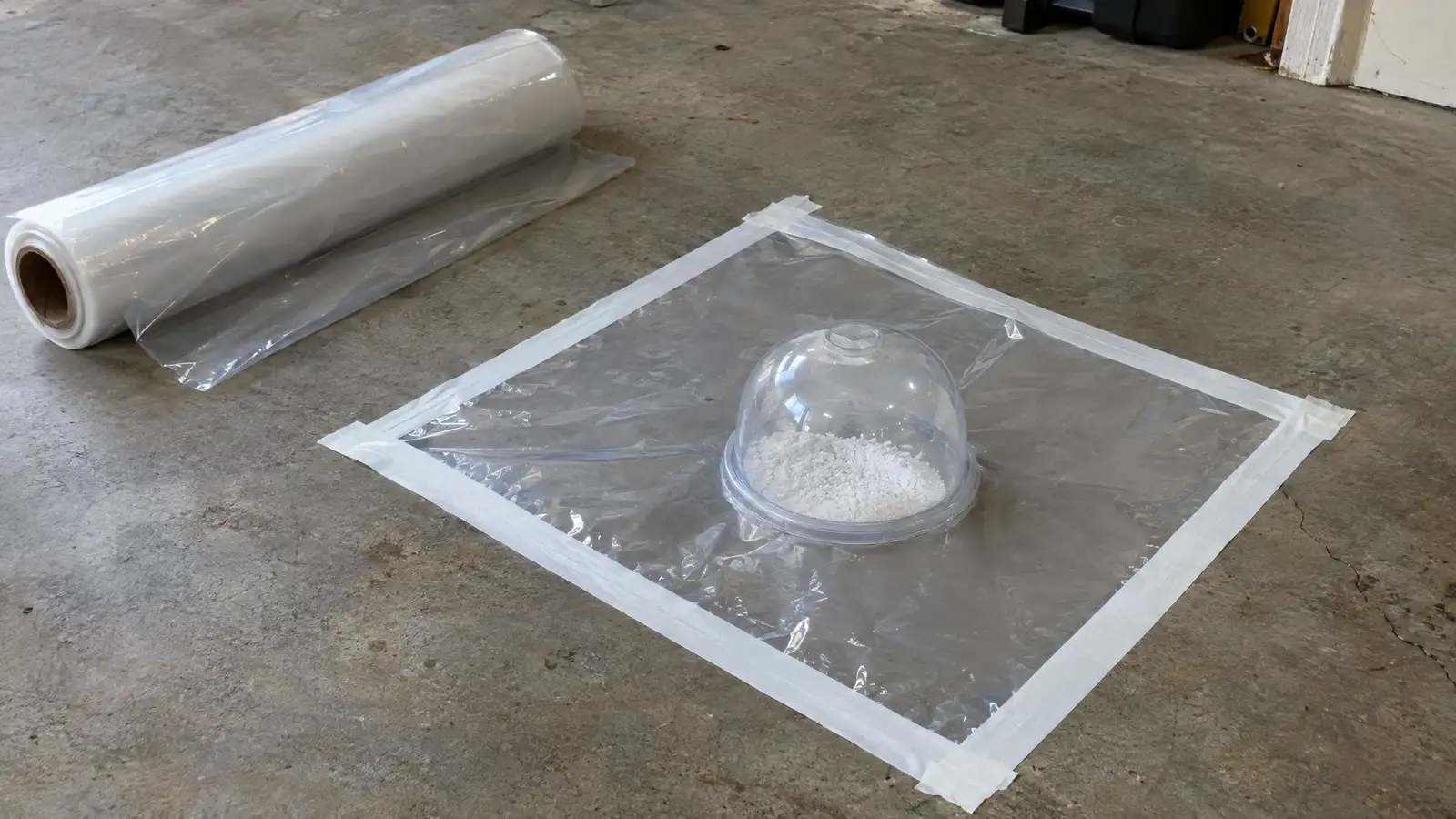
Tape a square of clear plastic tightly to the slab for a day or two. Condensation under the plastic or darkened concrete suggests moisture is moving. It is quick and easy and gives a rough indication rather than a number.
It is a useful first check, not a final answer.
03 Calcium chloride and in-slab humidity
A calcium chloride kit measures the weight of moisture a sealed dish absorbs from the surface over a few days. In-slab relative humidity probes measure the humidity inside the concrete, which many coating manufacturers use in their limits.
Each coating product lists the readings it can tolerate.
04 What to do about high readings
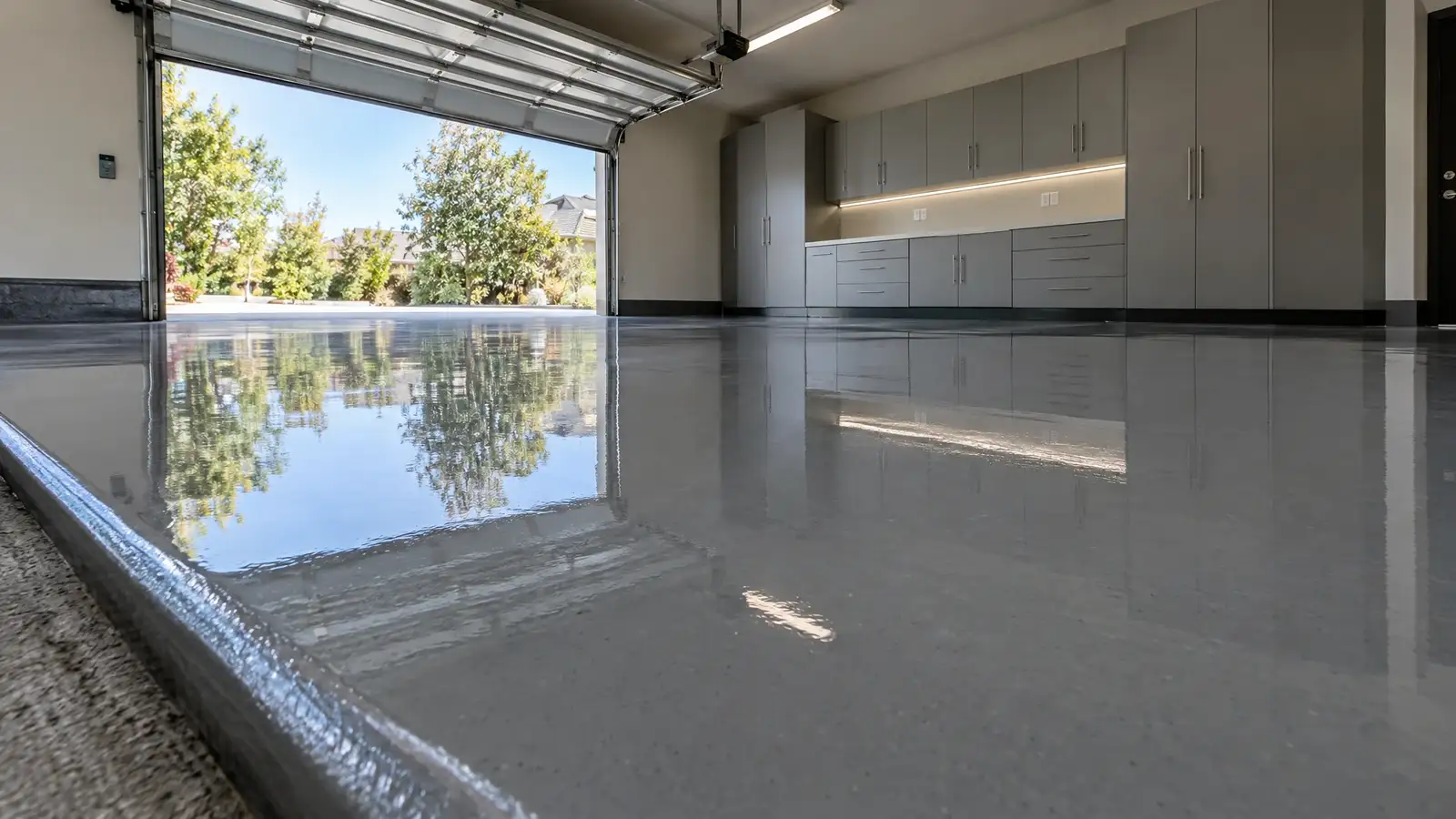
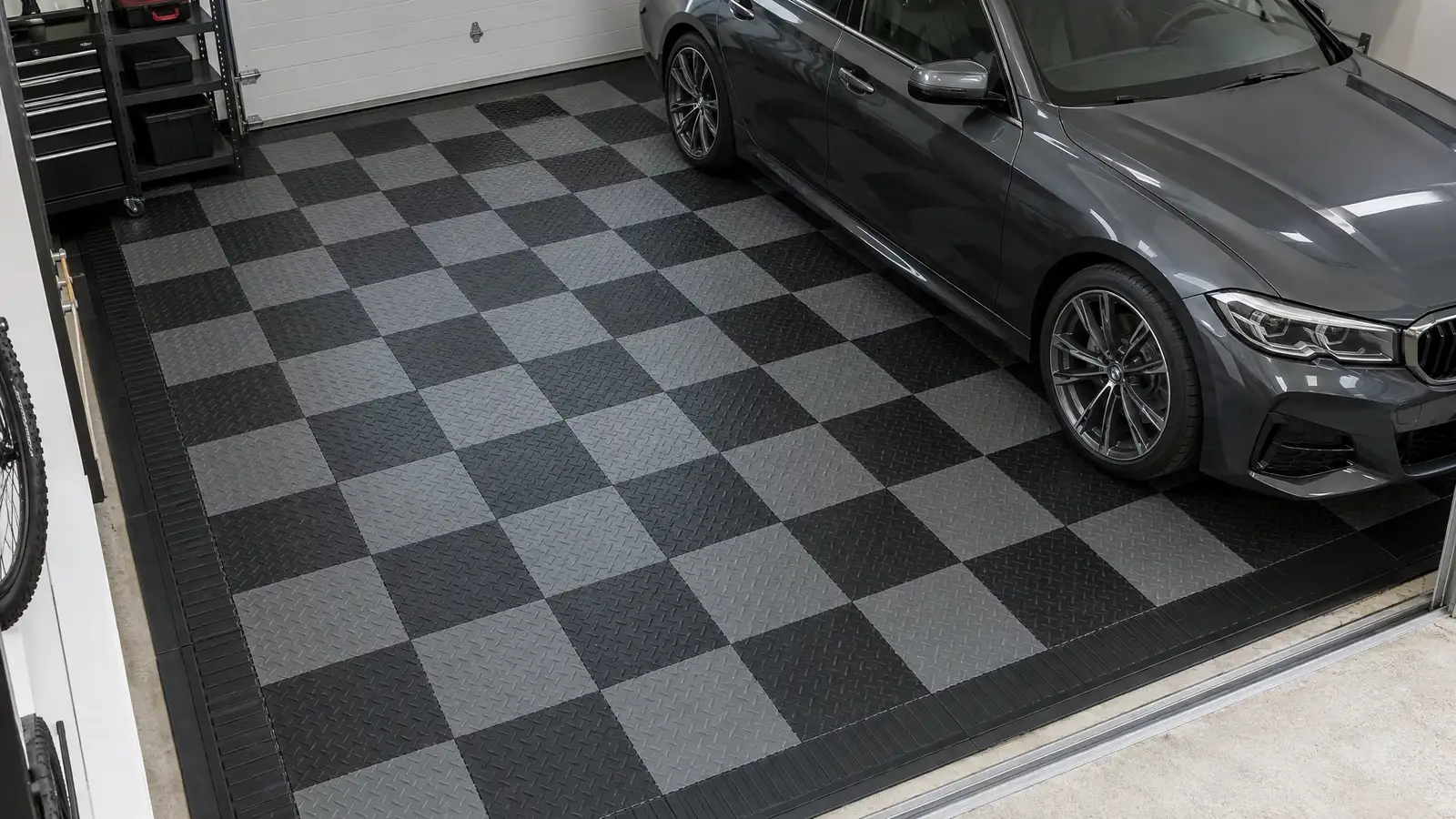
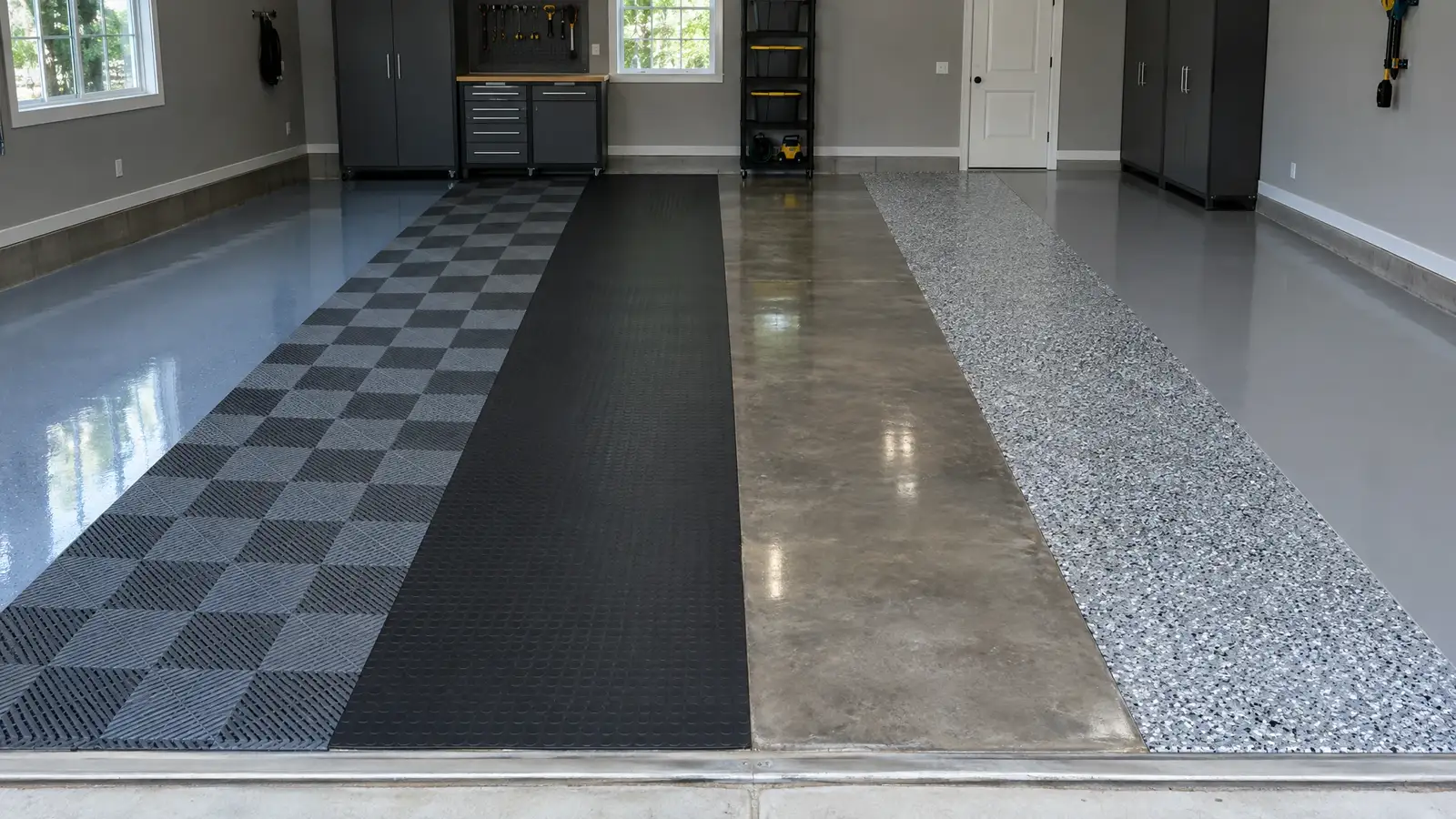
Moisture-tolerant primers, vapor mitigation coatings and drainage fixes can allow a coating to go on. In severe cases a floating floor of tile or mat may be the better choice. Fixing the source, such as grading or gutters, helps in every case.
A professional can interpret readings against the chosen product.
? Common questions
How do I test it myself?
The plastic sheet test is a simple DIY check. For numbers, use a test kit or hire someone with probes.
Can I fix a wet slab?
Often it can be managed with the right primer or barrier. Source drainage fixes help too.
Does season matter?
Yes. Slabs are wetter after long rains. Test under typical or wet conditions.