01 Types of damage
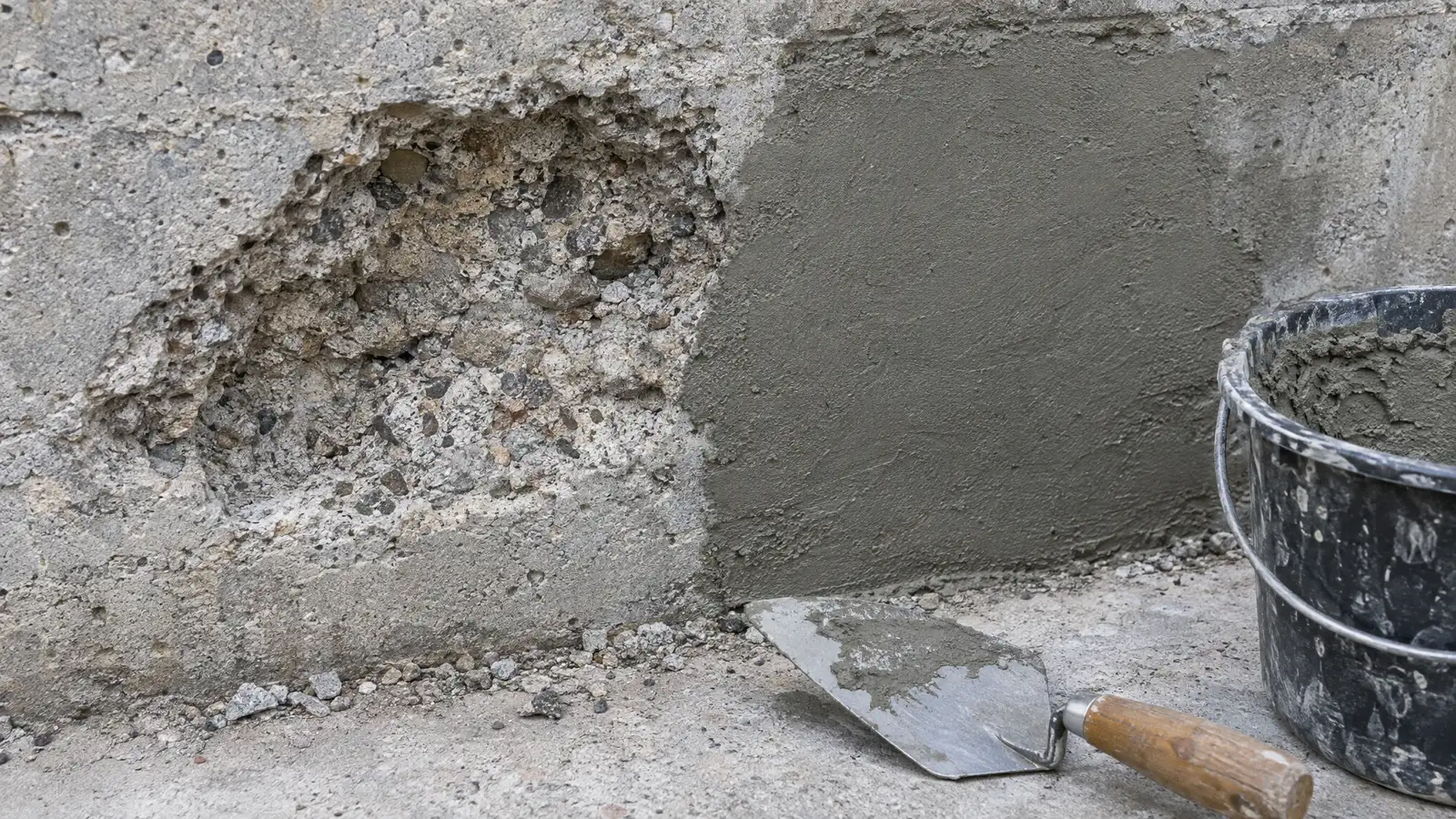
Hairline cracks come from shrinkage as concrete cures. Wider cracks can come from settlement or heavy loads. Spalling is flaking of the surface, often from freeze-thaw cycles, salt or a poor finish. Pits are small holes that collect dirt and moisture.
Each type needs a different fix.
02 Crack repair
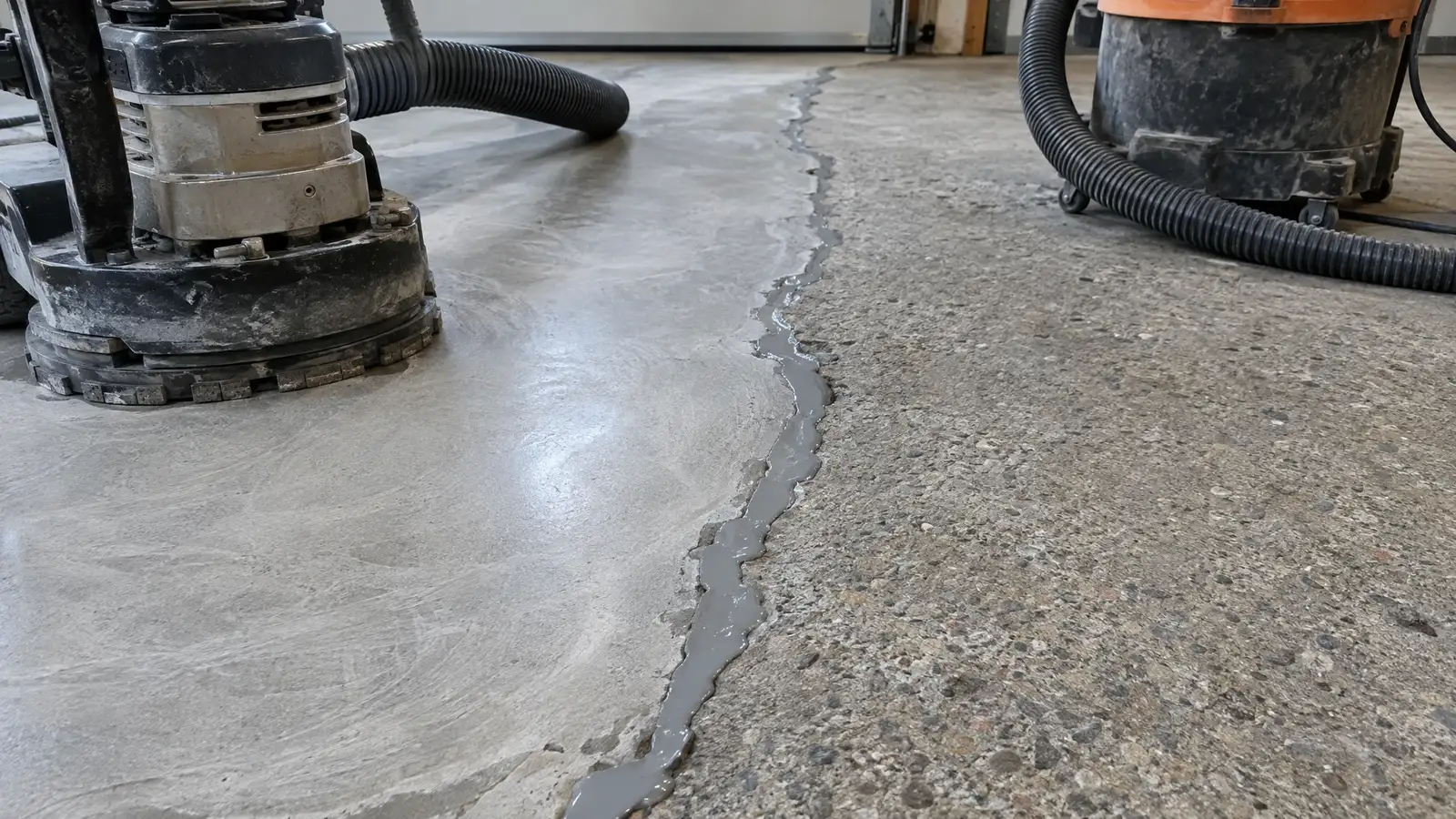
Cracks are opened with a grinder, cleaned and filled with a flexible or rigid repair product depending on whether they move. Hairline cracks that are stable are often sealed and covered. Wider moving cracks may reflect through a coating.
Control joints are cleaned and filled rather than covered.
03 Pits and spalls
Loose concrete is removed and the area is patched with a repair mortar that bonds well and cures hard. The patch is leveled to blend and ground flush. The aim is a solid, level surface that coating can bond to.
Large spalled areas may need more extensive repair.
04 When to call a specialist
If cracks are wide, uneven in height or growing, the cause may be settlement, drainage or poor sub-base. A structural or concrete specialist can advise before finishing work.
Do not cover active problems with a coating and hope.
? Common questions
Will cracks come back after repair?
Stable cracks usually stay quiet. Active cracks can reappear, so we look at why they formed.
Can I repair small cracks myself?
Yes, with a suitable filler and good prep. For a coating, repair and grinding should be done as part of the prep.
Is spalling serious?
Usually cosmetic, but it signals surface weakness that should be fixed before a finish goes on.