01 What heat and humidity do
Heat softens adhesives and warps thin panels. Humidity swells the cores of cheap boards and rusts exposed steel. In coastal air, salt speeds up corrosion. The combination is hard on cabinets built for dry rooms.
Choosing materials that do not absorb water is the first defense.
02 Materials that cope
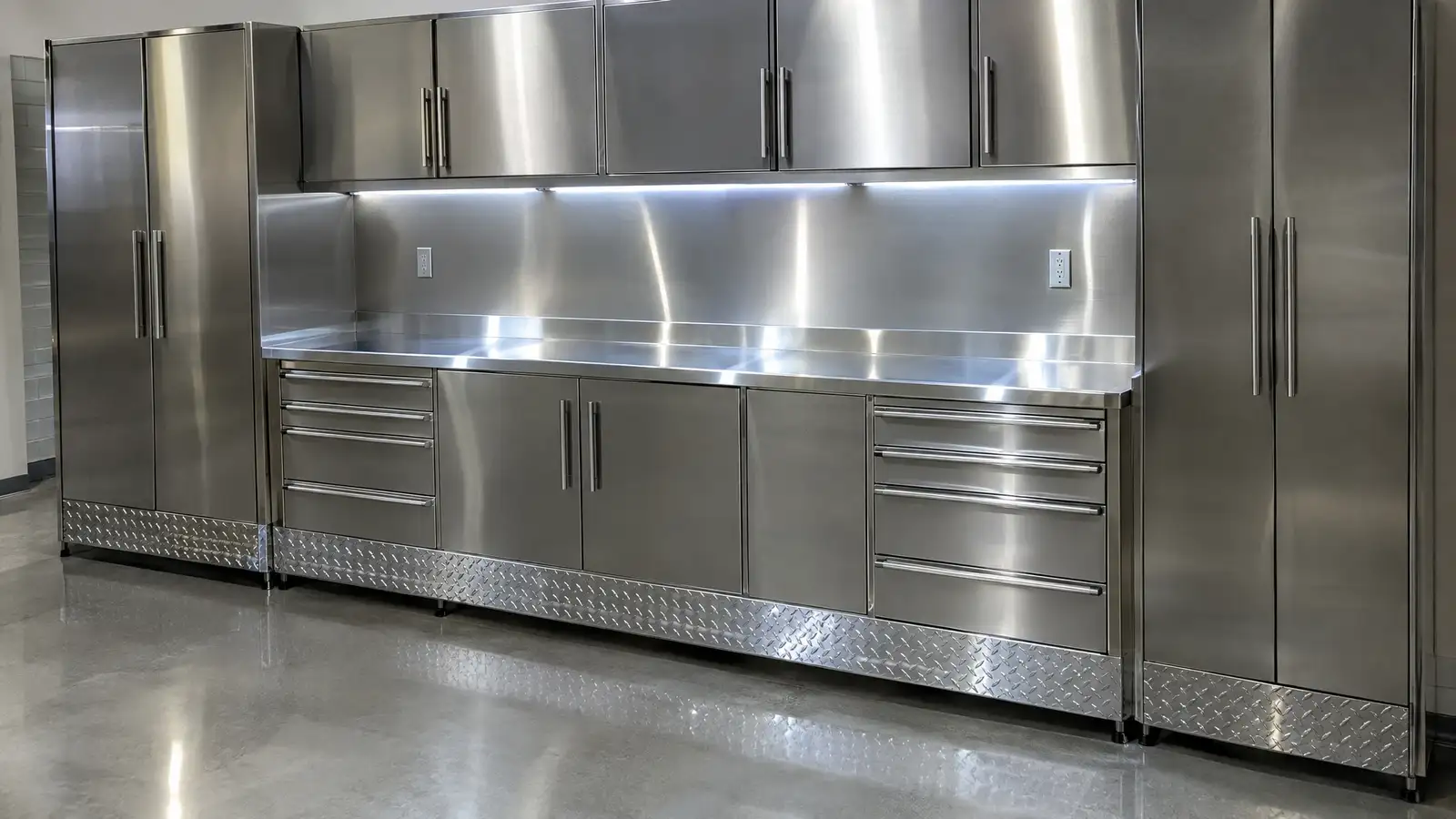
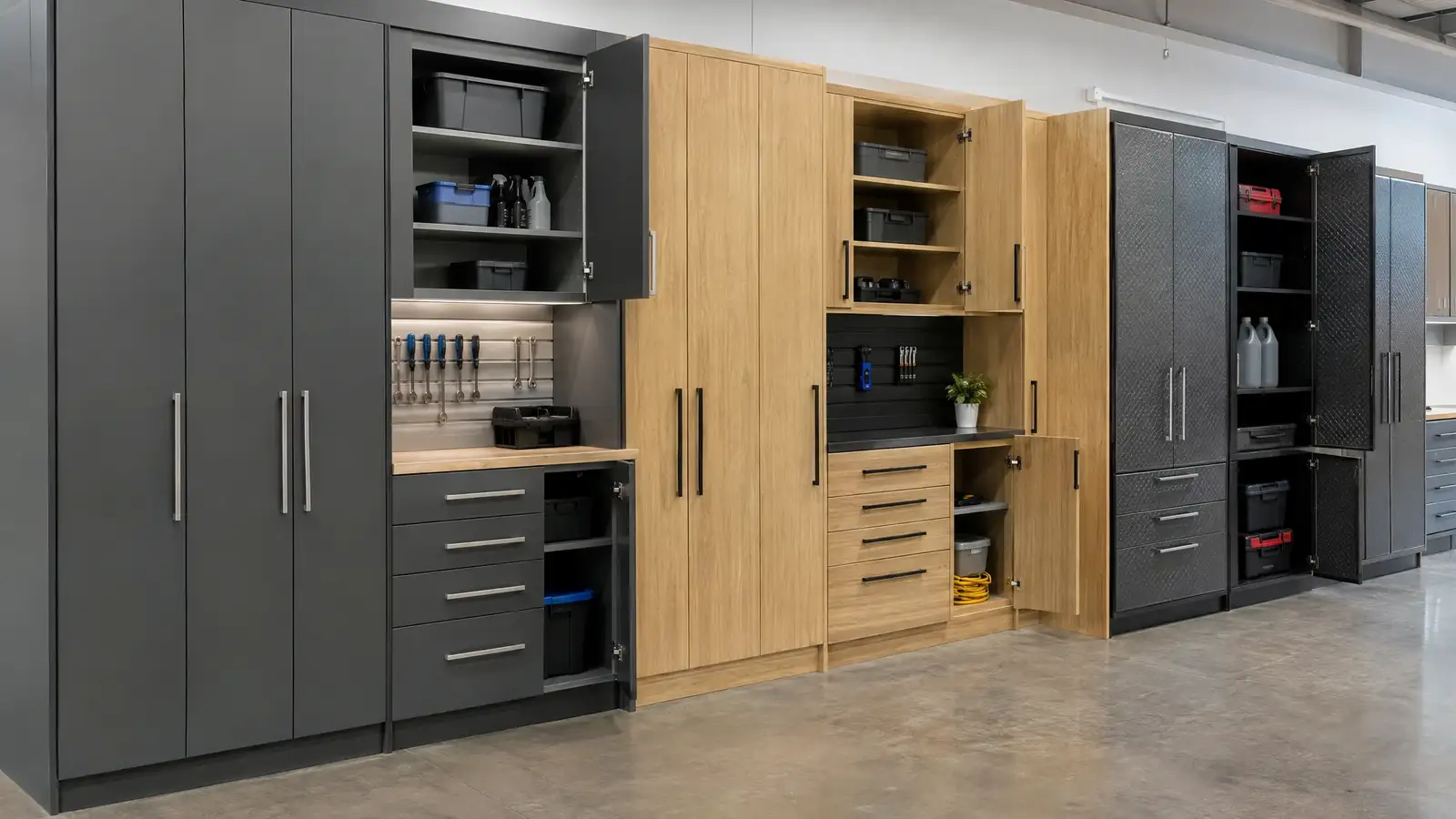
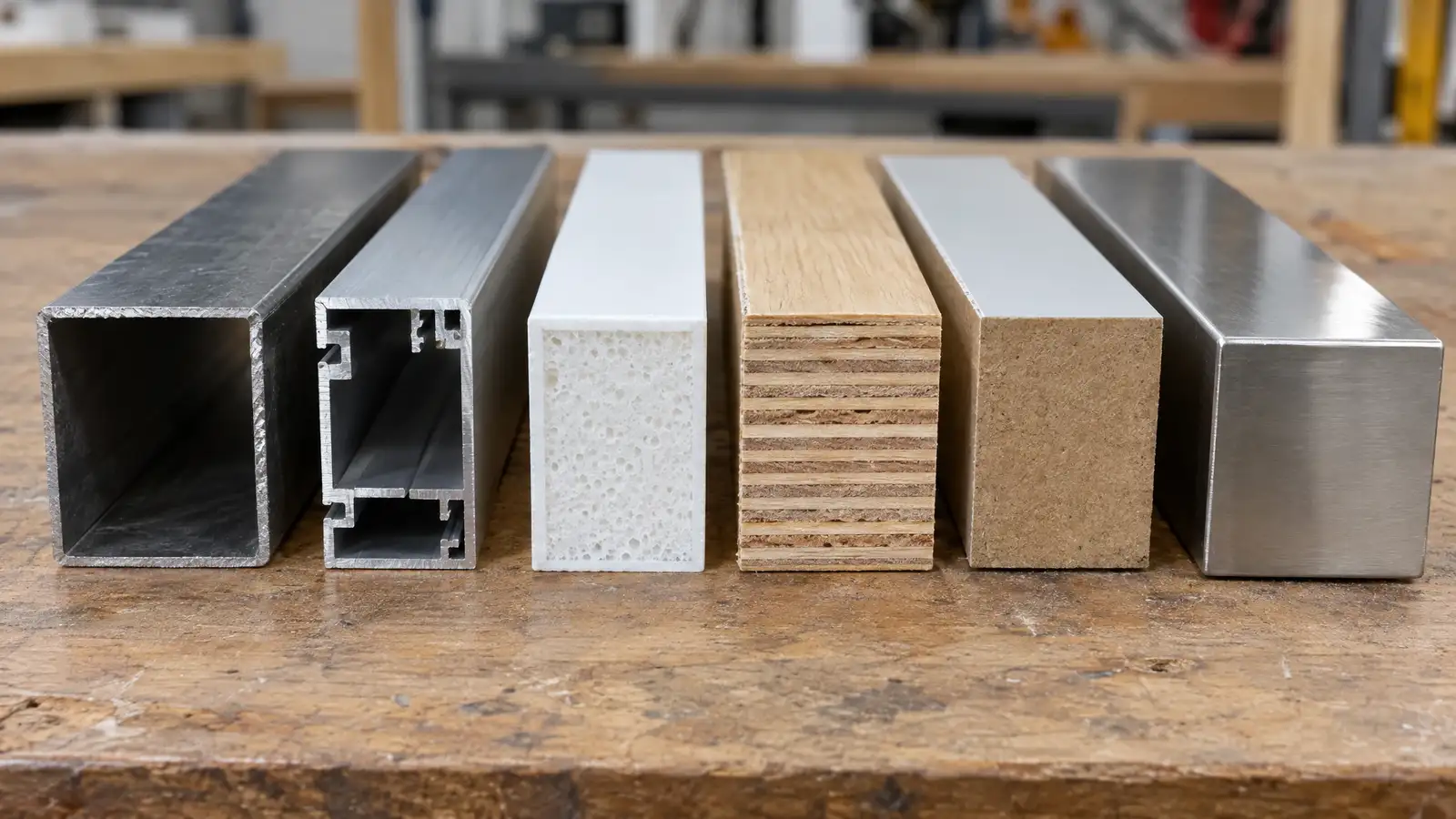
Polymer and PVC cabinets do not absorb water and cannot rust. Aluminum does not rust. Stainless resists corrosion well. Steel with a good powder coat can work if the edges are sealed and the cabinet is raised off the floor.
Avoid unsealed particleboard or MDF in damp garages.
03 Layout and airflow
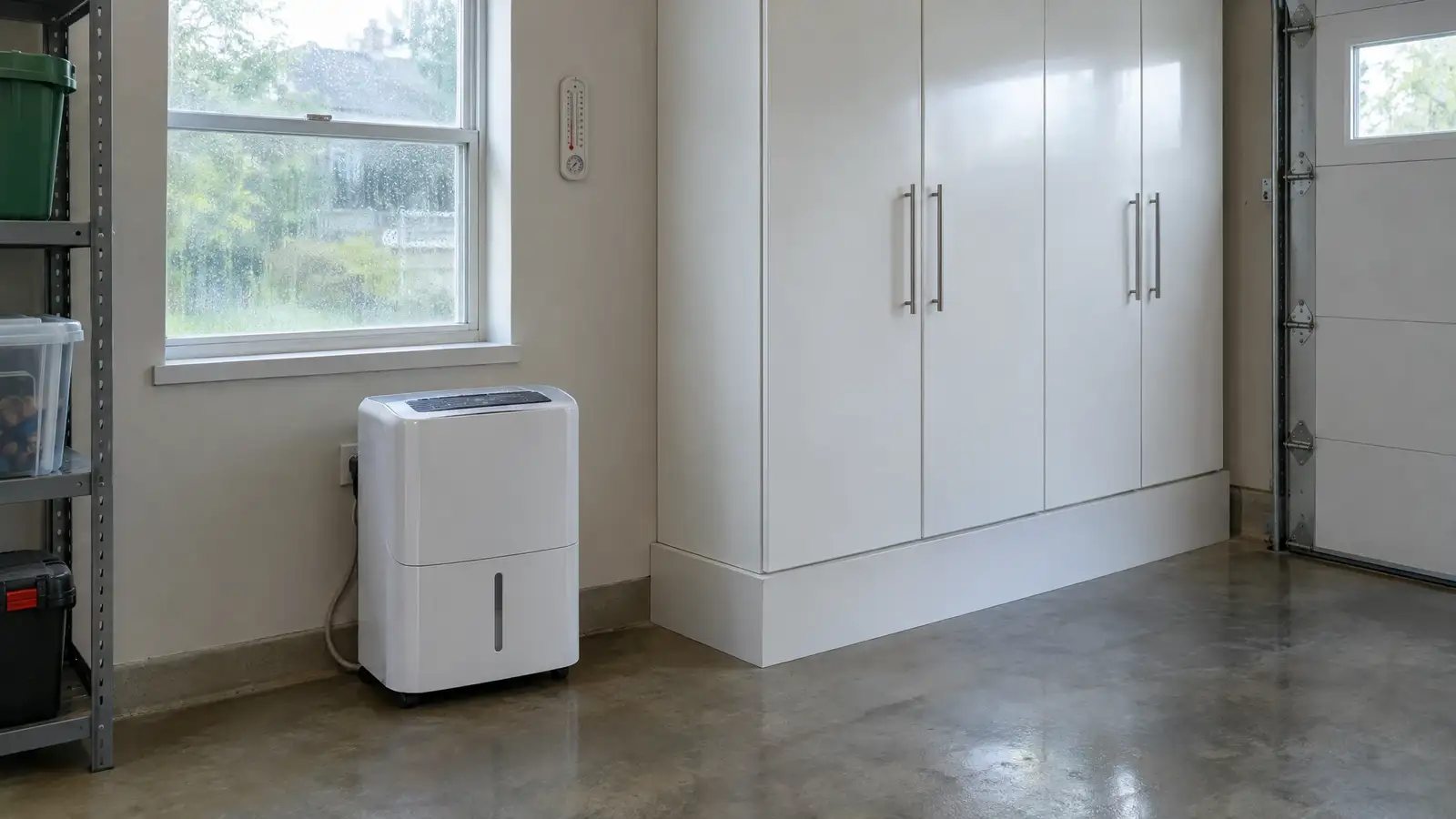
Raise cabinets on a plinth or legs so they are not sitting in any water that reaches the floor. Leave a small gap behind the cabinet for air. A vent or ventilated door on a cabinet storing damp gear helps it dry.
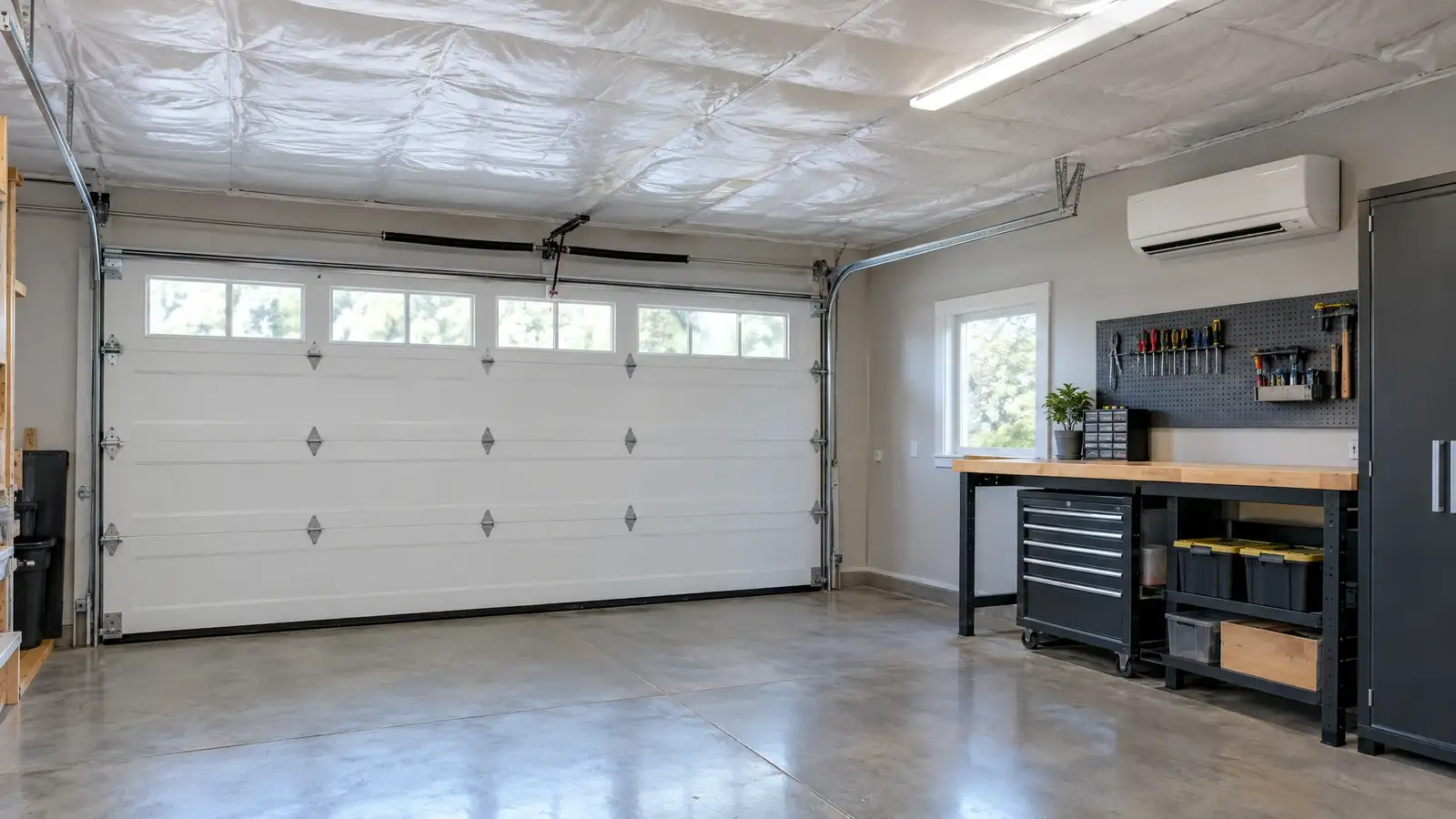
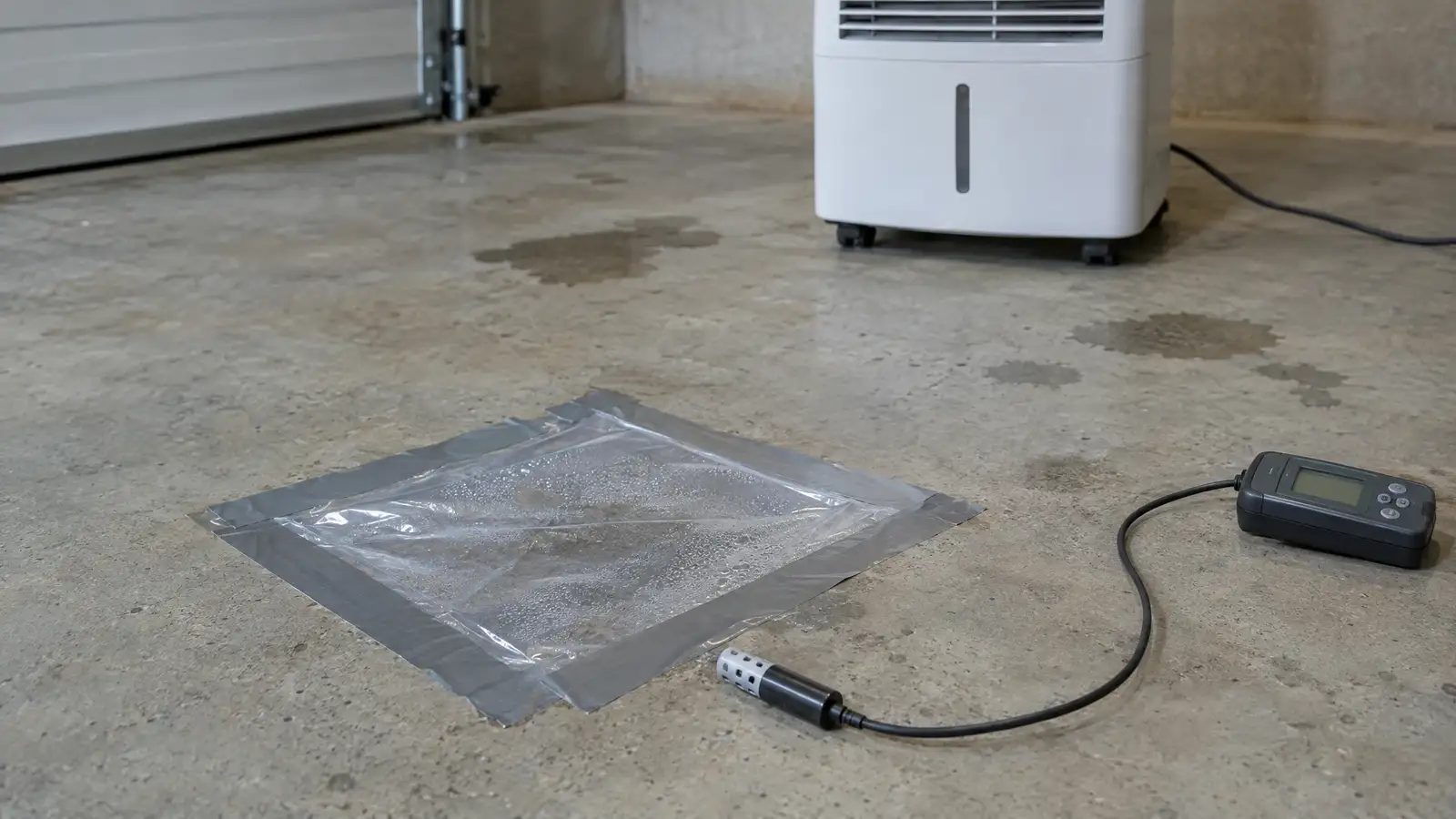
A dehumidifier keeps the whole room more stable.
04 Stay ahead of problems
Wipe up spills and check hinges and edges once a year. Touch up scratches in powder coat before rust starts. Keep chemicals tightly closed since vapors can attack finishes.
A coated floor makes water management easier too.
? Common questions
Will steel cabinets rust in a humid garage?
A good powder coat resists rust, but scratches and cut edges can start it. Raising the cabinet and touching up chips helps.
Is wood good for a hot garage?
Plywood with sealed edges can do well, but solid wood and unsealed boards can move with heat and humidity.
Does a dehumidifier help?
Yes. It lowers the moisture that causes swelling and corrosion across the whole space.