01 Hinges that last
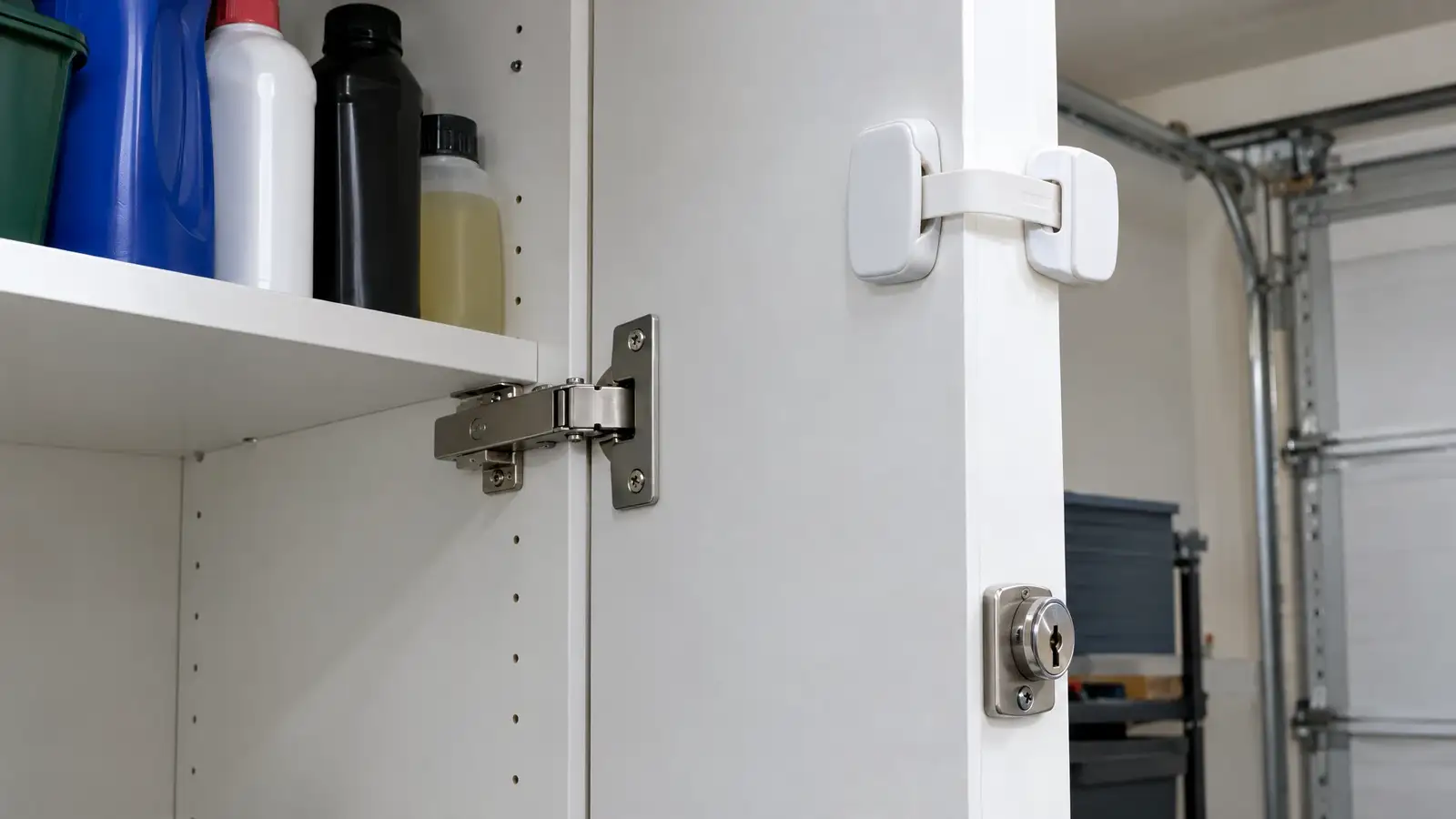
Garage doors swing a lot and carry weight. Look for adjustable, heavy-duty hinges with soft-close options. A hinge that can be adjusted keeps doors aligned as the cabinet settles.
Cheap hinges are a common failure point and a quick way to tell a lower-grade cabinet.
02 Drawer slides
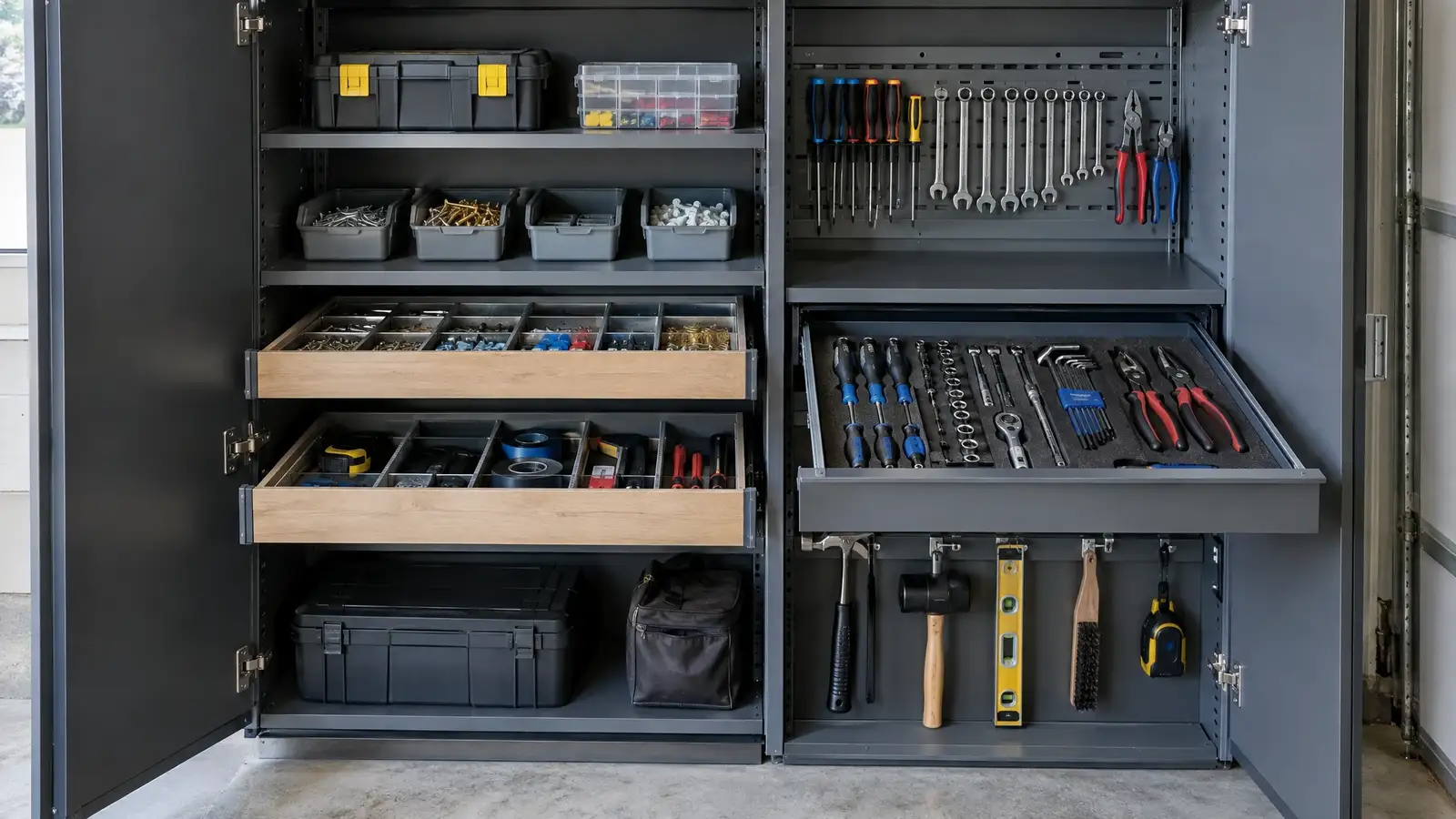
Full-extension, ball-bearing slides give access to the whole drawer and carry heavy loads. Check the rated load per drawer and match it to the contents. Soft-close dampers prevent slamming.
Deep drawers for power tools need higher ratings than a utility drawer for screws.
03 Locks and safety
Locks protect chemicals, sharp tools and valuables. Keyed or combination locks on selected cabinets keep children out. Place chemicals high or behind a locked door, and keep a fire extinguisher accessible near the work area.
Child-proof latches are a simple add-on for lower cabinets.
04 Anchoring
Tall and wall-hung cabinets must be anchored to studs or masonry. A tall cabinet can tip if a drawer is pulled out while loaded. Always use the anchors the manufacturer specifies and the right fasteners for your wall.
Our guide on anchoring explains wood and masonry walls.
? Common questions
Do I need locks on all cabinets?
Not necessarily. Lock the ones that hold chemicals, sharp tools or valuables, and leave the rest open for convenience.
How do I stop a tall cabinet from tipping?
Anchor it to the wall studs with the supplied brackets and make sure it is level and loaded evenly.
Can hardware be upgraded later?
Hinges, handles and slides are usually replaceable. Choose systems that use standard parts.